• Skip to primary navigation
  • Skip to main content
TAD Graphics logo

t ad studio | tad graphics

A vibrant, multi-disciplinary advertising, communications, creative and digital agency

  • About us
  • What we do
    • Creative and graphic design
    • Copywriting
    • Marketing and advertising
    • Promotional photography
    • Web design and digital media
  • Portfolio
  • Blog
  • Contact us
  • Shop prints

website

Introduction to infographics

30 October 2017 by tadgraphics

Infographics

Information graphics or infographics as they are more commonly known, are widely used in visual content marketing. More and more businesses are utilising infographics as an efficient way to communicate their composite message in a way that is both easy to comprehend and visually pleasing.

The internet has taken visual marketing to the next level, and infographics are becoming a significant part of that growth. In fact, it is estimated 84 per cent of communications will be visual by 2018, and 79 per cent of internet traffic will be video content by 2018.

So yes, infographics certainly have an important role to play in visual marketing. According to the Content Marketing Institute, the use of infographics has risen from 50 per cent in 2015 to 58 per cent in 2016. And their popularity shows no sign of slowing down.

What is an infographic?

Infographics include a combination of information and graphics featuring charts, diagrams, photos and stylised text. An effective way of creating a story in a more entertaining and eye-appealing manner, visual content marketing has been proven to be many times more effective than text.

This representation of information in a graphic format is designed to make the data easily understandable at a glance. People use infographics to communicate a message quickly, to simplify the presentation of large amounts of data, to see data patterns and relationships; and to monitor changes in variables over time.

According to Usability expert Jakob Nielsen, the regular user knows at most 20 to 28 per cent of words during an average visit. An average person also gets distracted in eight seconds, though a mere 2.8 seconds is enough to distract some people. If you want your message to be seen and understood, infographics are a highly useful tool.

Advantages of infographics

Provides essential facts and figures

People love reading facts, numbers, statistics and other such data. Infographics can help provide this information in a prearranged appealing way. Infographics are much more eye-catching than text. By using infographics to increase interest, it will give your site or blog a lot more drawing power.

Easier to comprehend

. Infographics are visually appealing. Used correctly, they are much easier to understand than text data. The human brain can process and commit to visual memory information better than text.

Social media

Infographics are also on the rise in social media. By combining the influence of infographics and social media, who knows how far your business could go. Social media is a fast-paced platform and when used appropriately will help your business to progress and be noticed. With infographics, all of the information is right there. There is no clicking to get here or there, nothing to sign up for or add time to your readers’ visit.

Simplify the subject matter

Reading lengthy text to understand the data is a very composite and unsightly task. Infographics can present the same issue in a more orderly and simplified way, thus making it incredibly easy for your readers to read and understand the given information.

Disadvantages of infographics

Time consuming

Excellent infographics are not easy to make and call for a decent time investment. Infographics must be thoroughly researched and outlined, cautiously and efficiently designed, and well promoted.

Not naturally SEO friendly

One of the biggest disadvantages of using infographics is that they are not seen as substantial content for search engines; they are not search engine friendly. SEO, particularly localised SEO, is very important for most small businesses to drive real organic customers. A workaround is to post the infographic details in text form, underneath the infographic, and adjust it for keywords.

Require a flexible budget

Many small businesses just do not have a flexible budget to test an infographic drive. The creation of infographics requires many hours or days, and outsourcing the design work to creative professionals can be costly. As a small business entrepreneur, you want to be sure every dollar you invest is going to have a positive return on investment (ROI).

Possible futility

Investing hundreds of dollars into an attractive infographic does not imply viral popularity. There is still a possibility that no one will take notice. This is because creating an infographic is only half the battle. The other half is promoting it. If you still have not considered these steps, your professionally designed infographic could very well fade away into the internet abyss. Also, factors such as timeliness and insignificance can weigh down your campaign.

If you’re looking for a web and graphic designer in Perth, and you would like an informal, obligation free chat about your infographic options, please feel free to get in touch with us.

Filed Under: Blog, Graphic design, Web design Tagged With: benefits, blog, design, graphic, infographic, infographics, trends, web, website

Seven things a website needs to succeed

13 October 2016 by tadgraphics

7 things your website needs to succeed

What do I need to do to make my website a success? It’s a common question we get asked by our clients. Pretty much everyone with a website has their eye on the big prize – getting their business onto page one of Google. In today’s demanding and competitive online space, if you want the best chance of boosting google rankings, increasing traffic and ultimately attracting more customers and sales, you need to make sure you’ve got the key elements covered.

You see, not all websites are made equal. If the essential components aren’t there, your efforts at placing top in Google ranking search results won’t deliver the desired results. Google has lots of different algorithms and tools to determine where websites appear in search engine results. It means you have to fight hard to make yourself stand out. And it starts by following a few simple steps.

So let’s take a look at some of the fundamentals a website needs if it has any chance of succeeding.

Be responsive

40-per-cent-smartphones
Source: The Mobile Story, Neilsen Mobile Ratings, September 2015

We’ve previously blogged in detail about the advantages of responsive websites. With more people than ever before turning to their smartphones and tablets to search the internet, if your website stands any chance of being successful, it must be optimised for mobile devices. If you want to give your customer the best user experience possible and help boost traffic and search engine rankings, a responsive website is a necessity and not a luxury.

Have well written relevant content

Let’s not beat around the bush. Google loves and respects well written, unique and relevant content. High quality search engine optimised content will help you gain more website traffic, strengthen your brand’s online reputation, increase engagement and generate more leads. Creating quality content doesn’t just mean using correct grammar and ensuring the copy isn’t littered with typos. It also means making sure what you write about is readable. The benefits of great website content speak for themselves. So change it. Refresh it. Update it. And never, ever, lift content from another website without permission. Google strongly discourages duplicate content and copying content will come back to bite you on the bum – never mind the fact that it’s just plain wrong!

Make sure your content is optimised for search engines

Your content needs to be well written and engaging; enough so that it grabs the attention of your audience and potential customers. But it must also grab the attention of search engines too. So you need to optimise your content with keywords and phrases. Keyword optimisation is a process which involves incorporating keywords relevant to your business into your text. Keyword research will help to determine the words and phrases people are using when they search the internet for goods and services. When optimising content don’t let readability suffer, so avoid keyword stuffing at all costs. Over-optimisation will ultimately do more harm than good. Relevant keywords should also feature in title tags, meta descriptions and URLs. Don’t forget to optimise the visual elements of your website too, such as photos, with alt text descriptions and image title tags.

Have a blog

Blogs boost website traffic by as much as 55%

So you’ve got great, well written and engaging content. And you’ve made sure to optimise your copy with useful and relevant keywords. Good job! But don’t forget to keep your website updated with fresh content. Regularly updated websites are looked favourably upon by the Google gods. And one of the easiest and most affordable ways to get new content onto your website is by having a blog. Blogs help businesses establish themselves as industry experts and they can boost website traffic too – by as much as 55%. Remember to create content that meets the needs of your target audience. And because most people scan content rather than read it, make it easy for them to read because if you don’t they won’t.

Publish high quality images

with ecommerce websites, 67% of customers rate the quality of a product image as “very important”

It’s often said that images speak louder than words. Good quality high resolution photos are essential because they will help to tell your story and sell your products and/or services. In the case of ecommerce websites, 67% of customers rate the quality of a product image as “very important” when it comes to buying products. Using high quality images can help to increase the quality of user engagement. Not only that, websites featuring poor quality images look unprofessional, less trustworthy and less reputable. Images must also be relevant to your content, otherwise you run the risk of sending conflicting messages.

Contact details on every page

Make sure visitors to your website know how to get in contact with you. Ideally you should have your phone number and email in the footer of every web page. A specific contact page should include these details together with your bricks and mortar address, mailing address (if different), hours of operation (if applicable) and a contact form for customers to get in touch with you. If you’ve got social media profiles like Twitter, Instagram and Facebook, make sure to include these too. Basically the more information the better.

Call to actions

Good call to actions are very important and can improve conversion rates. Call to action buttons are used to direct site visitors and to get them to take a specific course of action. They need to be easy to find and easily identifiable. Use short actionable words and regularly test the placement, size and even colour to see what works best for you.

At TAD Graphics, we offer a range of affordable creative services. We design cost-effective responsive websites for individuals, businesses and organisations who require a professional online presence. We can also assist with various forms of content creation to address marketing needs, including promotional photography, graphic design and copywriting.

Get in touch to discuss your requirements by giving the team a call on +61 402 636 014. You can also send us a message by filling out the form on our contact page or drop an email to tadgraphics@t-adstudio.com

Filed Under: Blog, Web design Tagged With: content, copywriting, mobile responsive, web design, website

Four fabulous reasons why websites need great content

26 August 2016 by tadgraphics

Four fabulous reasons why websites need great content

We often get asked about the benefits of good website content, and why it’s important to use a professional website copywriter. After all, most of us have the ability to write, even if we can’t design an awesome website. As true as that may be, writing unique high-quality search engine optimised content is a completely different kettle of fish.

It pains us to say this, but far too often, website content is an afterthought in website development. Which is not just wrong but pretty foolish. The words on your website will speak volumes about your company: who you are, what you do and your ethos. If your website is poorly written, what does that say about your business? Potential customers will not be impressed.

In order for your website to be the effective marketing tool it’s designed to be, you’ll need more than fancy web design to stand out in the crowded online space. Websites need engaging, well-written and informative copy to succeed. And that’s where a professional copywriter is worth his or her weight in gold. From boosting SEO rankings to gaining more traffic and leads, a skilled professional copywriter will be able to provide customised content to connect with customers.

We give as much attention to what’s written on your website, as we do to the way it looks and responds.

So, let’s look at what well written, engaging and informative website content can do for you.

It will help build your online reputation

Whatever your line of work, your reputation can be the difference between success and failure. To strengthen your brand and stand out in the online space, the words on your website will play a huge role in building your online presence and reputation. With high quality copy, your business will benefit from higher levels of engagement needed to build awareness of your company and brand. Quality customised content goes a long way to establishing authority and trust, positioning credibility as an expert in your industry. If you can establish rapport and trust, people are more likely to buy the goods and services you are selling.

Increase website traffic

Static websites are so yesterday. You may as well not have a website if you don’t keep it updated and populated with fresh new content. Did you know that by having a blog on your website it will increase website traffic? A survey carried out by HubSpot revealed that businesses with a blog get 55% more traffic compared to those that don’t. You can’t argue with those results! With a blog, you have the perfect opportunity to engage with your target audience. Blogs are also great for keeping your website updated with regular relevant and shareable content.

Generate more leads

Great content will help generate leads. Many B2B and B2C businesses recognise the benefits of blogging as part of their content marketing strategy. The higher the quality of the content you produce and share, the more credible your online position, which will help boost engagement and attract leads. According to research conducted by WebDAM, businesses that blog on a regular basis generate 67% more leads each month, compared to businesses who don’t. Again, it’s hard to argue with those statistics.

Help with inbound advertising

Not all advertising is affordable, particularly in the current economy. Many businesses simply don’t have the marketing budget for traditional outbound advertising like radio and TV ads. Inbound advertising is definitely much more affordable. Good quality content will bring potential customers to you and you won’t have to spend the big bucks on old outbound marketing methods, like buying ad space. A blog on a website is a cost-effective form of advertising compared to traditional forms. Aim to publish search-engine friendly high quality content at least once a week – and don’t forget to share what you’ve written across social media too.

At TAD Graphics we don’t just design great websites, we can also help with the content part too! From SEO copy and blogs to email marketing, newsletters and social media marketing, we offer affordable creative copywriting and communication services to help address your content marketing needs.

To discuss your project and get a quote, simply give us a call on +61 402 636 014, send an email to tadgraphics@t-adstudio.com or message us via our contact form.

You can also keep up-to-date with our adventures by following TAD Graphics on Twitter and LinkedIn.

Filed Under: Blog, Web design Tagged With: content, copywriting, web design, website

Responsive web design: what is it and why you need it

31 March 2016 by tadgraphics

Responsive web design: what is it and why you need it

We love websites. Which is a good job because we work with them every day, designing and maintaining corporate and personal blog type sites, brochure websites and ecommerce online shopping cart stores. While no two websites are ever the same, they share a commonality – the same responsive design.

You see it’s all well and good having an online presence, but if it’s not responsive in design, you’re doing your business – and your customers – a great injustice. And potentially affecting your traffic and search engine rankings too.

Google, the biggest search engine in the world, loves responsive websites. And so should you. In just a few short years they’ve transitioned from an option and a bit of a luxury into a necessity. Responsive websites rock.

Fair enough. But what is a responsive website?

That’s a good question. You know how sometimes you use your smartphone to view the internet, and other times you might use your desktop and even a tablet? Well having a responsive website design really just means your website can be viewed across different devices.

Think of it as a one-size-fits-all. A responsive website provides whoever is viewing it with the same look and feel, regardless of whether they’re accessing it from a desktop or a mobile device, and across the plethora of web browsers (Google Chrome, Internet Explorer, Safari, Firefox, etc.) too.

Long gone are the days where desktop computers and laptops are the only way of accessing the internet. Viewing experience has never been more important. Lay out and coding is key to providing a website which delivers an optimal viewing experience for customers.

With a responsive website navigation, images, text and screen layouts have the ability to re-adjust themselves across a variety of devices. As web designers, it’s our job to ensure that happens by embracing a responsive design. It saves time and money in the long run because it means not having to create and maintain separate desktop and mobile versions of the same website.

Having a responsive website is a little more expensive but it’s the smarter choice. Yes, it takes longer to design, develop and test. But it’s better than having to meet the cost of designing, developing – and not to mention maintaining – two websites. So you’re actually saving yourself money in the long run.

Saving money is great. Any other benefits and advantages?

Plenty.

The benefits of responsive websites continue way beyond the initial design and development. As we touched upon earlier, Google are big, big fans of responsive design. In fact, last April the internet giant announced its intention to start demoting websites which weren’t mobile friendly. That’s a pretty big hint!

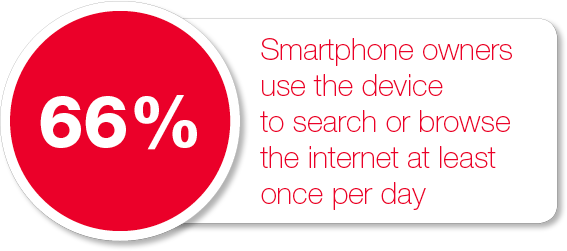
The fact is more and more people are using their tablets and smartphones for online access. According to the 2014 Australian Mobile Phone Lifestyle Index, 66% of smartphone owners use the device to search or browse the internet at least once per day. The change in internet access, from desktop computers to portable devices cannot be overlooked. We live in a smartphone society where digital connectivity is only going to increase.

There’s no two ways about it: a responsive website is a business necessity.

66% of smartphone owners use the device to search or browse the internet at least once per day

Do my customers care about responsive websites?

Yes. And so should you. If your website isn’t optimised for mobiles and tablets, you could potentially lose business. If potential customers can’t navigate their way around your website easily, they will leave and likely go elsewhere. Imagine losing business to a competitor simply because their website is far better optimised for mobile users? Doesn’t sound good for business, does it?

A website which is responsive in design not only looks the business but it loads faster too. And it’s better for SEO – a way of improving your search engine rankings to help customers find you. At the end of the day, it’s all about giving the customer the best experience possible.

Before we finish, let’s go back to those earlier figures: 66% of smartphone owners use the device to search or browse the internet at least once per day.

Like it or not, mobile internet users are growing day by day. It means a chunk of your customers favour their mobile devices for their online activities over traditional desktop and laptop computers.

Still think you don’t need a mobile optimised website?

The good news is, it’s never too late to invest in a responsive website. Come and talk to us about our affordable all-in-one responsive mobile optimised website design services. We can even take care of all your copywriting requirements too.

Simply give us a call on +61 402 636 014, send an email to tadgraphics@t-adstudio.com or message us via the contact form.

Like what you read? You can follow us on Twitter @tad_graphics.

Filed Under: Blog, Web design Tagged With: design, responsive, web, website

Nine reasons why you need a website

25 February 2016 by tadgraphics

9 reasons why you need a website

Most businesses today realise the value of having a professional, responsive and easy to navigate website. Whether you’re a sole trader, a small business, a franchise or not-for-profit organisation, in today’s world having some kind of online presence is vital to your success.

If you’ve been thinking about having your own website, but have so far resisted the urge to take the plunge, we’ve put together a few good reasons why you should take the leap and get your business online. With over two billion people using the internet everyday, if you don’t have a website you’re actually missing out on a highly powerful sales and marketing tool. Not only that, but it’s affordable too.

Okay, so having a website might sound scary, daunting or difficult. But it really isn’t. And better still, a website is one of the easiest ways to get your name out there – without having to spend a fortune on marketing.

So let’s take a look at a few reasons why a website makes great sense for you and your business.

Num_01It’s an affordable way to market your business

Affordable. One of our favourite words. We don’t believe a small business should have to spend a small fortune to get their website up and running. There are of course online services that provide templates for free website. But we’re big believers in that old saying: you get what you pay for. If you’re looking to create a professional, credible online presence, do you really think a free website is going to pass muster? No, neither do we. A professionally designed responsive website with engaging, well written search engine friendly content doesn’t have to cost the earth.

Num_02Think of a website as an online brochure

As much as we love the feel and smell of 300 gsm paper, printing has become ridiculously expensive. Rather than creating business cards, brochures and flyers, which you’re probably going to have to distribute yourself, once your website is up and running, you’ll have this wonderful piece of digital real estate to direct clients and customers to. Oh, and it’s better for the environment.

Num_03Websites are great for brand building

A brand will help you win over new customers – and retain them. A website is an extension of your brand. It’s an important part of your business’s brand identity and the most visible face of your brand. Remember first impressions count. A well designed user friendly website will appeal to potential new customers and give you the opportunity to create the best first impression for your business. We only get so many opportunities to impress.

Num_04Always open for business

Websites don’t have lunch breaks or holidays. They rarely get ill. They don’t have set opening hours, and unlike an office or business premises, you won’t have to be on site and it doesn’t need locking up at the end of the working day either. Think of a website as 24/7 advertising. It will work hard for you every hour of the day and every day of the year.

Num_05It’s instant credibility for your business

These days you don’t need a shop or an office to promote and sell goods and services. A website can do all that for you. So bye bye expensive overheads. Remember how we said over two billion people use the internet daily? It’s a fact that more people than ever before are turning to the internet to buy products and look for services. Why? Because it’s much easier and faster and more convenient. If you haven’t got a good website, just think of all the potential customers you could be losing to your competitors?

Num_06Attract more customers and clients

Whether you’re selling a product or a service, to make any sort of sale you first need customers. To get customers, you need to promote yourself. A professionally designed website is a great promotional platform. As a medium on which to showcase your work and what you do, here you have the perfect opportunity to outshine your competition. Testimonials, an online portfolio or gallery of work can all help you to stand out from the crowd.

Num_07Websites create measurable results

You will be able to check the number of visitors to your website and, in the case of an ecommerce website, record the number of online sales. It’s important to measure website traffic and where your visitors are coming from. Once you’ve armed yourself with this valuable information, it will help you to improve your website and visitor experience.

Num_08Websites can save you money

We like saving money as much as we like making it – and spending it! Websites as a form of advertising are much, much cheaper than radio and television advertising. Placing an advert in a newspaper or magazine will cost you more without nowhere near the same kind of reach. Factor in the cost and the potential exposure, websites are the most cost-effective way to promote your business.

Num_09Your competition most likely has one

Generally, we don’t believe in following the crowd. Just because that’s what everyone else is doing, doesn’t mean you have to. But websites are a good exception to that rule. It’s a bit of a dog eat dog world out there. If your competitor has a website and you don’t, you’re the one losing out. Sorry, but it’s true. Smart businesses recognise the value websites can bring to the table.

At TAD Graphics, we offer a range of affordable web and graphic design services. We design great looking websites that are responsive, customer friendly (easy to navigate!) and more over, affordable websites to give you a voice in the online world.

Whether you’re an individual, a small business or a medium sized company, we’d love to help you with your website project. What have you got to lose? Drop us a line and we’ll happily provide you with a free quote. If you want to meet up too, that’s great. We love informal chats over coffee and cake. We’re also quite partial to biscuits too. But never both. We’re not that greedy!

Filed Under: Blog, Web design Tagged With: design, development, web, website

© Copyright 2005-26. All rights reserved. t ad studio | tad graphics. Web and graphic design Perth. Admin