• Skip to primary navigation
  • Skip to main content
TAD Graphics logo

t ad studio | tad graphics

A vibrant, multi-disciplinary advertising, communications, creative and digital agency

  • About us
  • What we do
    • Creative and graphic design
    • Copywriting
    • Marketing and advertising
    • Promotional photography
    • Web design and digital media
  • Portfolio
  • Blog
  • Contact us
  • Shop prints

inca

Machu Picchu – a 15th century Inca citadel

4 January 2020 by tadgraphics

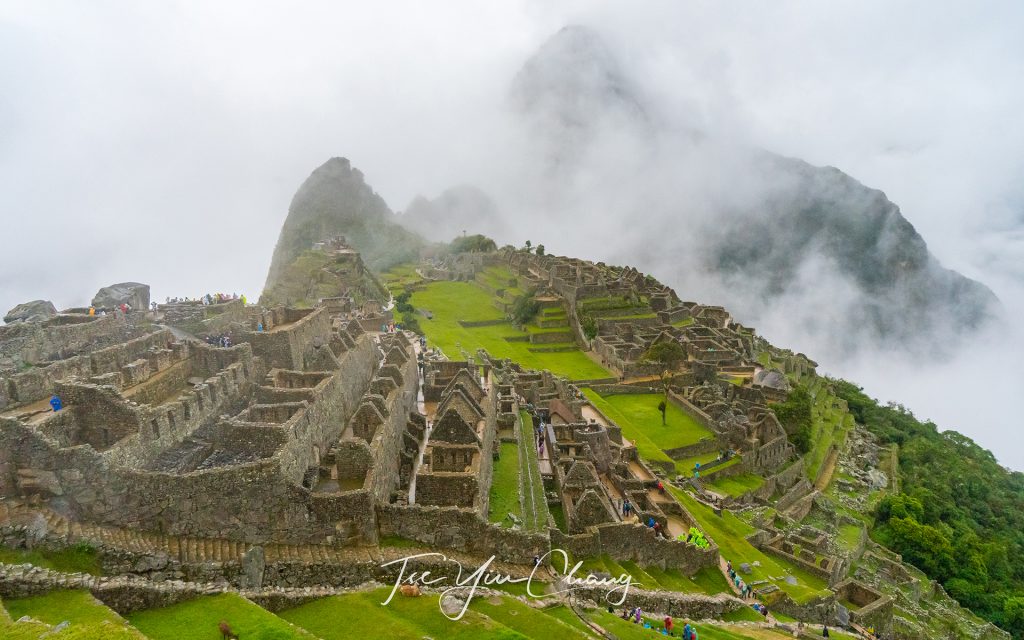
The famous shot of Machu Picchu, view of the main square from the city gate. Huayna Picchu is hidden behind the cloud
The iconic shot of Machu Picchu, view of the main square from the city gate. Huayna Picchu is hidden behind the cloud

Pretty much everyone who visits Peru goes to Machu Picchu at some point. For many people it is the main reason for visiting the country. It is without doubt one of the most recognisable places in the world, and one of the most photographed. It is considered to be one of the new Seven Wonders of the World, as it is one of the most significant pieces of human patrimony.
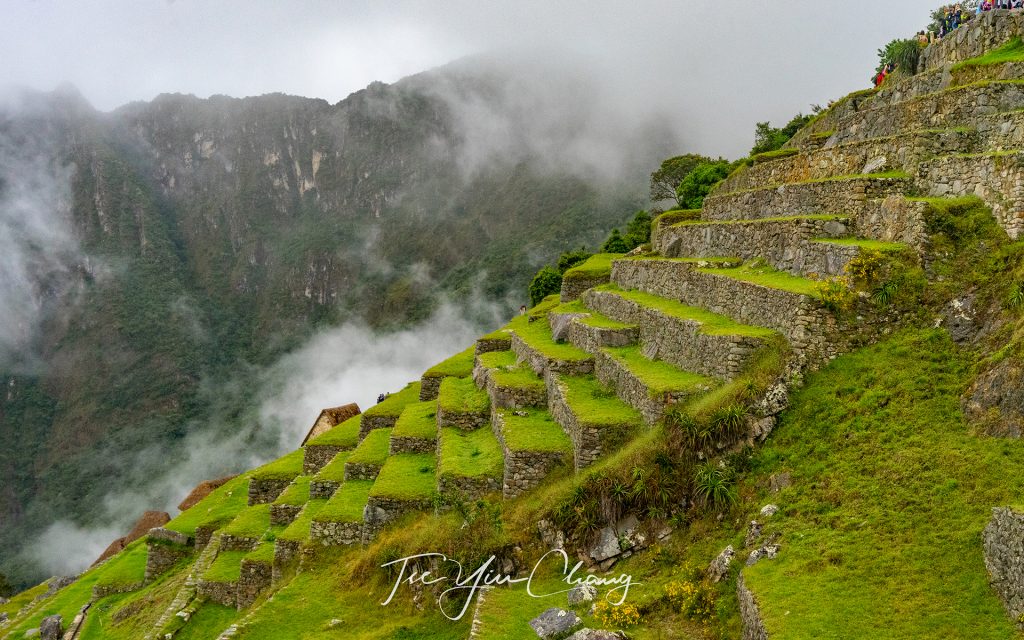
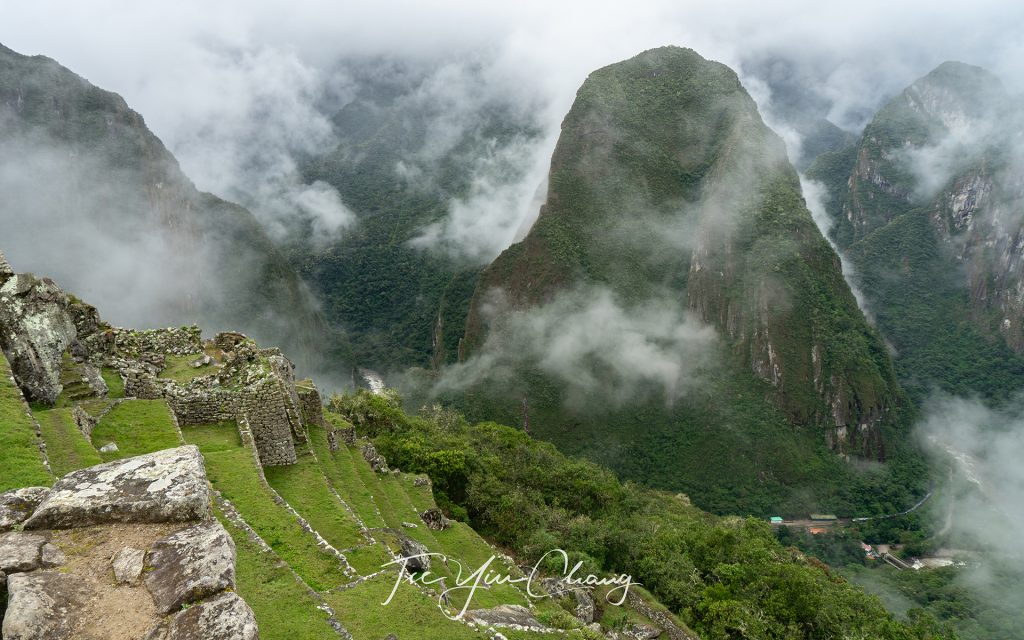
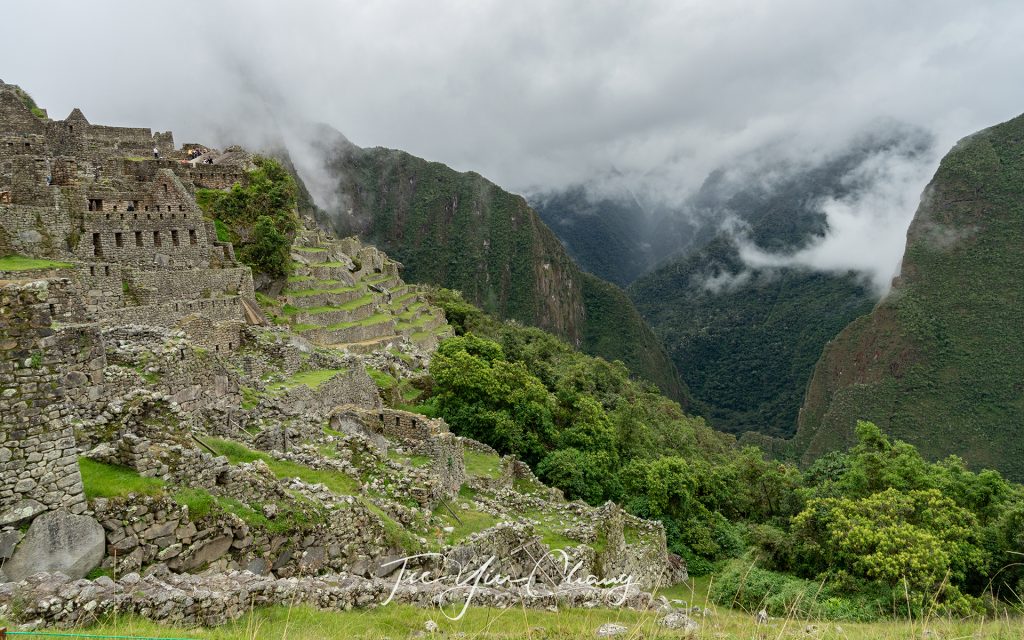
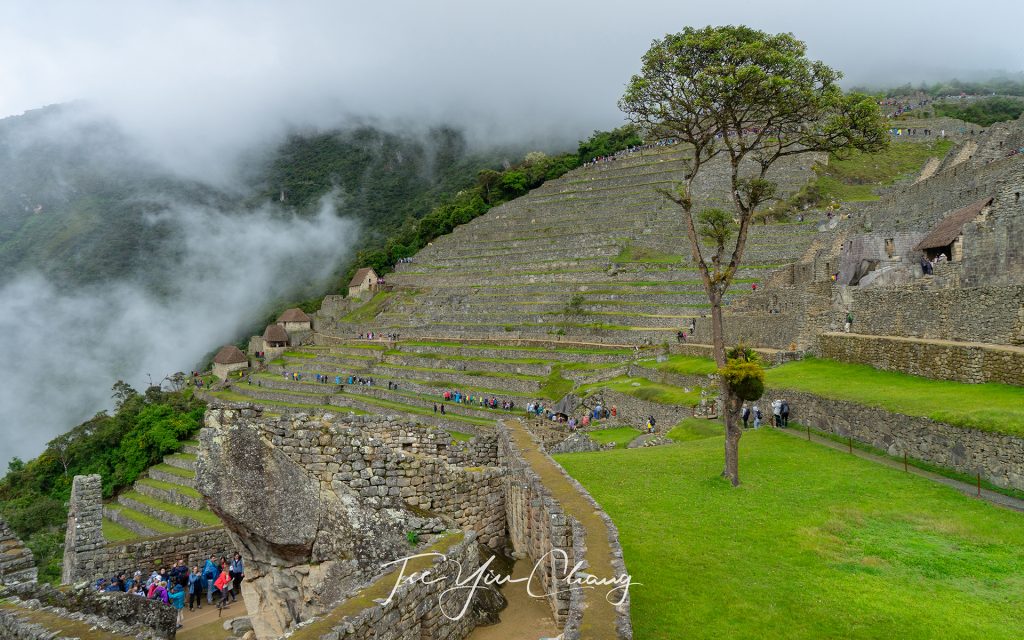
Agricultural terraces, you can more clearly how the terraces were built, amazingly, the Inca managed to carve out their stepped terrace farms even on these near vertical slopes

We too were making our way there, but we had taken the scenic route. We crossed the Altiplano by train and visited several other Inca sites; stopped at Cusco, Ollantaytambo and Pisac among others, and each had been breath-taking and deserving of some of Machu Picchu’s fame. Like everyone else however, we were looking forward to seeing the big one. There is a reason everybody wants to go to Machu Picchu.
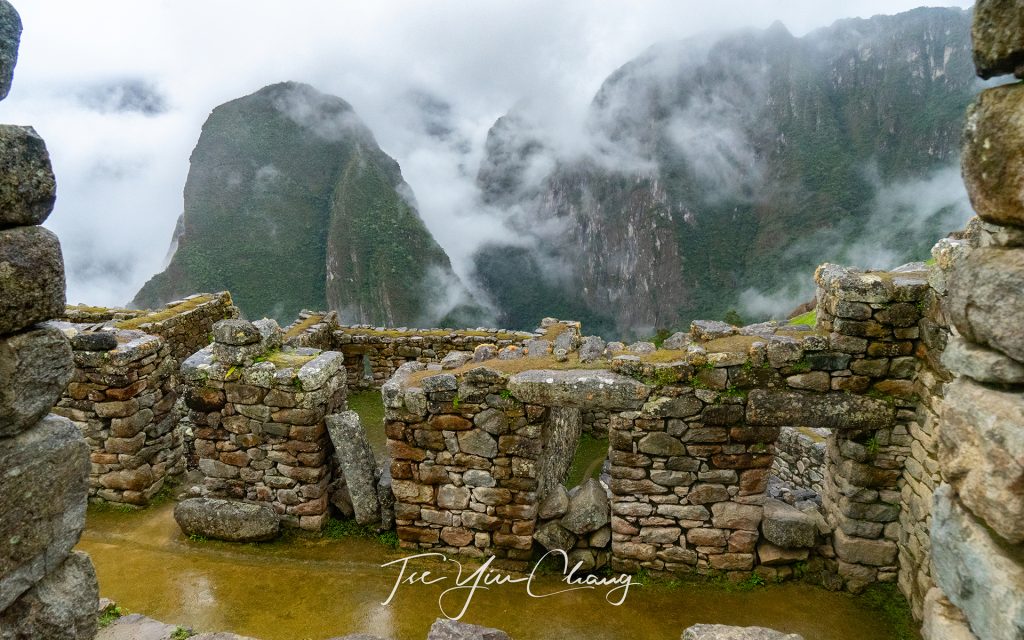
Entrance to the main square

The nearest settlement is Aguas Calientes, and this is where we stayed overnight. After breakfast, we walked over to the tourist information centre where we met with our guide and caught the bus. Guides are mandatory when visiting Machu Picchu, a requirement set by the government. As well as providing visitors with some context, they also help ensure that the huge numbers of tourists are managed (thus protecting the site), and also provides employment for Peruvians. We had got a sense of how huge those numbers were while in Aguas Calientes, but it was rammed home as we waited for the bus. The queue was very, very long.
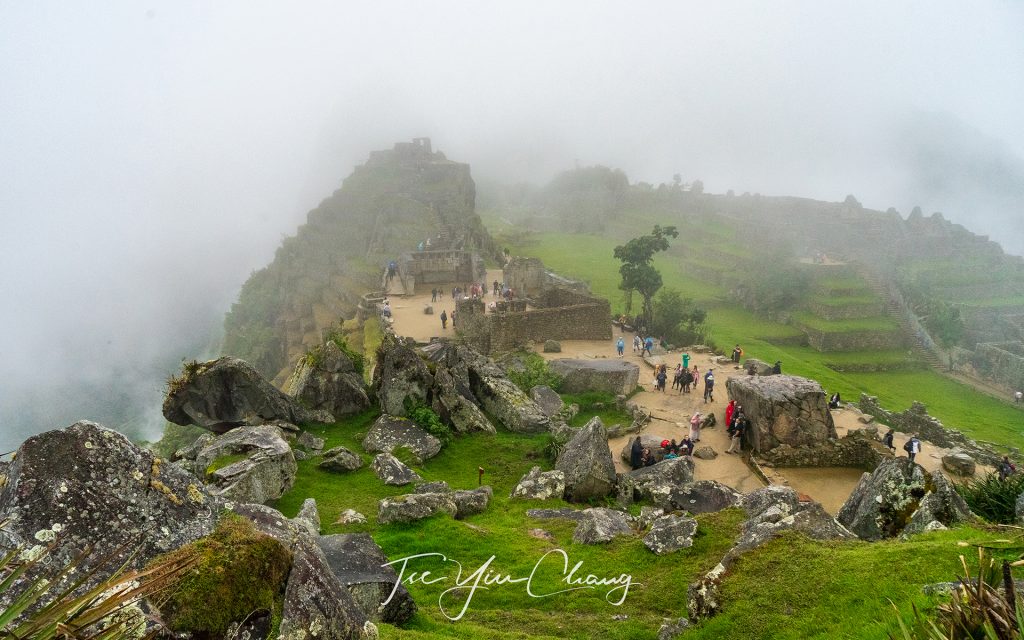
On a clear day you can see a beautiful view of the valley below, this is an abandoned quarry

Machu Picchu is the historic site which gets by far the most attention in Peru. However, for the Inca who built it, this was far from their most important settlement. In fact, it was a relative backwater. The remote location, on the top of a mountain hidden up an inaccessible valley, is what makes it so spectacular, but it also made it a poor place to build a thriving city. Instead (clearly being a man who appreciated natural beauty), the Inca Emperor Pachacuti decided to build a personal estate to give himself a place to retreat from the pressures of ruling. At its height, Machu Picchu had a population of around 750 people, but this probably would have increased when Pachacuti visited.
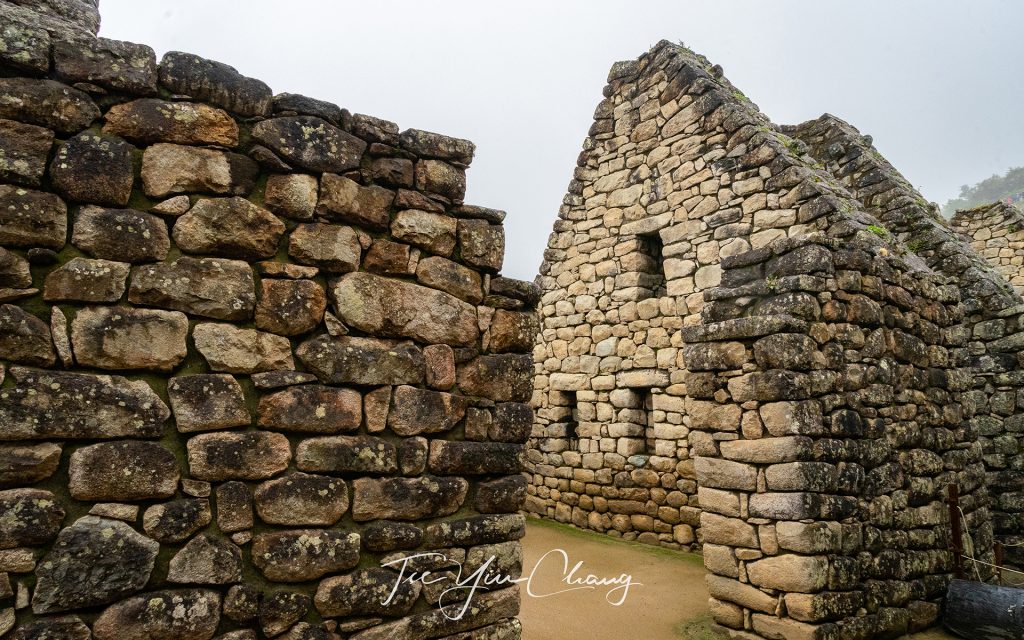
The Palace of the Princess or Ñusta Palace

The weather on the morning we visited was overcast, thus making it the perfect temperature to go climbing up and down steep hills. As we climbed up to the site however, the clouds started moving in and when we reached the top, the rain started. As we wandered around the views were obscured by mist and being a photographer, I knew I was being denied some great shots. Despite this, we weren’t too disappointed because as the mist swirled around the jagged ruined walls, it added to the ethereal atmosphere of the place.
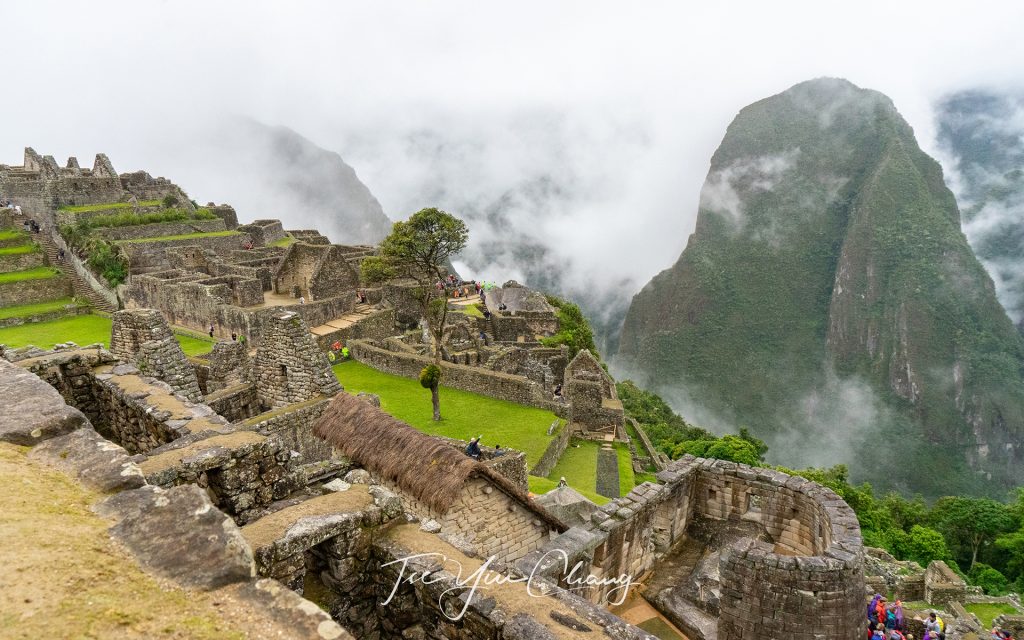
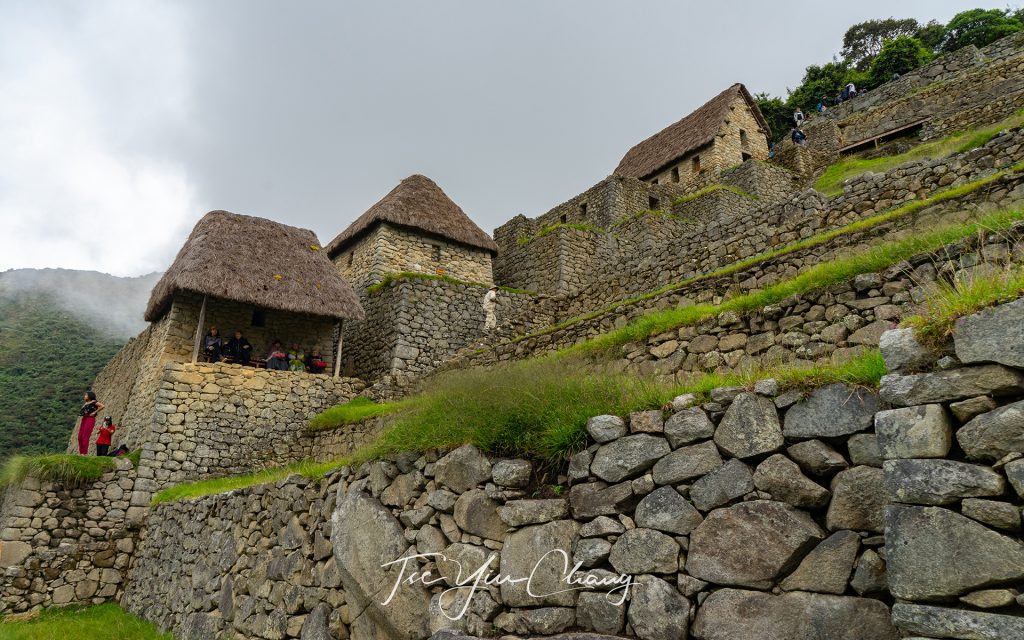
The semi-circular structure is the Temple of the Sun
The semi-circular structure is the Temple of the Sun, Royal Residence behind the thatched roof. You can see the eastern urban sector in the background

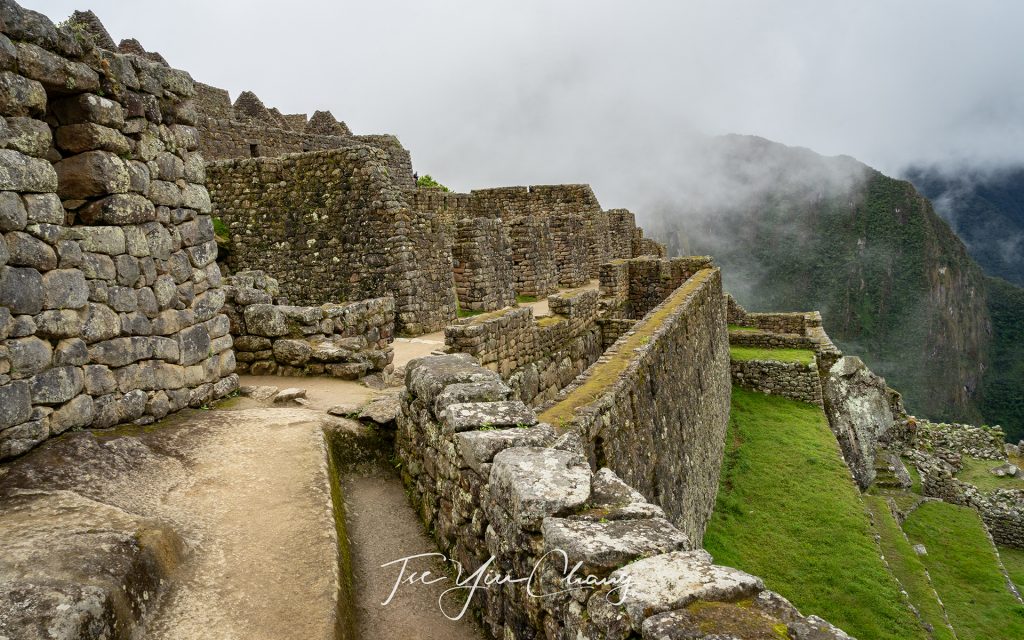
Our guide led us along the increasingly muddy paths which loop around the ruins. She showed us the settlement’s main square, the circular tower (most likely used as an observatory), and the sacred solar clock. We were shown the palace where the emperor would have stayed, the temple of the three windows and then the cemeteries. The upper part of the city is home to the palace and the sacred temples. Just below are the houses that the bulk of the population would have lived in as well as the grain warehouses. Amazingly, the Inca managed to carve out their stepped terrace farms even on these near vertical slopes. As you look down at the valley below, you can still see the stone embankments they built to give themselves scraps of flat land to grow crops on.
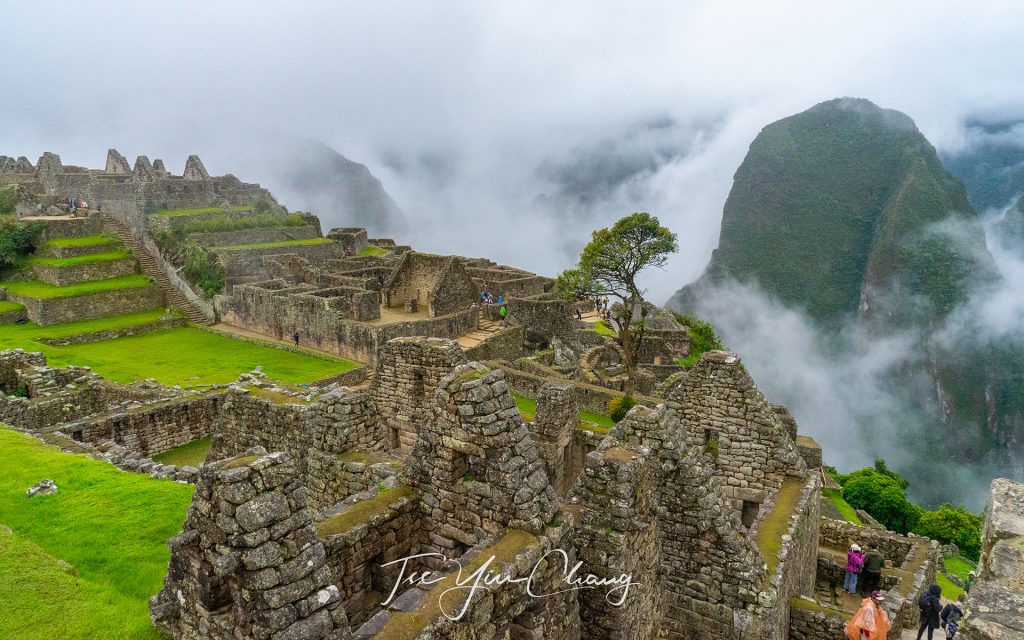
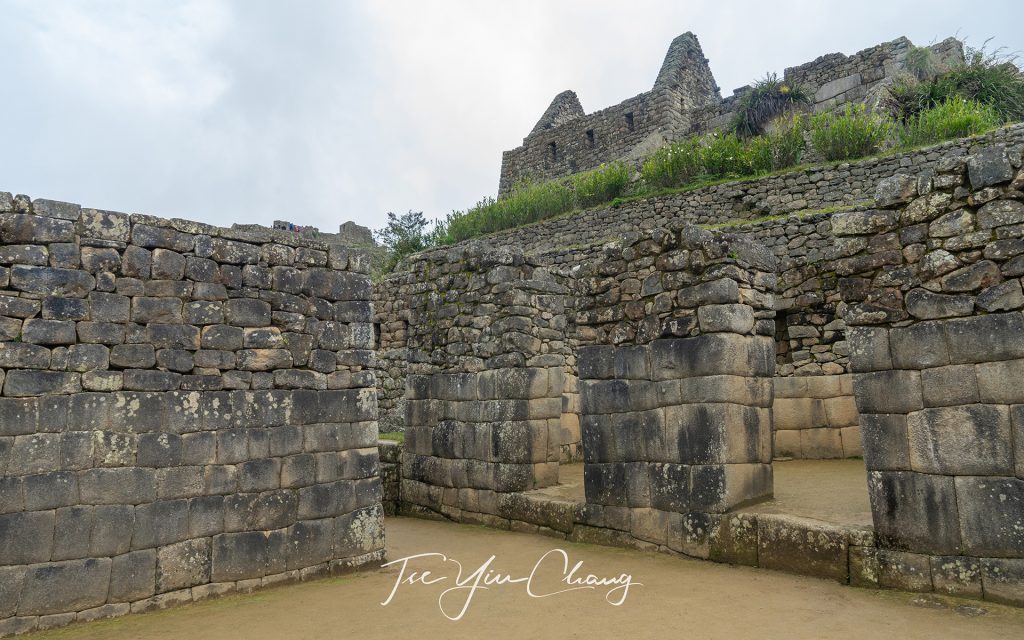
Houses of factories
Houses of factories

Despite the weather and the crowd, the majesty of Machu Picchu is undeniable, and it was clear  that its UNESCO world heritage site status is more than justified. It is a magical, mysterious place that feels like something from a fantasy story. The American explorer,  Hiram Bingham, must have found it even more so when he rediscovered it in 1911. He had the place all to himself (with the exception of his indigenous guide, of course). In fact he would have been one of just a handful of visitors since the site was abandoned by the Inca during the Spanish conquest hundreds of years before.
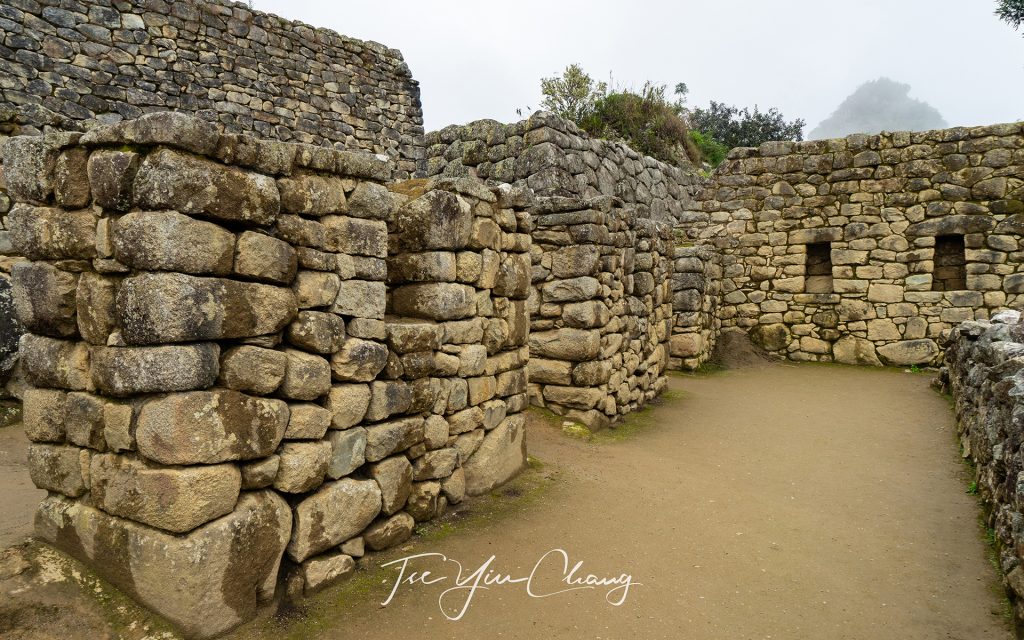
Bingham was a real life Indiana Jones, whose adventures are as fantastical as Machu Picchu itself. Coming from a family of missionaries in Hawaii, he set of for Chile in 1908 for a conference and instead of returning home, decided to wander through the jungles of Peru looking for lost Inca cities. Machu Picchu was not the first that he discovered, he was also the first to document the existence of Vilcabamba, also known as the Lost City of Inca. It was the city where the last Inca emperors hid and mounted a guerrilla campaign against the Spanish. He had heard rumours of another forgotten city, high up in the mountains, and eventually persuaded a villager named Melchor Arteaga from the valley below to take him there. Although others probably visited Machu Picchu before him, he was the first to document it and bring it to the world’s attention.
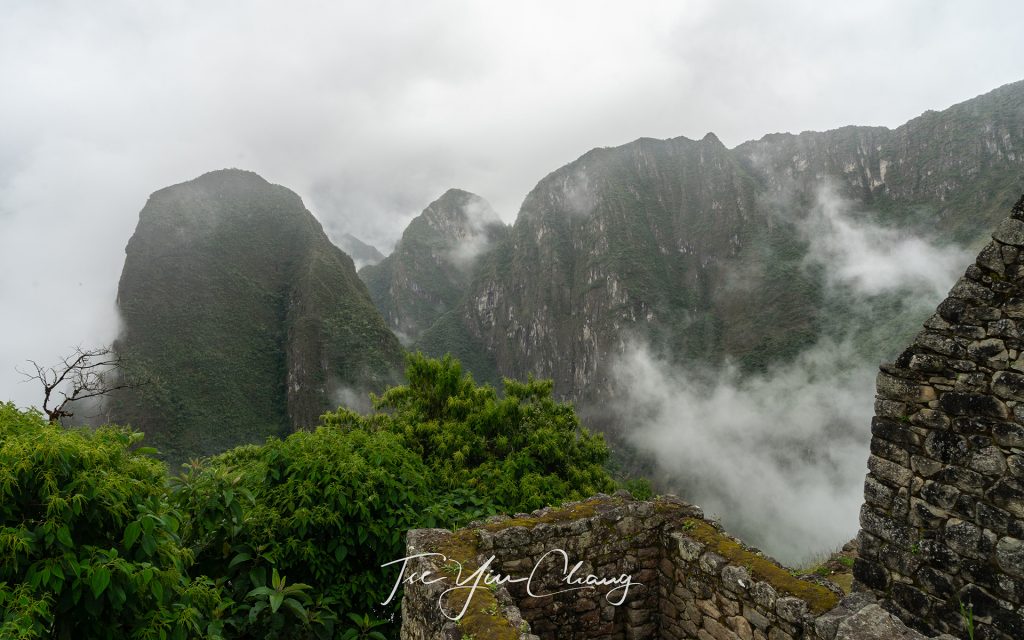
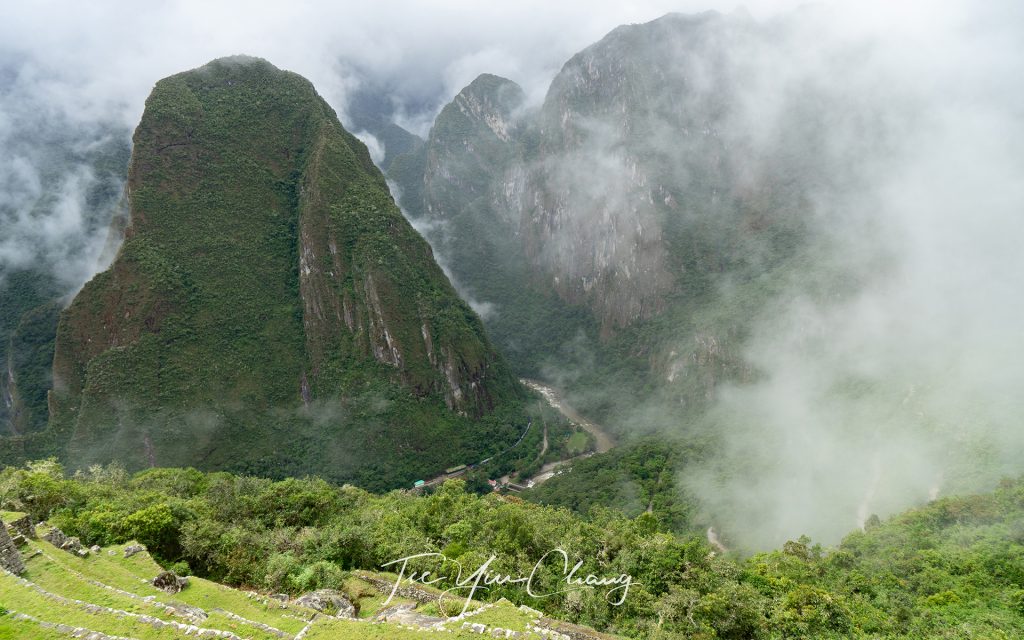
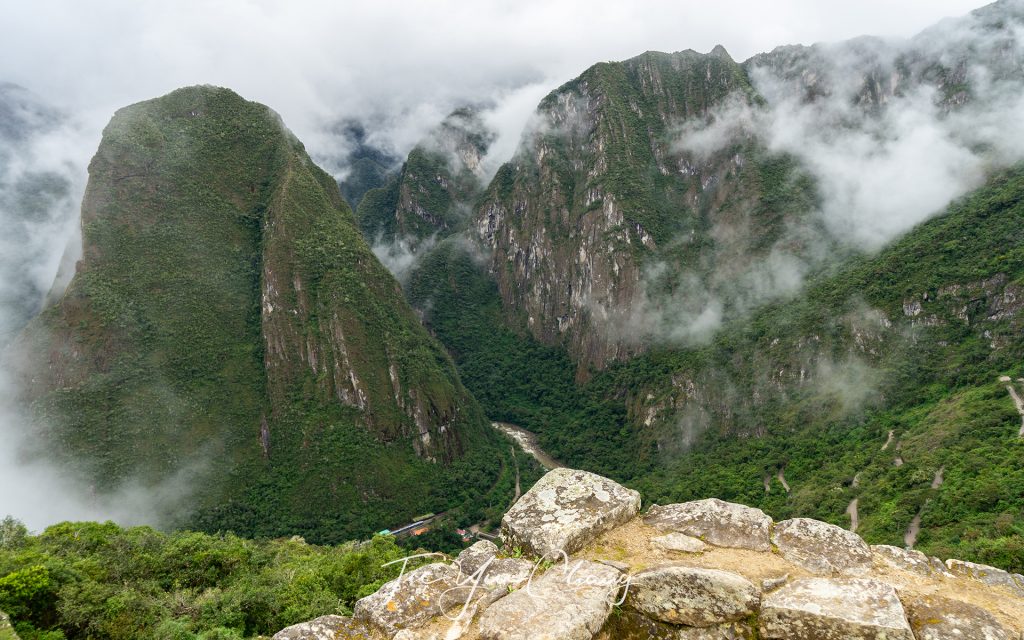
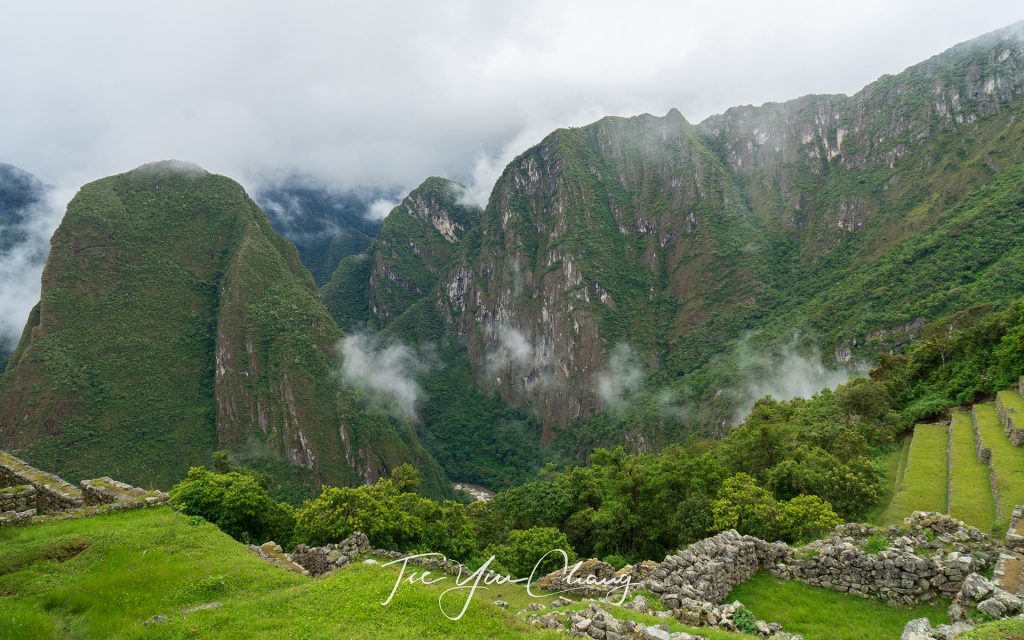
Mysterious yet beautiful view looking down to the valley

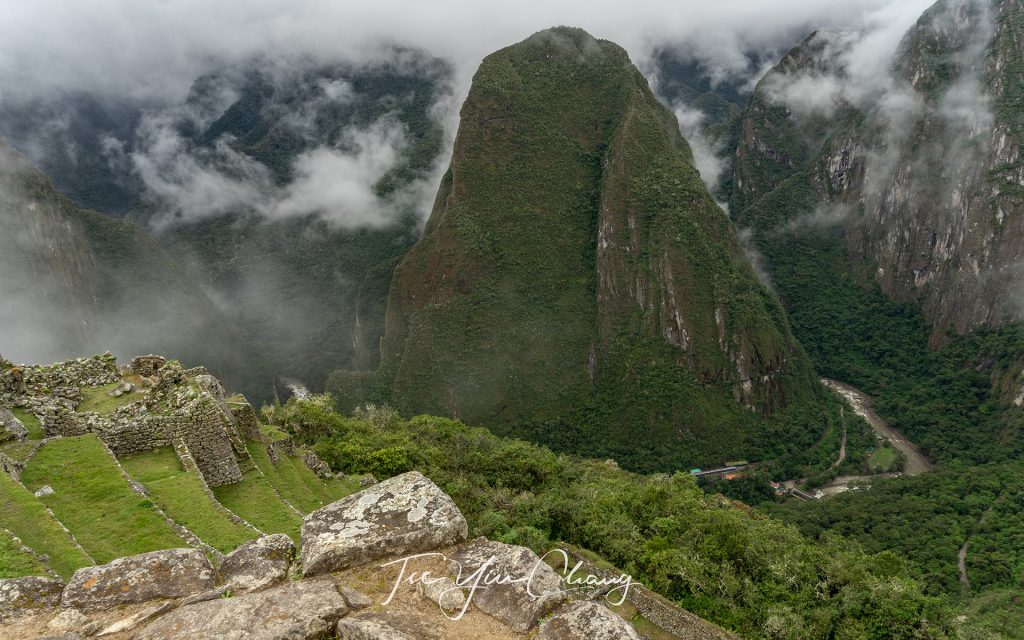
Hiram Bingham took a photo of the site from a viewpoint looking down over it. This is the same famous shot which hundreds of people now take every day. It shows the ruins, the sheer cliff faces on either side, and the equally sheer peak towering behind. This is Huayna Picchu, and if you really want the full experience, it can be climbed as well. To do so, however, you need to book well in advance – its narrow paths only allow a certain number of people at a time, and so access is controlled by the Peruvian Government. If you want to climb it, you have to book at least three months ahead.
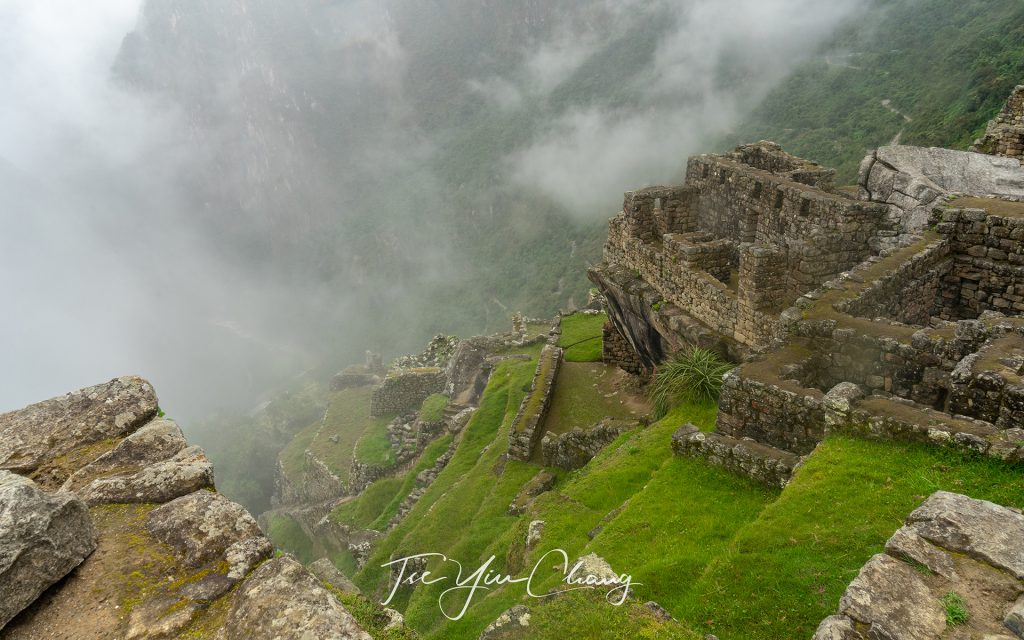
Steep terraces, looking down from Intihuatana

Another measure imposed to limit the impact of the huge number of visitors Machu Picchu generates, is to limit the time you can spend there to a maximum of four hours. If you really wanted to, you could spend a whole day up there taking it all in, but four hours is long enough to see everything, so we didn’t feel deprived. At around midday we headed back down to Aguas Calientes and enjoyed some lunch. Then we wandered around the souvenir markets while we waited for the late afternoon train back to Ollantaytambo. There, we met our driver and headed back to Cusco. While the weather had been against us, that couldn’t take away our delight at having visited such an awe inspiring place.
See also:

  • A journey through the picturesque Andes by rail
  • Exploring the capital of the Inca Empire – Cusco
  • Sacred Valley – the gateway to Machu Picchu
Agricultural terraces
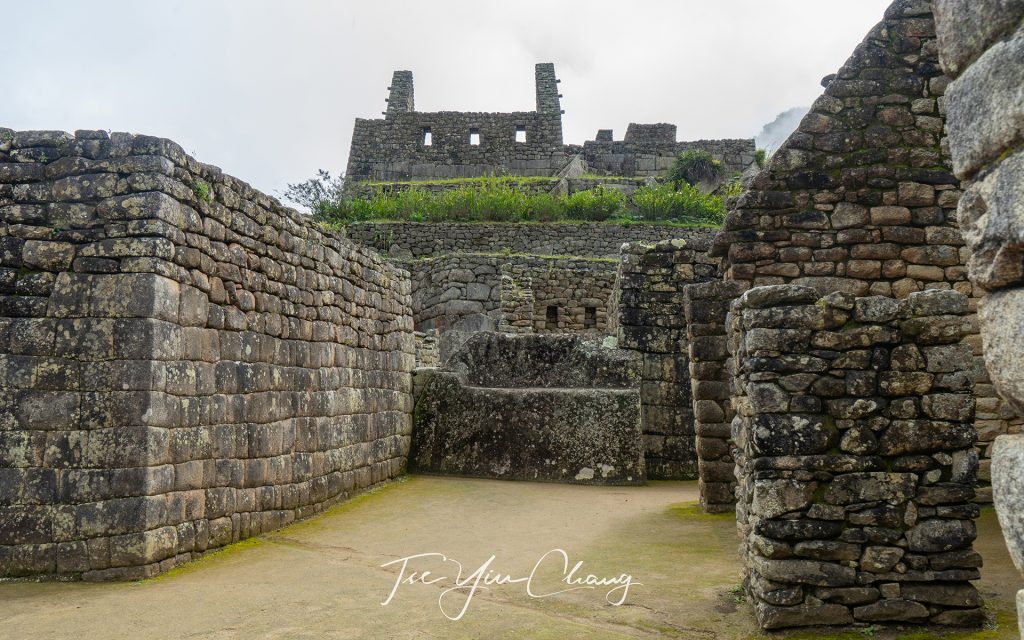
Looking up to the Temple of Three Windows
Picturesque Huayna Picchu and the Urubamba Valley and river
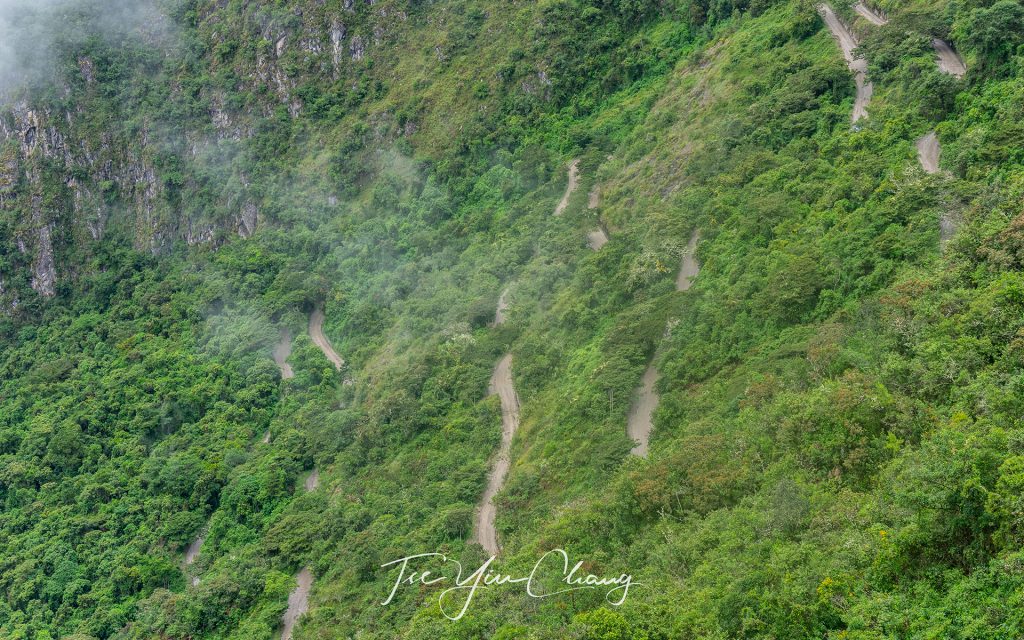
This is the winding road we took from Auas Calientes going up to Machu Picchu
The main urban area consists of houses and factories
Huayna Picchu
Huayna Picchu
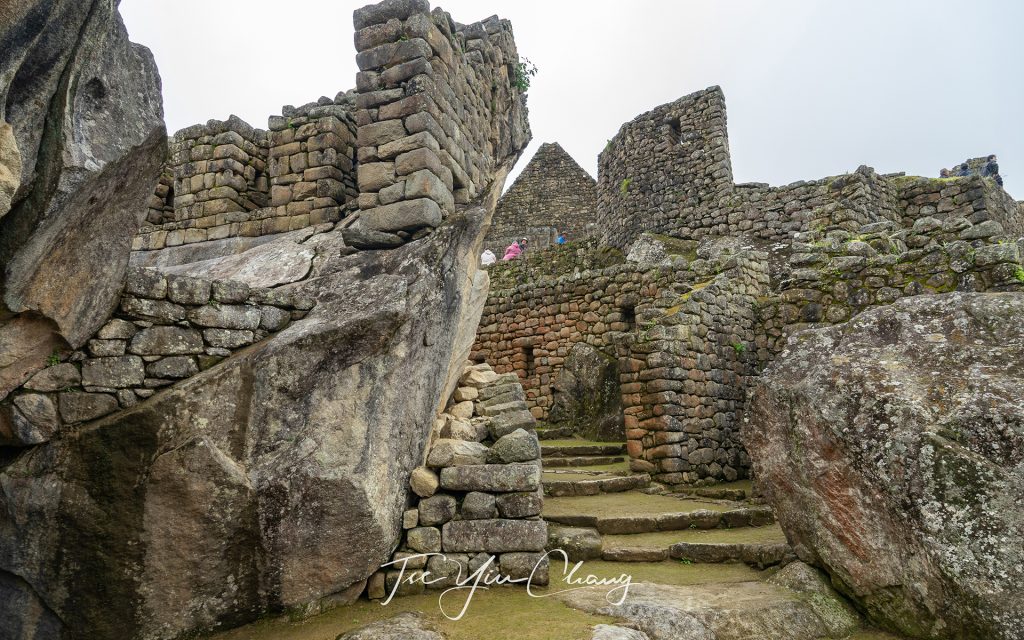
The Temple of Condor is a fine example of Inca stonemasonry, where they skillfully shaped it into the outspread wings of a condor in flight
The prisoners area
The prisoners area
House of the Guardians
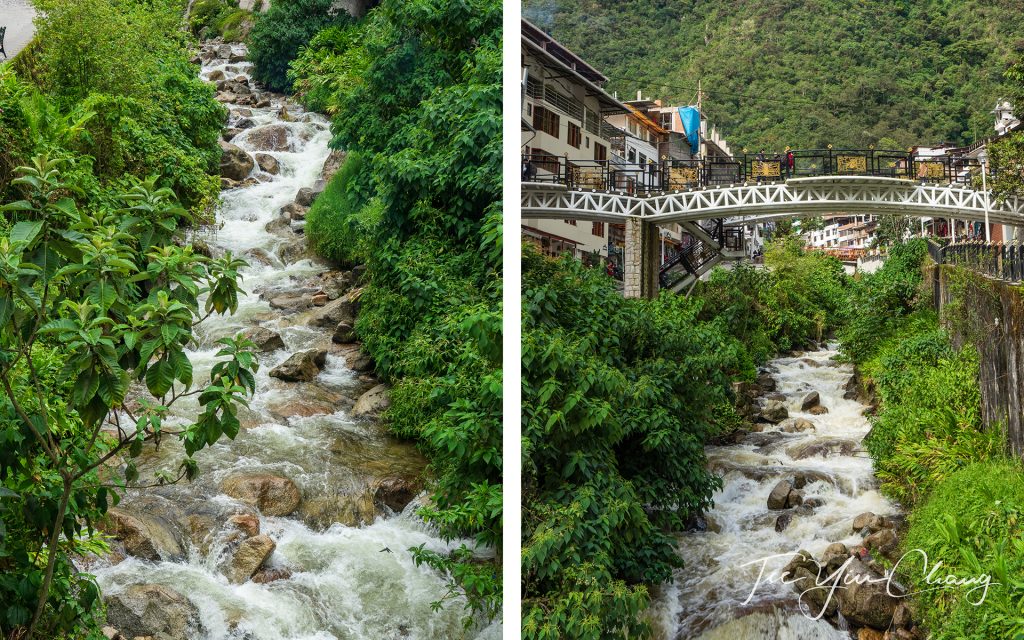
Aguas Calientes, which means hot waters in Spanish, is often referred to as Machu Picchu Town
Aguas Calientes is a town in the Urubamba River Valley

Filed Under: Blog, Photography, Portfolio, Travel Tagged With: altitude, inca, machu picchu, peru, sacred valley, south america, spring, UNESCO

Sacred Valley – the gateway to Machu Picchu
13 December 2019 by tadgraphics

The Sacred Valley was one of Inca's most important places
The Sacred Valley was one of Inca’s most important places

Peru’s southern highland provinces are so packed with the ruins of Inca civilisation that sometimes it feels you can’t go anywhere without stumbling across one. It is only by visiting them and seeing for yourself the sheer number of constructions and the skill that their builders possessed, that you can appreciate the advancement of the Inca civilisation. At its height, it covered as many territories as the Roman Empire, and despite their eventual defeat to the Spanish, you can’t help but feel that in terms of power and sophistication, they were close rivals to the Europeans of the time.

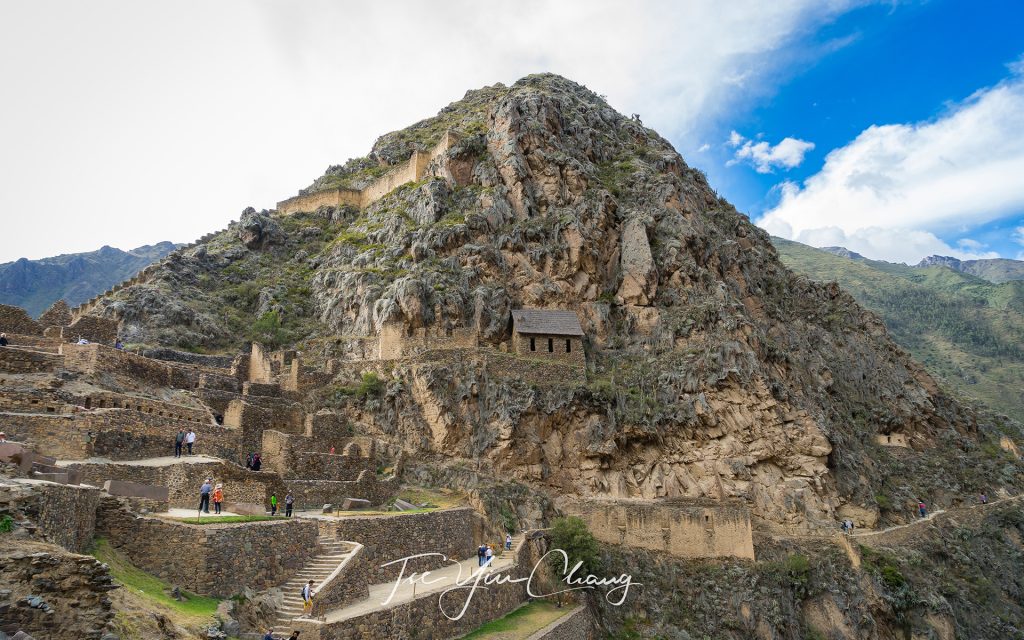
It is only by visiting and seeing for yourself the sheer number of constructions and the skill that their builders possessed, that you can appreciate the advancement of the Inca civilisation. This is Ollantaytambo Ruins

We had just taken in Cusco, their empire’s capital, and were planning to make our way to Machu Picchu. It was tempting to head straight there, but between these two sites is a place nobody should miss. The Sacred Valley of Urubamba was one of the Inca’s most important places and, as such, it has a particularly high number of impressive ruins. We decided to take a day taking in the sites of the valley.

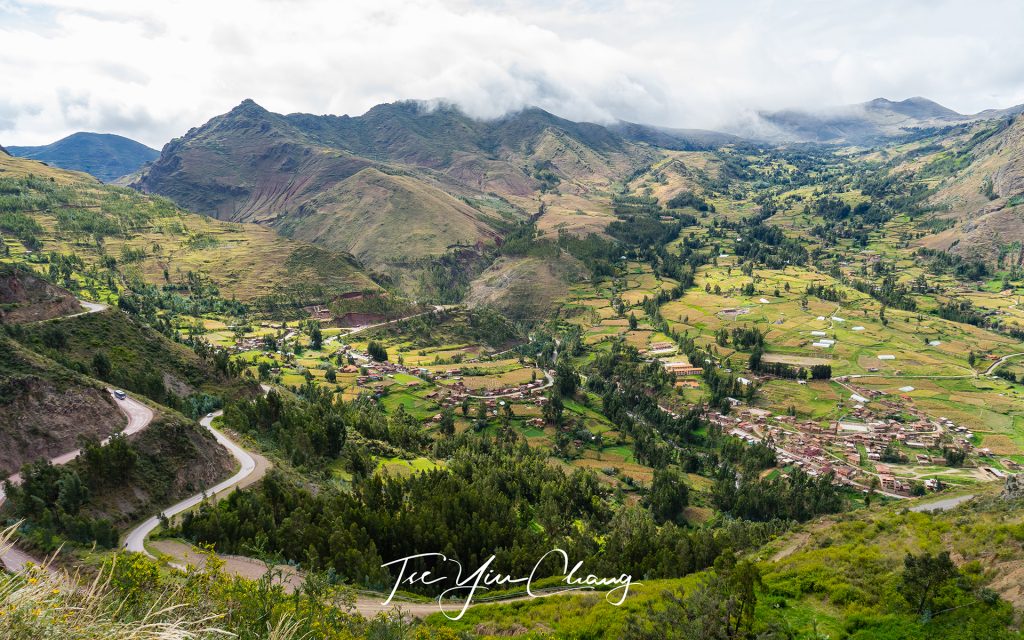
Pisac is located at a strategic position at the head of the Sacred Valley

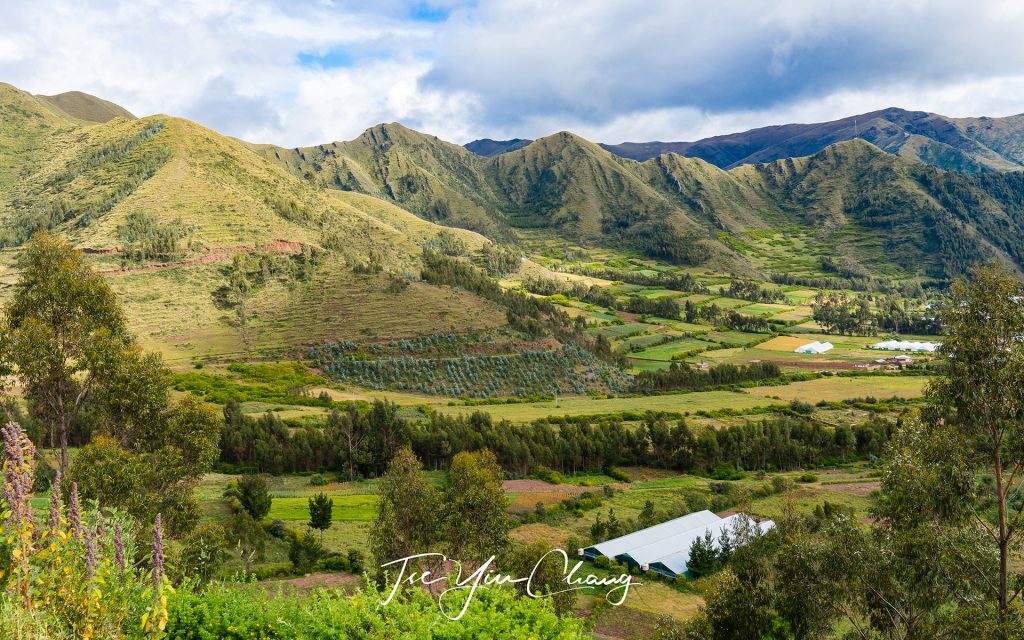
This valley was important to the Incas, not just because of its proximity to their capital, but also due to the relatively lower altitude. In a place as high up as this part of Peru, this is a rarity. Because of this, the valley could be farmed more intensively than elsewhere, and corn, an uncommon and important status food for the Inca elites, could thrive. Its fertility was aided by the Urubamba River which flows along the valley floor. As the valley grew in importance, several towns sprung up and the valley became one of the favoured retreats for the elites and the emperor himself. The rich and powerful started to build large estates for themselves, so that they could escape from the city to relax from time-to-time.

View of Pisac town from the archaeological park

Our first stop was Pisac, located at a strategic position at the head of the Sacred Valley. The small town of Pisac is still inhabited by the Quechua speaking descendants of the Inca. During the height of their ancestor’s empire however, it was a thriving town, so large that its remains are spread out across four separate complexes.

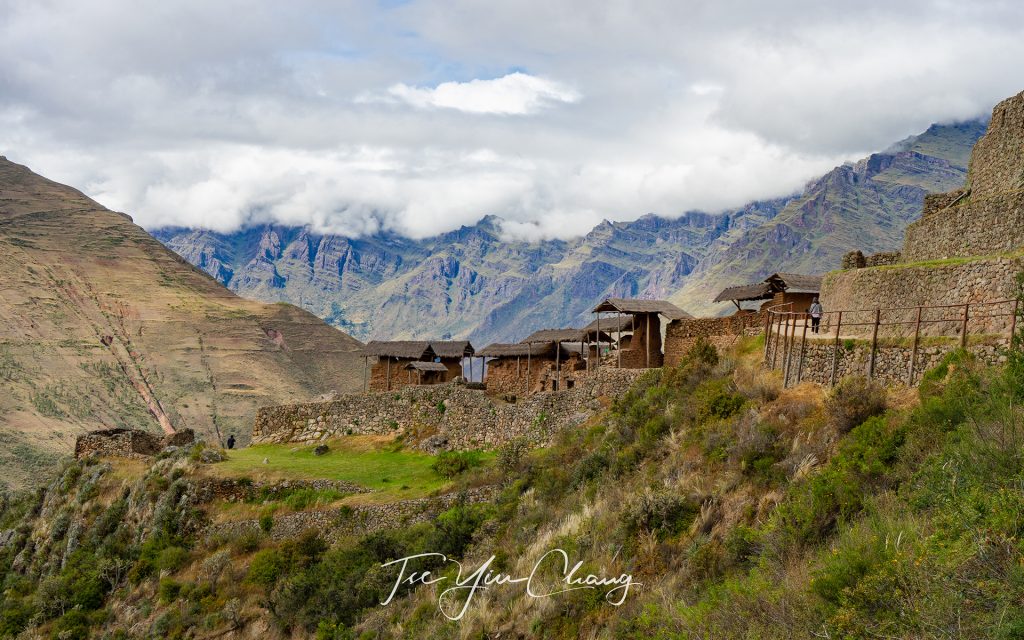
Kinchuraqay, perched precariously on the side of the hill, were grain stores where precious corn was kept

Pisac’s main purpose was to guard the southern end of the valley, protecting both its precious agricultural land, and the heartland around Cusco from invaders. It is theorised that the main threat were the Asháninka people who lived down in the jungle on the eastern foothills of the Andes. These people resisted Inca conquest fiercely and may have launched raids up into the mountains.

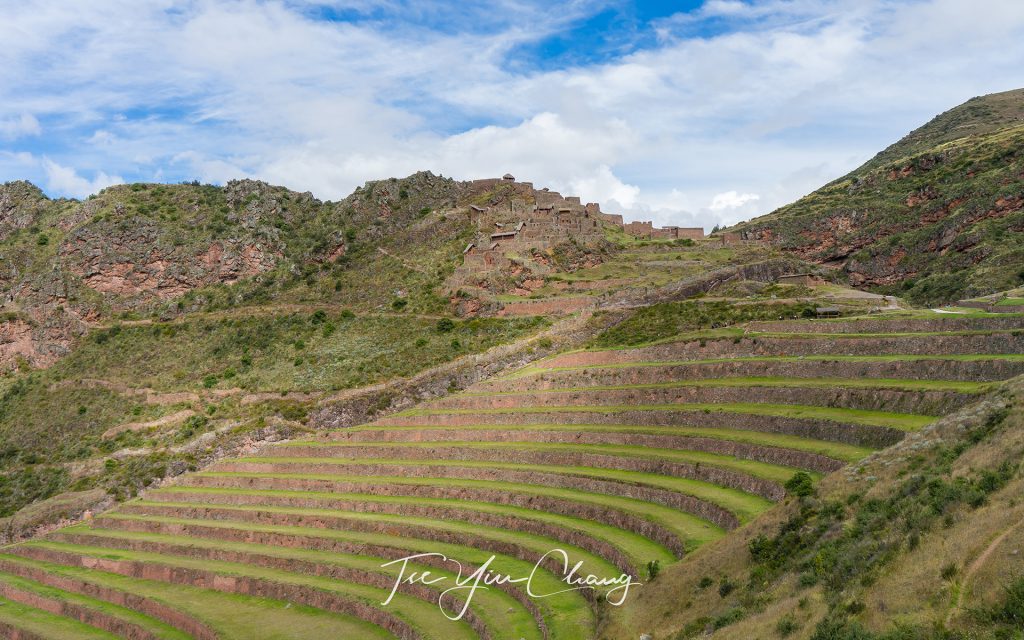
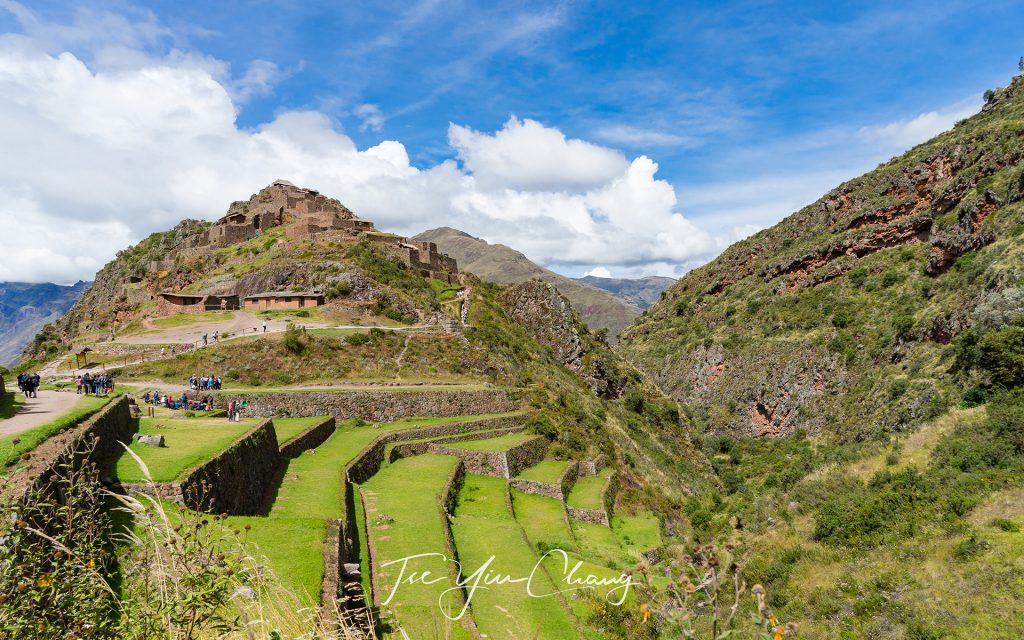
The Inca carved out dramatic terraces from the hillside to be used for agriculture, you can see Intihuatana sun temple at a distance

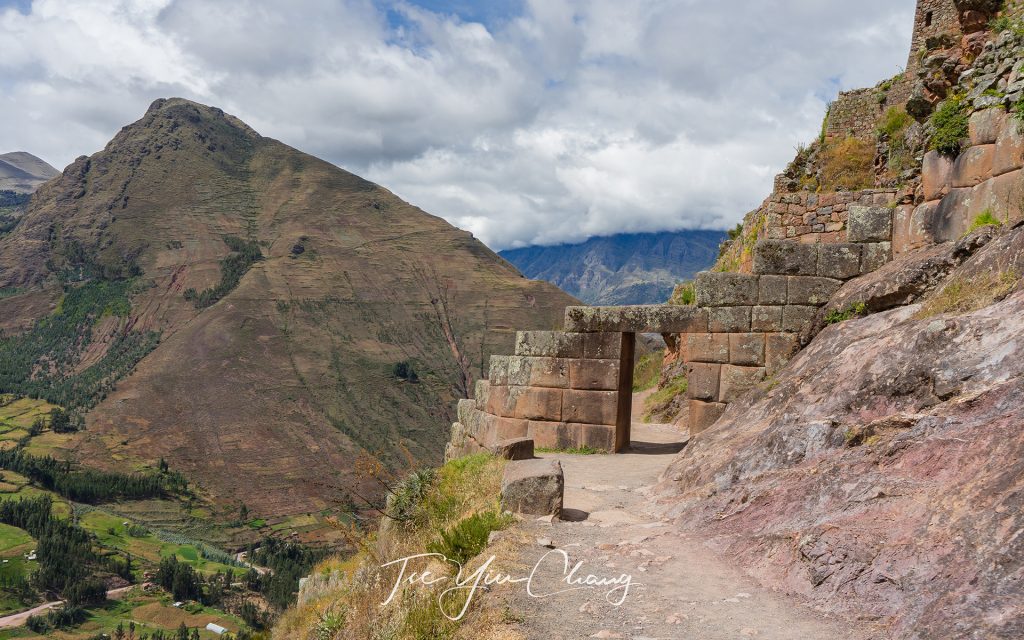
Pisac’s main attractions can be found up in the hills overlooking the village from the north. The first site we visited was Intihuatana – the sun temple. Inti was the favourite god of the Inca and he was associated with the sun. Here the name refers to the temple as a whole, but there are many Intihuatanas in Peru, and usually they take the form of a sacred stone which, when combined with the light of the sun, functioned as a type of clock or calendar. This one aligns with the sun during the June solstice, and within the temple there, is also an altar and a sacred spring. The temple is another fine example of the famous Inca stonework on display. Its location high up on the ridge gives it commanding views of the valley below.

Agriculture terraces and Intihuatana - the sun temple. Pisac is one of Peru's biggest archeological site
Agriculture terraces and Intihuatana – the sun temple. Pisac is one of Peru’s biggest archeological site

A little further down the slope is Q’allaquasa. This was the main Inca settlement where the majority of the ruins are of the houses which were occupied by the settlement’s ordinary inhabitants. Despite not being grand constructions, they are still impressive thanks to their position on the crown of a hill. To maximise the land available for agriculture, the Inca carved out dramatic terraces from the hillside, reminiscent of those in Eastern Asia. These still exist today, and some of the most impressive surrounding Q’allaquasa.

Inca doorway, marking the entrance to the sun temple

The final site we saw at Pisac was Kinchiraqay. Perched precariously on the side of the hill, these red stone buildings were the grain stores where precious corn was kept. Stacked one on top of the other, their charm is completed by the sloping thatched roofs, and as with almost every site in the Sacred Valley, the sweeping views their position gives.

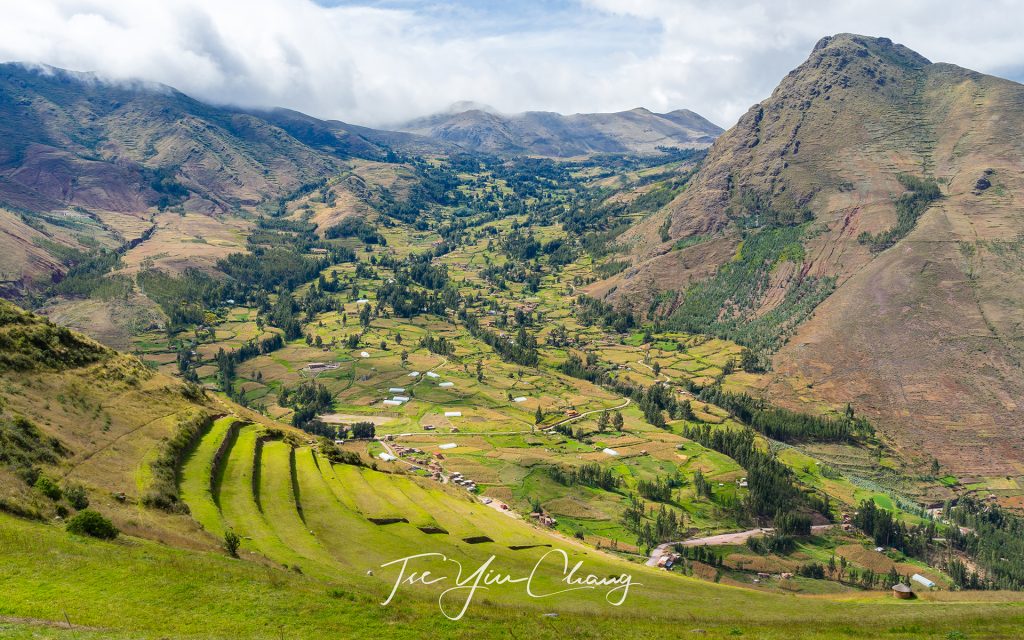
Pisac is an important argricultural hub due to its climate and fertile soil

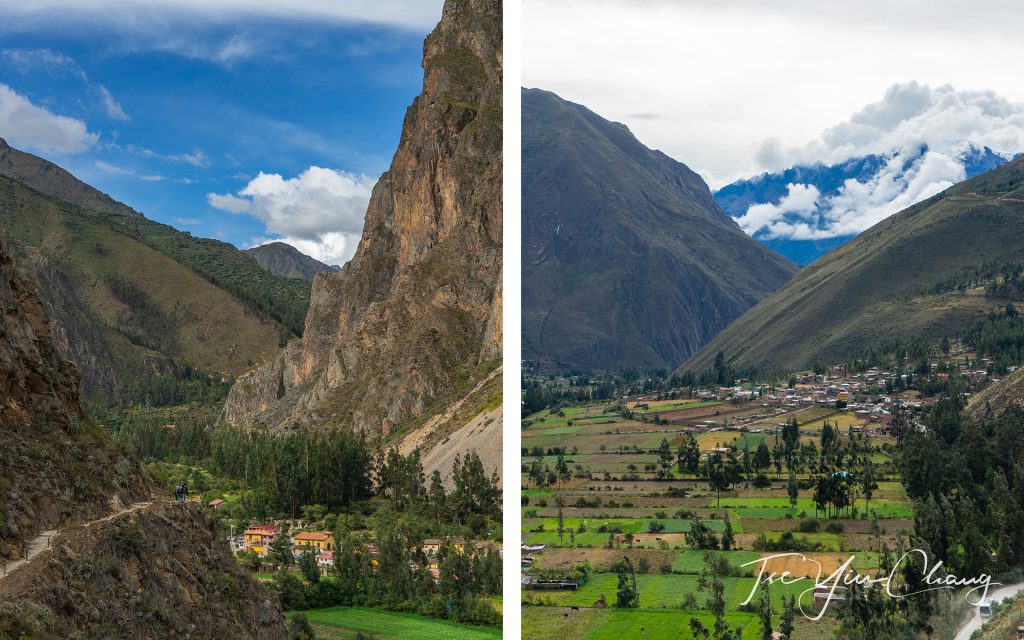
We moved on towards the town of Urubamba for lunch. Urubamba is one of the larger towns in the valley with a population of less than 3,000. It is situated at a spot where the valley opens up and provides enough space for a town, as well as for agriculture. On our way there we were treated to more of the valley’s striking scenery. Following the river along the valley floor, we were treated to an endless procession of pastoral fields bounded by towering peaks.

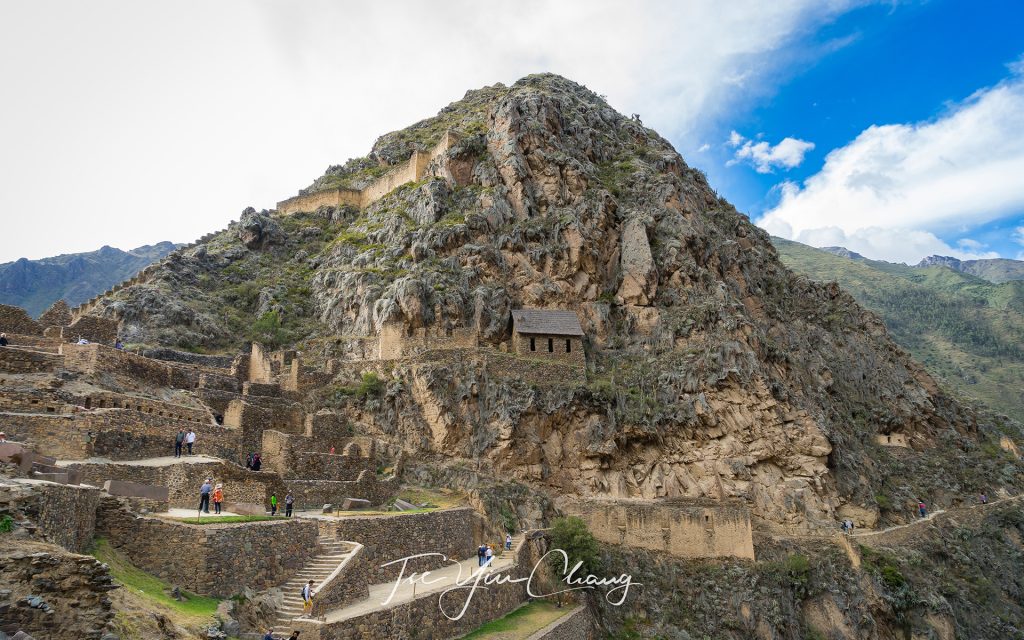
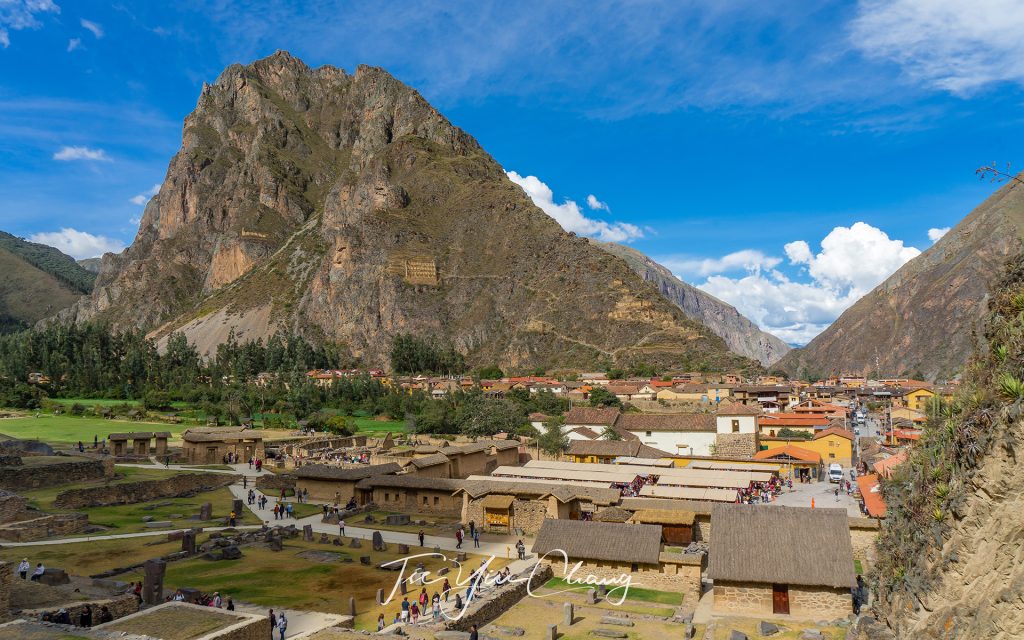
View of Ollantaytamboo old town from the ruins

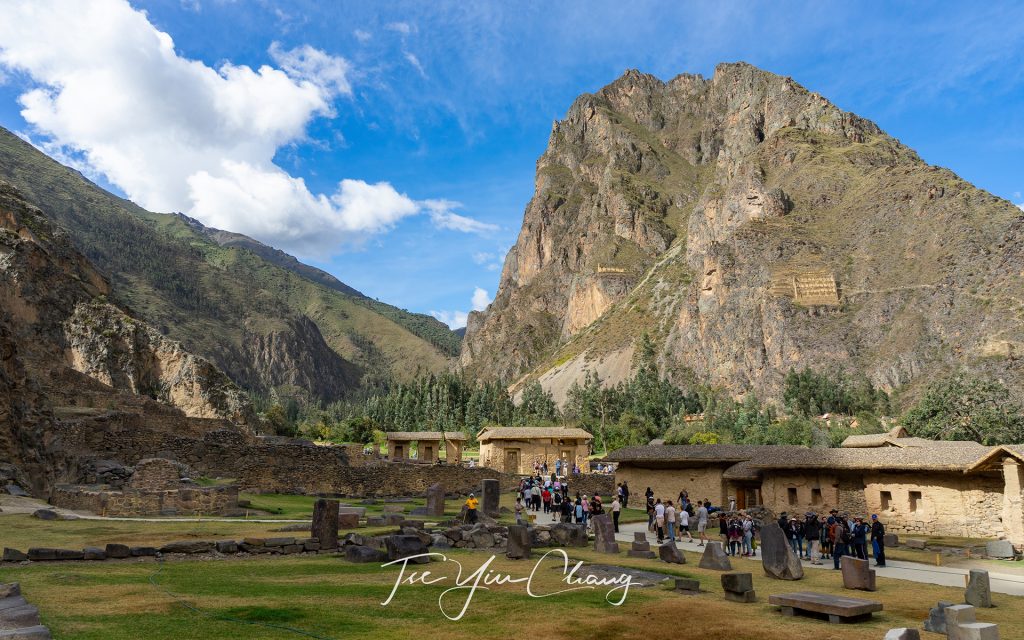
After lunch we continued up the valley until we reached the region’s other major set of ruins. Just as Pisac guards the southern entrance to the valley, Ollantaytambo, also known as Ollanta by the locals, was designed to stop potential attacks from the north. The site was occupied long before the Inca arrived, however it was Pachacuti, considered as the most successful Inca emperor, who really transformed it into a significant place. He decided to set it aside as his personal estate after he had brought it into the empire.

The well-preserved Ollantaytamboo was once a stronghold of Inca resistance to Spanish colonisation

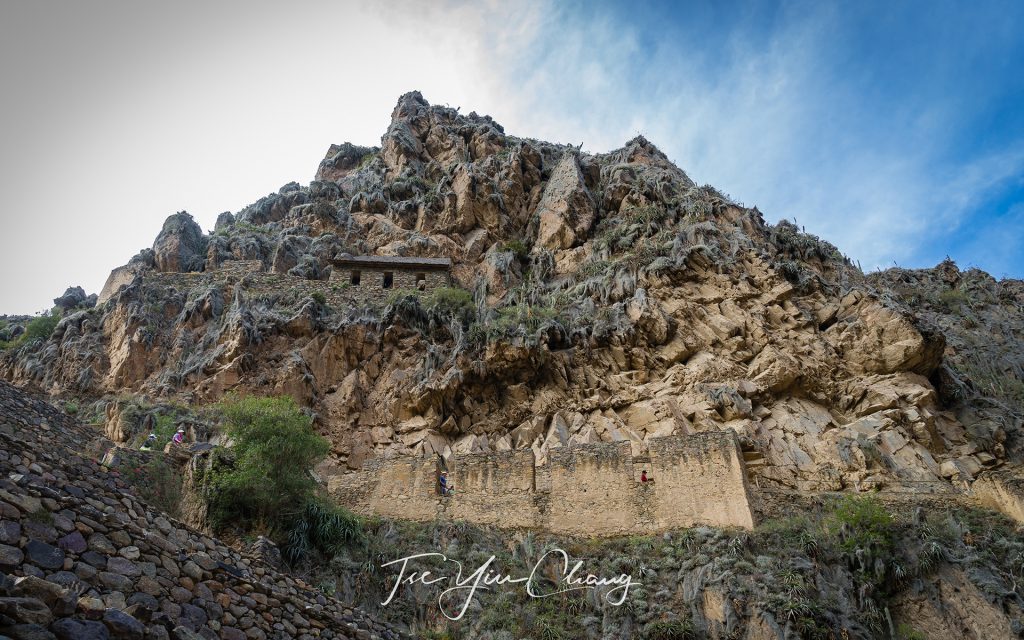
Here he constructed temples, defences and agricultural terraces, prompting the development of a town to house the workers of his estate. That town was largely demolished by the Spanish, but the rest of Pachacuti’s work has been preserved, albeit in ruined form. It is not hard to picture how grand this place must have been, despite its abandoned state.

Ollantaytamboo looking across to Pinkuylluna mountain (right). If you look closer you will see the face of Wiracocha carved into the rocks. The Incas believed he was the creator of all. Next to it you can see the Pinkuylluna Incan storehouses, used to store agricultural crops to feed the town

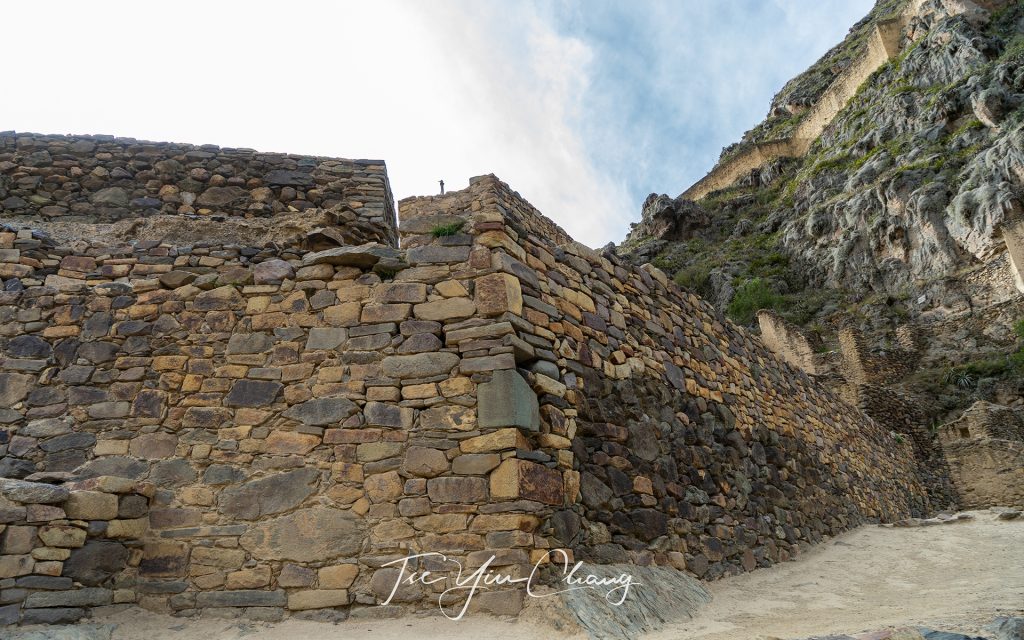
The famous and impressive Inca stonework is on display everywhere, and some buildings are almost complete, apart from a lack of roofs. Structures like the wall of the six monoliths, which forms part of the temple complex, demonstrate the highly developed engineering skills that the Inca possessed. Built from stones weighing more than fifty tonnes each, it’s a mystery how they managed to drag them up to this inaccessible spot. Archaeologists believe that the temple was never actually finished, and it is thought that Ollantaytambo was in the midst of a renovation when the Spanish turned up and terminated the construction.

Another example of the famous and impressive Inca stonework on display at Ollantaytamboo

Clearly its defences turned out to be of no use against the Europeans, but that doesn’t mean that they were not formidable. Smaller fortifications dot the hills around the main site (as do grain storehouses and quarries from which the building stone was obtained), and the Inca even diverted a stretch of the river so that it ran across the valley floor rather than along it. This gave invaders another obstacle to navigate. Like at Pisac, the hills leading up to the ruins have been extensively modified to create stepped terraces, and while those at Pisac are bigger, these are unquestionably neater.

The Incas possessed highly developed engineering skills

We were dropped at the Ollantaytambo Station in the afternoon and boarded the train to Aguas Calientes. If it wasn’t for the fact that this is the closest settlement to Machu Picchu, this town would be of little importance, hidden away between the towering mountains. Much of the town has been given over to the tourism industry, and its streets are packed with visitors.

Ollantaytamboo is the beginning of the Inca Trail to Machu Picchu

While the landscapes of the Sacred Valley are spectacular, Aguas Calientes is further up into the Andes, and, its setting is even more dramatic. The slopes are like walls, and the flat space beside the river where buildings can be constructed is limited. The result is a small, but bustling town, wedged improbably into every available bit of space. It was a pleasant enough place to spend the night, but like everyone else there we were more excited about what tomorrow had in store for us – the ruins of Machu Picchu.

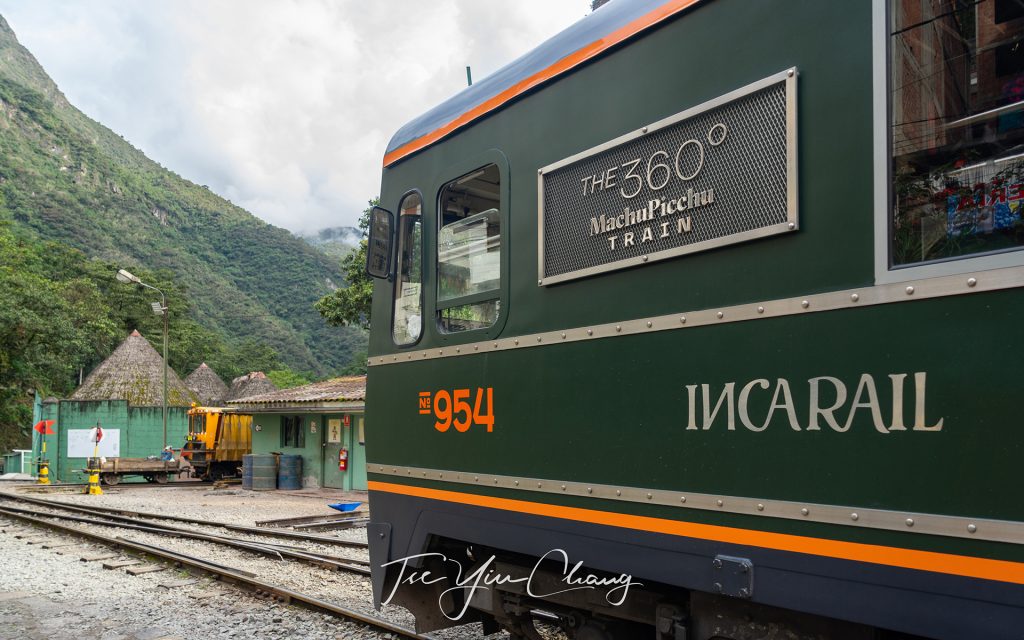
The scenic IncaRail 360o Machu Picchu Train has an observation outdoor carriage for travellers to admire the Andean landscape

See also:

  • A journey through the picturesque Andes by rail
  • Exploring the capital of the Inca Empire – Cusco
The IncaRail 360o Machu Picchu Train is one of the most panoramic journey in Latin America
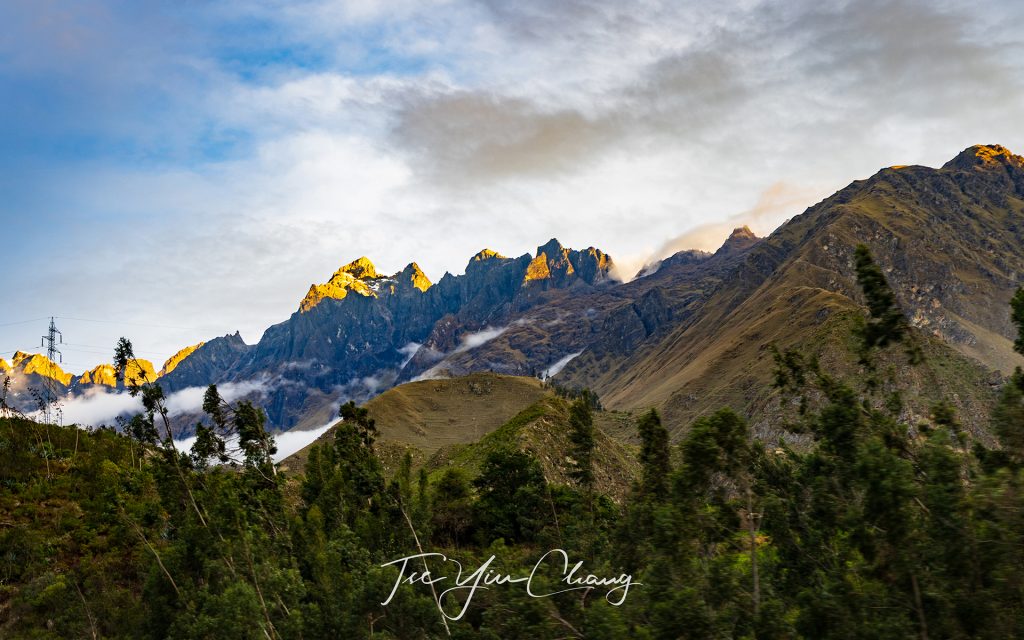
There were still snow on top of the mountains
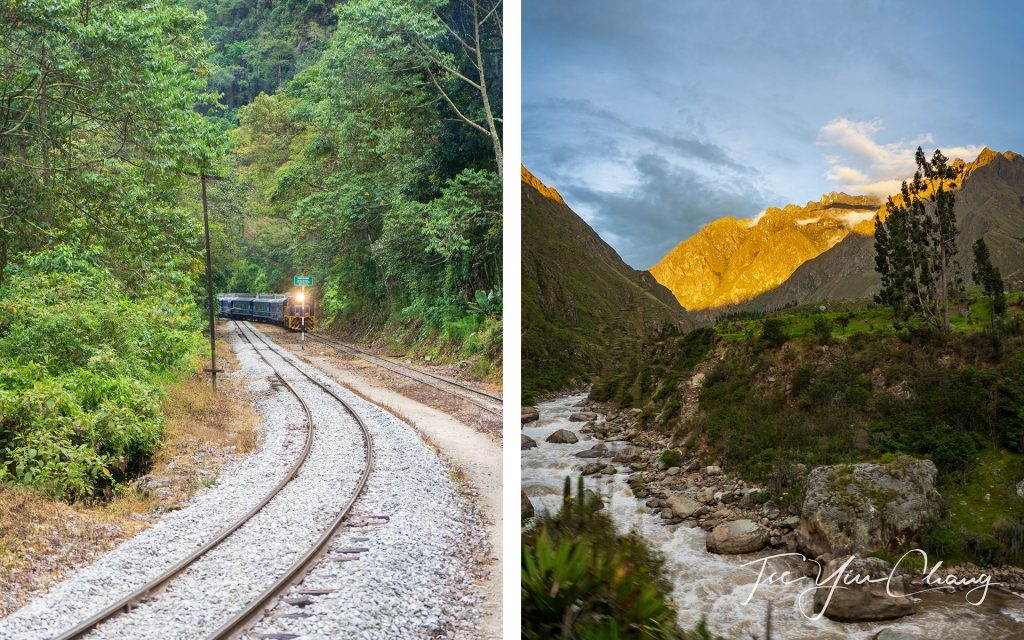
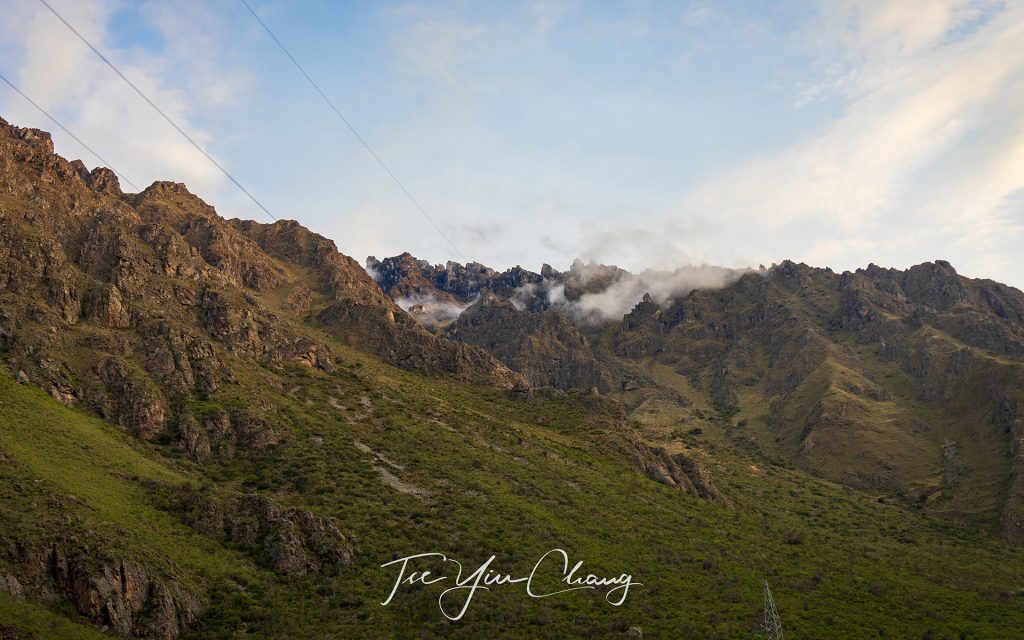
Dramatic and spectacular Andean landscape along the train journey to Machu Picchu

Filed Under: Blog, Photography, Portfolio, Travel Tagged With: adventure, altitude, inca, machu picchu, ollantaytambo, peru, pisac, rail, sacred valley, south america, spring, UNESCO, urubamba

Exploring the capital of the Inca Empire – Cusco

8 November 2019 by tadgraphics

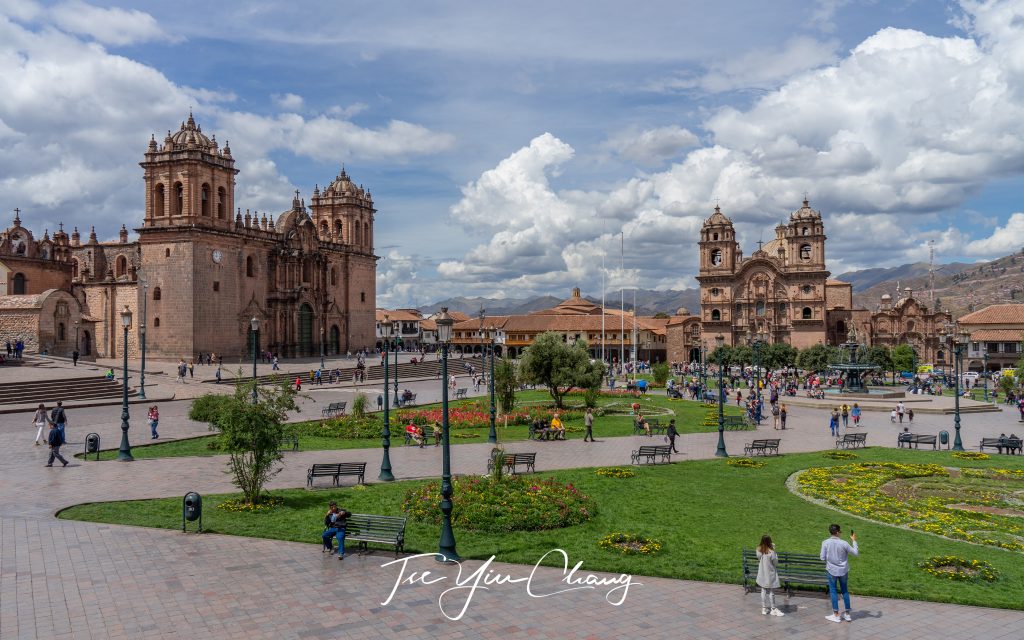
Cusco's old city, the grand square of Plaza de Armas has been landscaped with grass, flowerbeds and fountains making it a pleasant place to sit and watch the locals pass. On the left is Cusco Cathedral and on the right is the Church of the Society of Jesus
Cusco’s old city, the grand square of Plaza de Armas has been landscaped with grass, flowerbeds and fountains making it a pleasant place to sit and watch the locals pass. On the left is Cusco Cathedral and on the right is the Church of the Society of Jesus

South America is a continent full of astonishing historic sites. It has countless ruined cities, built by a myriad of indigenous cultures in strikingly different architectural styles. As well as this, it possesses numerous perfectly preserved colonial cities built by the Spanish and Portuguese. Ask ten history lovers which places are must-sees, and you will probably get ten different answers. Most, however, will say that Cusco is absolutely unmissable.

Cusco was the capital of the once sprawling Inca Empire, it continued to be an important city during the colonial era, making it one of the best examples of Spanish influence in Latin America

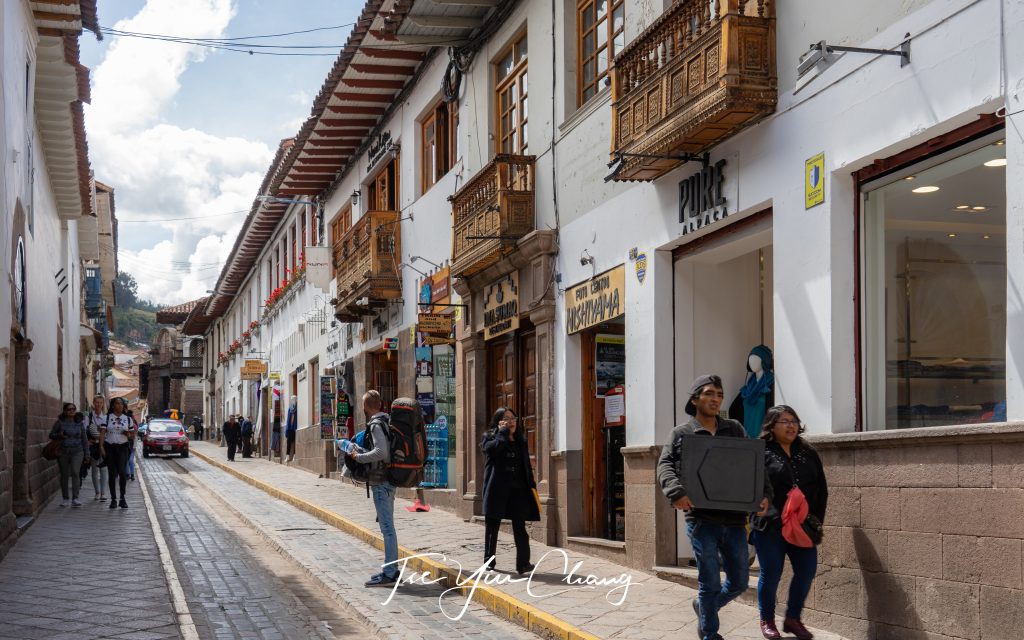
It was the capital of the once sprawling Inca Empire, and their legacy is still very much on display there. It continued to be an important city during the colonial era, making it one of the best examples of the Spanish influence in Latin America. Bustling with activity and life, Cusco is also very much a living city, not just an open air museum. The descendants of the Inca still make up a large part of Cusco’s population, speaking Quechua, the language of their ancestors and brightening up its streets with their colourful traditional dresses.

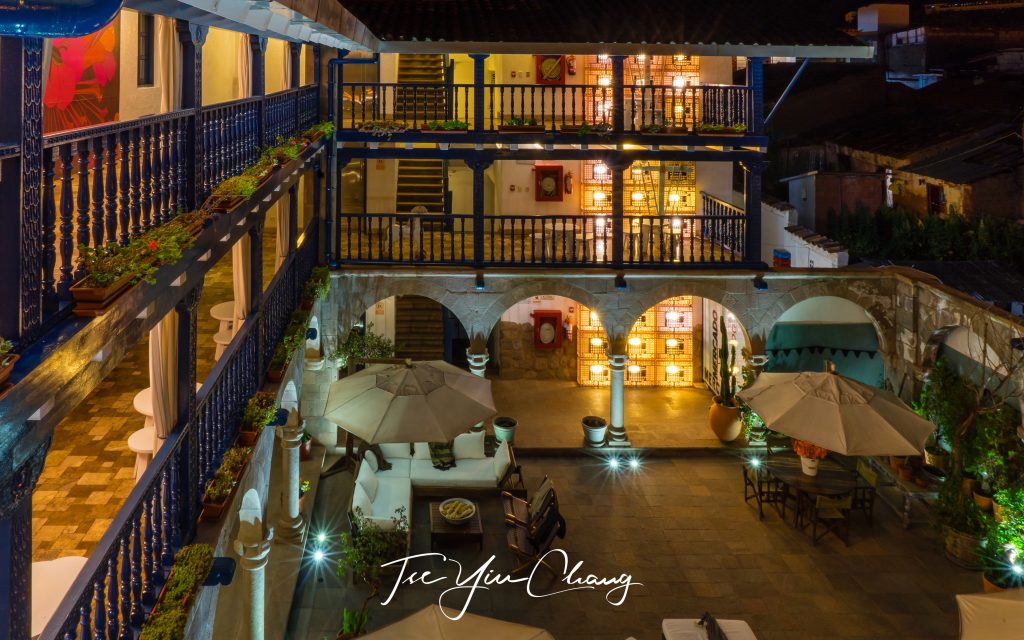
The El Mercado Hotel is a fantastic example of the whitewashed Spanish grandeur that can be found all over the old city of Cusco

Arriving by train from Lake Titicaca, we were picked up from Wanchaq station and taken to our accommodation. We stayed at El Mercado, right in the centre of historic Cusco. Originally built to serve as a market, the building is a fantastic example of the whitewashed Spanish grandeur that can be found all over the old city. Built around a central flag-stoned courtyard overlooked by three floors of arches and balconies, it is a peaceful retreat from the busy streets outside. Buildings like these are one of Cusco’s main attractions, so being able to stay in one really helped me immerse myself in the city’s charms during our visit. If you have limited time (as we did), its location is also a major plus. The elegant hotel is right in the heart of things, and close to many of the city’s most popular sights. It is a few blocks from the focal point of Cusco’s old city – the Plaza de Armas.

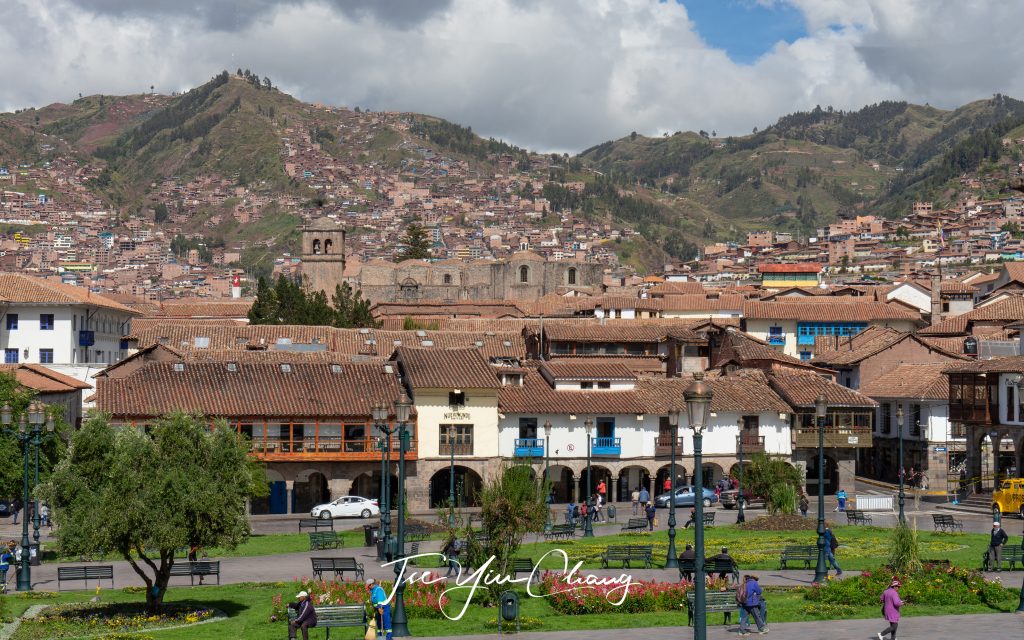
Cusco is considered the most beautiful city in Peru, it is also very much a living city, not just an open air museum

This grand square has been landscaped with grass, flowerbeds and fountains making it a pleasant place to sit and watch the locals pass by as they go about their day-to-day business. The square pre-dates the colonial period, and used to be much larger than it is now. It is thought that it was a religious centre where the population could gather to observe and take part in the ceremonies at the Temple of Viracocha.

Charming Cusco is a popular stop for tourists on their way to Machu Picchu
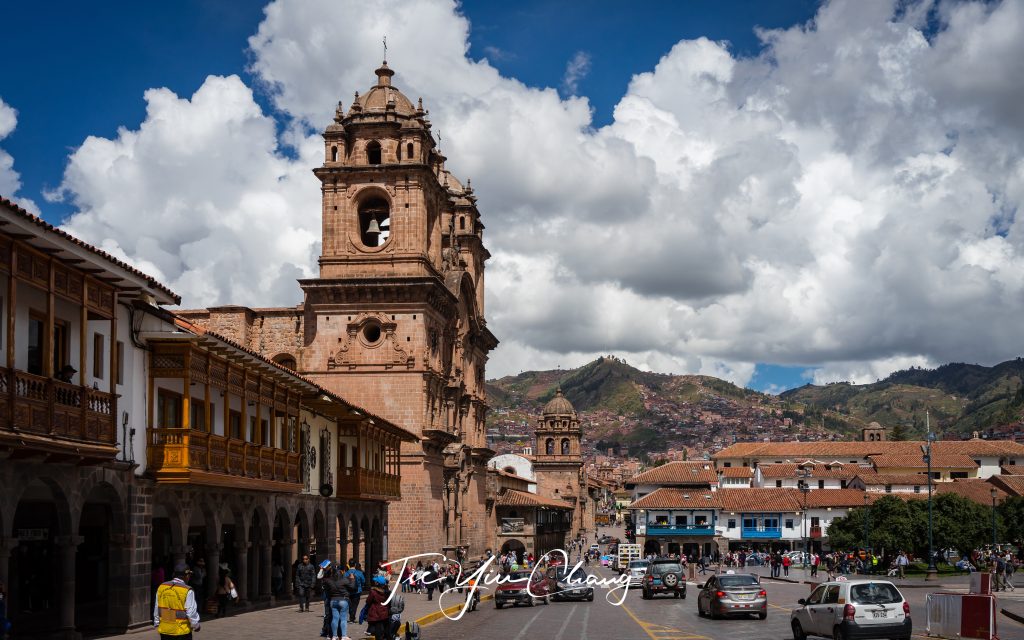
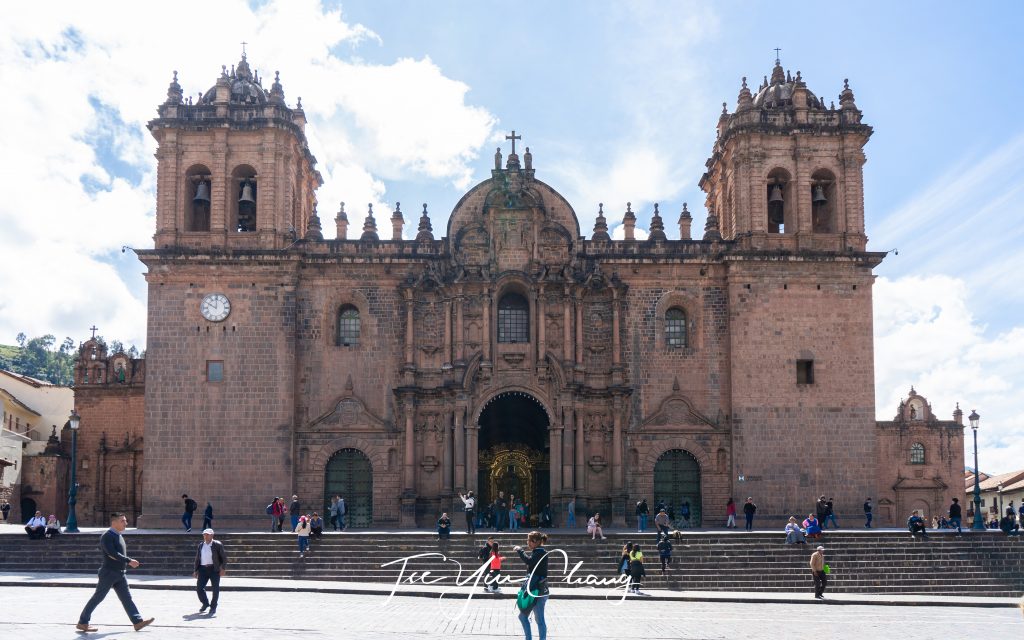
The Spanish enclosed the square and built the charismatic covered arcades which ring its edges. On one side they built a church and on another, after tearing down the temple, they built their cathedral. It took almost 100 years to finish, but it was worth the wait. The result is one of the grandest religious buildings in the Americas. The cathedral itself is a work of art, but visitors can also admire its collection of paintings and its two ornate altars.

The Cusco Cathedral is of the grandest religious building in the Americas

Remains of the Inca city can be found all over the place – largely in the foundations of later Spanish buildings. Many of the most substantial Inca structures, however, can be found outside of central Cusco. Given this fact and our limited time, we opted for a tour to fit as many of them in as possible. Before setting off for these more distant sites however, we were taken to another of Cusco’s unmissable attractions – Qorikancha.

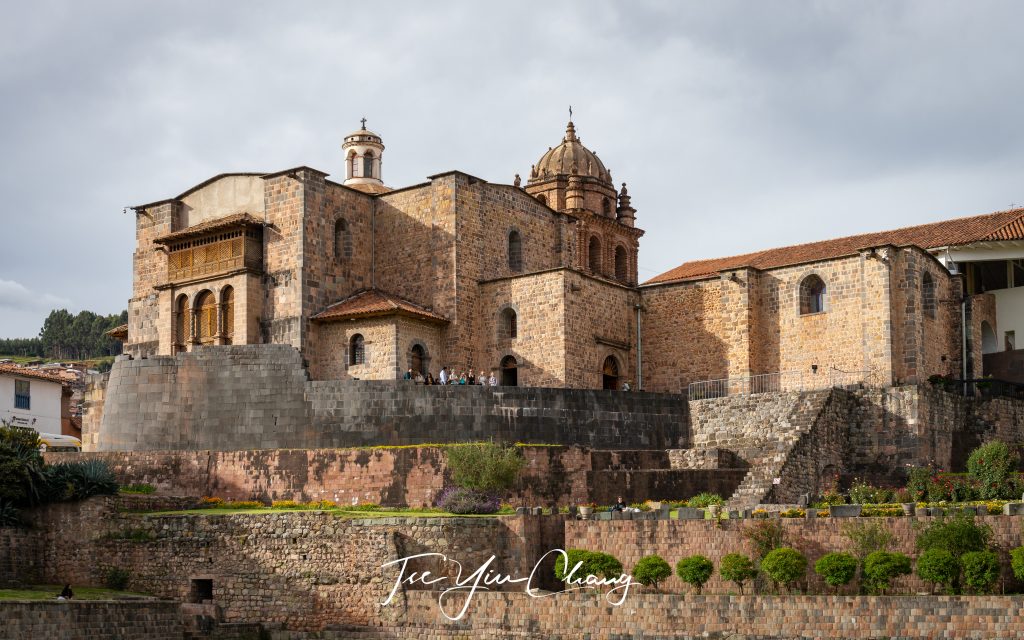
Qorikancha, the Temple of the Sun was once the richest in the Inca Empire, it was also the most sacred

If the Cathedral was (and still is) the focus of Cusco’s Spanish religious life, Qorikancha served that purpose for the Inca. The Inca had many deities, but their favourite was Inti. He was the god of the sun and the emperors were said to be his descendants. Not only the temple was once the richest in the Inca Empire, it was also the most sacred. It is said that its interior walls were clad with gold, while the outer ones were studded with emeralds.

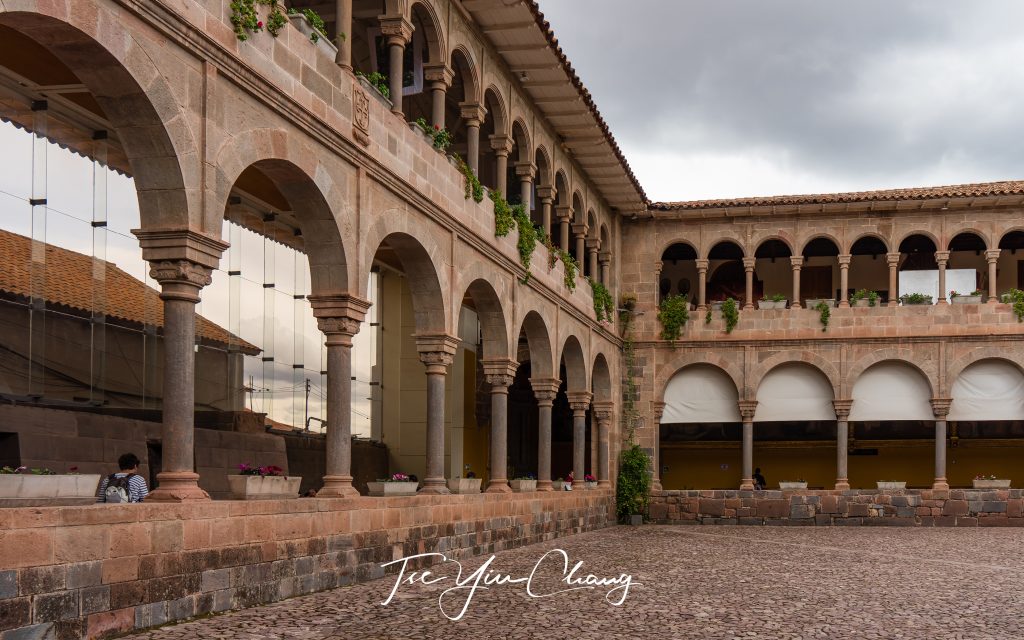
Qorikancha contained a courtyard around which small temples were arranged

Of course the gold and emeralds are long gone, plundered by the Spanish soon after they conquered Peru. Being fiercely Catholic, they weren’t satisfied with just stripping the gold and, as they had done with the Temple of Viracocha, they partially dismantled Qorikancha and built a convent on top. Despite this, much of the Inca building did survive, most notably a series of walls which rise up in steps to the convent. The site also contained a courtyard (the name means ‘golden courtyard’) around which small temples were arranged. This still exists, now enclosed by the convent, as does the open space below the complex where the Inca population would have gathered.

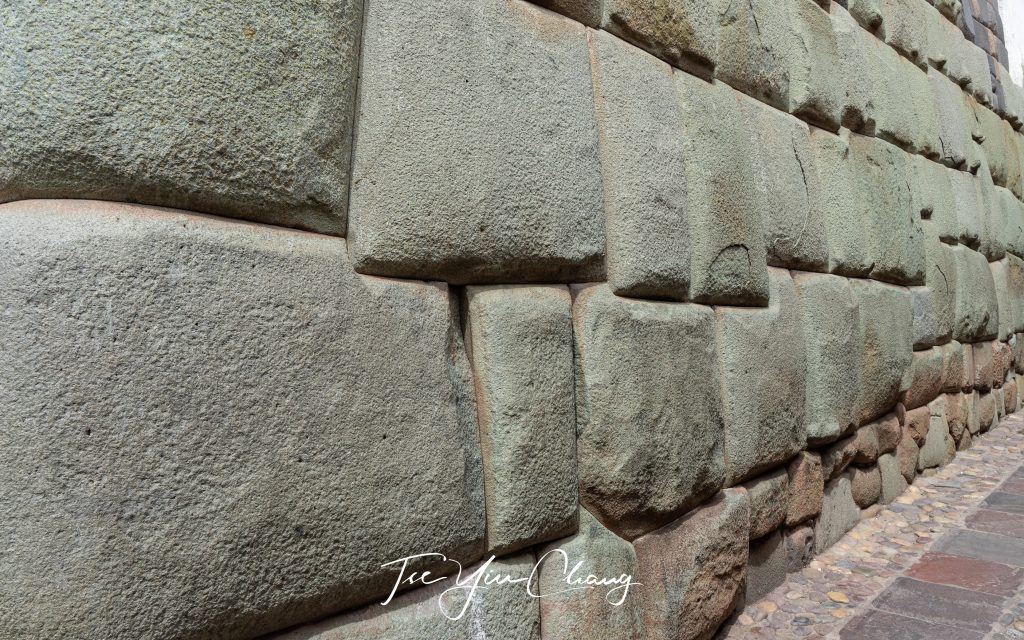
The few remaining Inca walls in Cusco. The walls were meticulously carved so that it would fit perfectly in place without using mortar or cement

Part of what makes the remaining Inca walls – and those of the city as whole – so impressive, is the way in which they are constructed. They used no mortar or cement, and instead they meticulously carved each stone block so that it would fit perfectly in place. They did this with such precision that you cannot slide a piece of paper between them, and they have survived numerous earthquakes, unlike many of the Spanish buildings built around them.

Qorikancha, a combination of Inca and colonial architecture, was used as an observatory where high priests monitored celestial activities

This method of building means that the blocks that make up Inca walls are far from uniform. Like a giant jigsaw puzzle, they were filed down to whatever shape was needed. The most extreme example of this can be found nearby – the twelve angled rock. The wall in which it sits today is part of the museum of religious art, and like many others in Cusco, it morphs from Inca stonework to Spanish whitewash around halfway up. Originally, however, it was part of a grand palace built by the emperor Inca Roca.

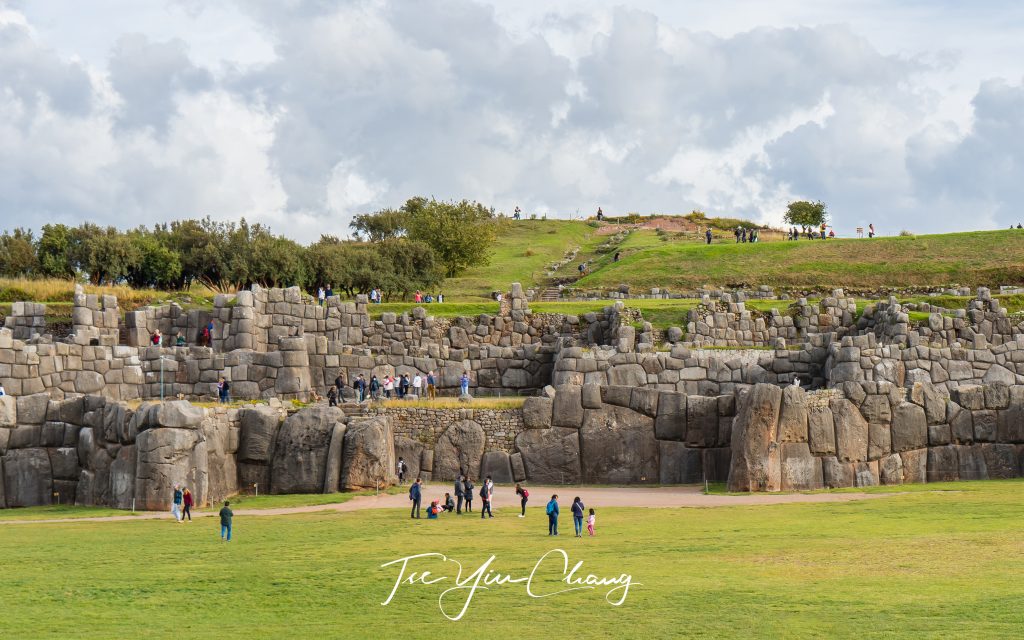
Perched on a ridge overlooking colonial part of Cusco, Sacsayhuaman is considered the most famous Inca ruins outside of the city centre

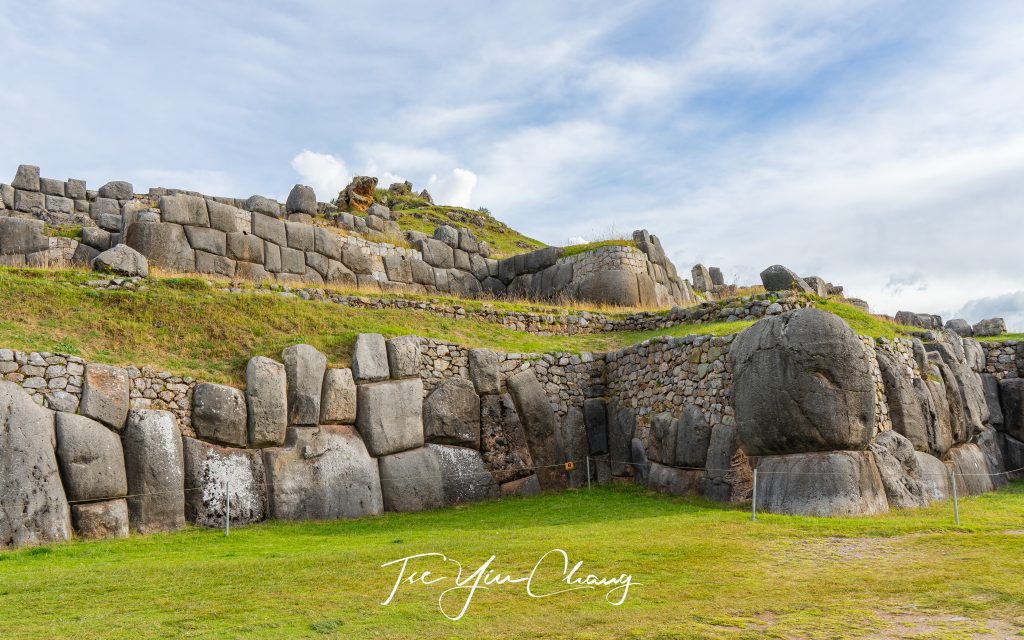
The most famous of the Inca ruins outside of the city centre itself is probably Sacsayhuaman. Perched on a ridge overlooking colonial part of Cusco, it is not actually very far at all – only a short drive from the Plaza de Armas. If you don’t mind climbing the steep hill, the site is only a short walk from the Plaza. This great fortress was an integral part of the city’s defences, and even today in their ruined state, its enormous stone walls look impenetrable. When it was built this must have been the equal of any European castle, and during the Spanish conquest, the Inca used it as a base for their resistance.

The great fortress of Sacsayhuaman was an integral part of the city’s defences, and even today in their ruined state, its enormous stone walls look impenetrable

The bulk of the site is Inca, however, parts of the complex were actually first constructed by the Killke people who occupied the region before them. The great walls enclose a plaza capable of holding thousands of people. It’s thought that huge religious ceremonies took place there during times of peace. While much of the site does remain, the Spanish used some of the stones they found here to build colonial Cusco; the Cathedral for example, is largely built from material pillaged from Sacsayhuaman.

The Spanish used some of the stone they found in Sacsayhuaman to build colonial Cusco; the Cathedral for example, is largely built from material pillaged from this site.
The Spanish used some of the stones they found in Sacsayhuaman to build colonial Cusco; the Cathedral for example, is largely built from material pillaged from this site.

If you continue up into the hills you soon reach two more of Cusco’s most significant pre-Columbian sites. The first is Puca Pucara. The name means ‘the red fort’ in Quechua, and it is so called because the rock used to build it appears red in certain lights. Situated on a rise overlooking what was the main road linking Cusco to the eastern part of the empire, it was most likely used to protect the city from any threats that might emerge from that direction.

While much of Puca Pucara’s buildings are lost to time, the walls still loom imposingly over the valley. Relatively little is known about the site, but interestingly it appears to have been constructed in a hurry. The stonework is not as neat as most other examples, but that doesn’t make it any less impressive. It is not hard to imagine how difficult it would have been to attack this place when standing beneath the walls, and looking down the slope that would have had to have been climbed to reach them.

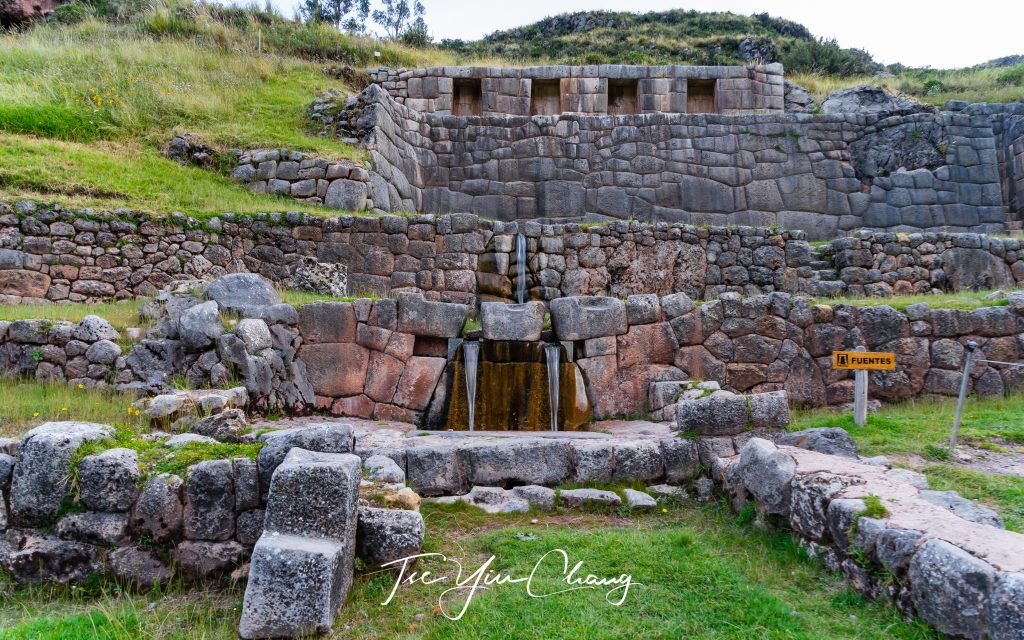
Tambomachay consists of a series of descending terraces and small buildings. It has a network of man-made waterfalls and channels which bring water down the terraces

Less than a kilometre away is the final place we visited – Tambomachay. It is not completely clear what the purpose of Tambomachay was, with possible suggestions including a military post, a stopping place for travellers, and a spa resort for the Inca elite. Carved out of the hillside, it consists of a series of descending terraces and small buildings. Flowing through the site are a network of man-made waterfalls and channels which bring water down the terraces. The water appears to flow from a natural spring, but archaeologists have been unable to locate the exact source without damaging the ruins in the process. You could easily spend a long time in Cusco. There is lots to see, and the city itself feels exciting and vibrant. The next morning we began the short hop across the mountains to our next destination. Cusco may have been the capital of the Inca Empire, but its heartland extended much further. We were on our way to the Sacred Valley, the home of countless ruins and dramatic landscapes.

See also:

  • A journey through the picturesque Andes by rail
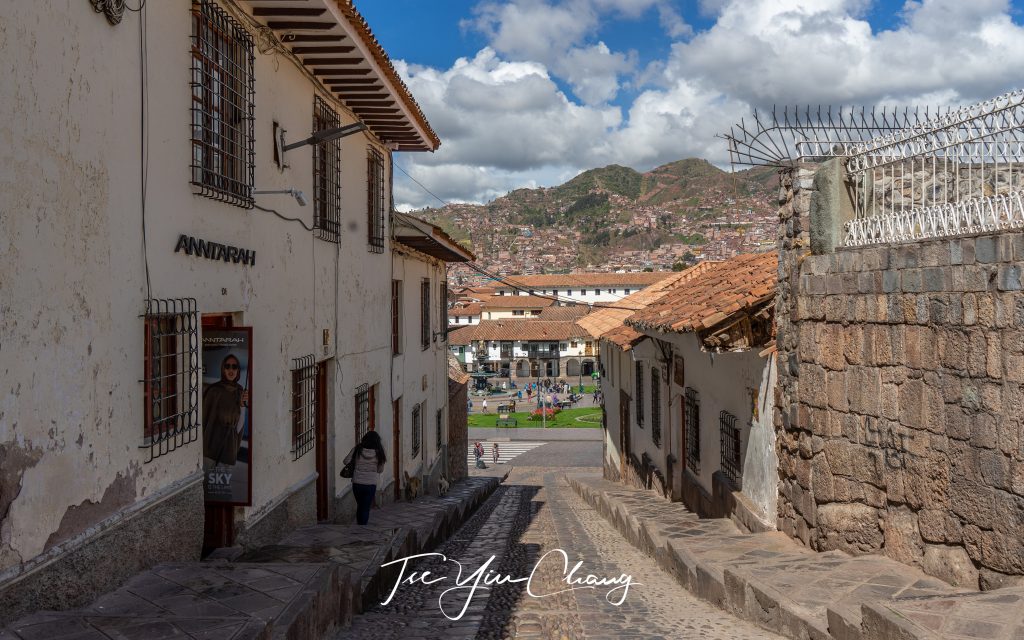
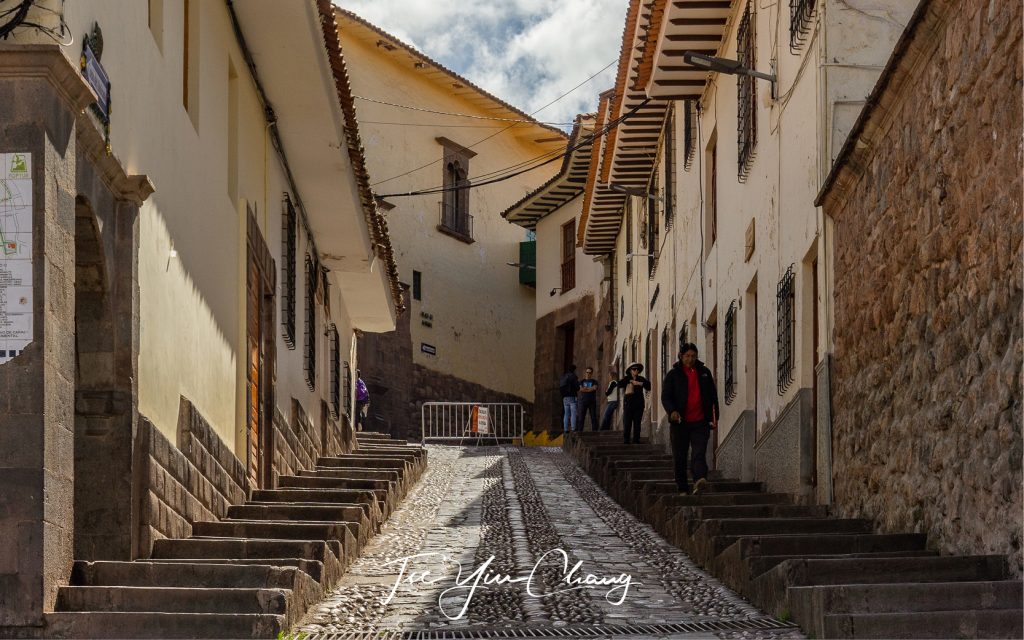
Cobble stoned alleys and plazas in Cusco
Cusco has lots of steep alleys and plazas made from cobble stones

Filed Under: Blog, Photography, Portfolio, Travel Tagged With: cusco, inca, peru, south america, travel

A journey through the picturesque Andes by rail

24 October 2019 by tadgraphics

Picturesque Andes is the world’s longest and second highest mountain range

The Andes are, without question, among the most dramatic places on earth. Stretching like a spine from the southern tip of the South American continent all the way to Colombia in its very north, they are the world’s longest and its second highest mountain range. Sitting right in the centre of the range – and encompassing some of its finest scenery – is Peru. There are many ways to travel around the country and take some of its marvellous landscapes in, but one of the best is the PeruRail train between two of the country’s most famous sites – Lake Titicaca and Cusco.

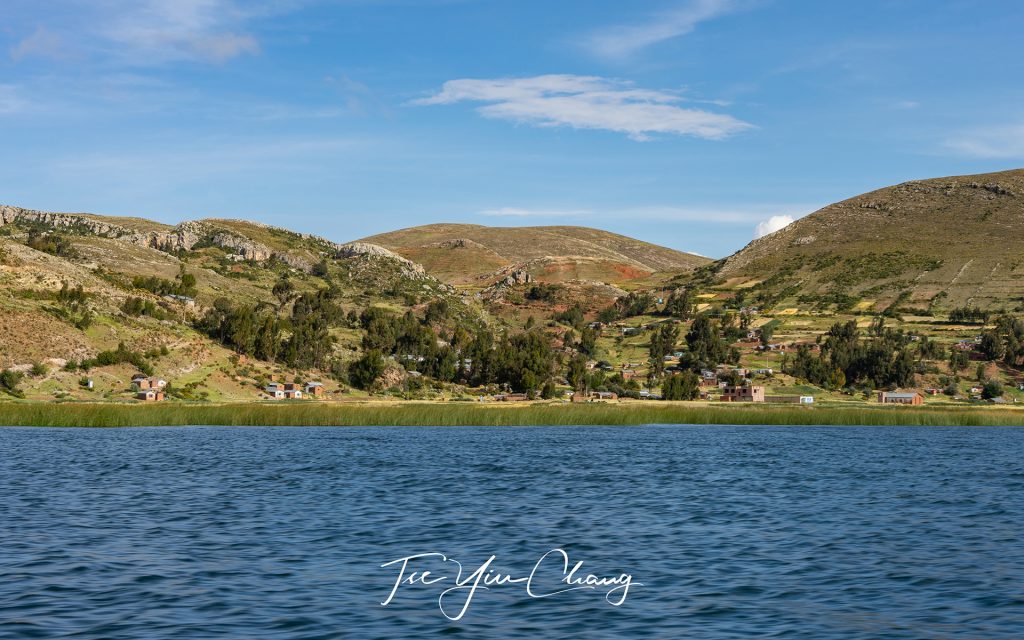
The pristine Lake Titicaca is the world’s highest navigable body of water, sitting at 3,800 metres above sea level

Lake Titicaca is the world’s highest navigable body of water, sitting at 3,800 metres above sea level. It is a place of desolate windswept beauty; a place where rocky slopes cloaked in yellow grass give way to pristine blue water and swaying reeds. In the distance are snow-capped mountains, and on the lake itself the indigenous people, also known as Uros build floating islands on which they live.

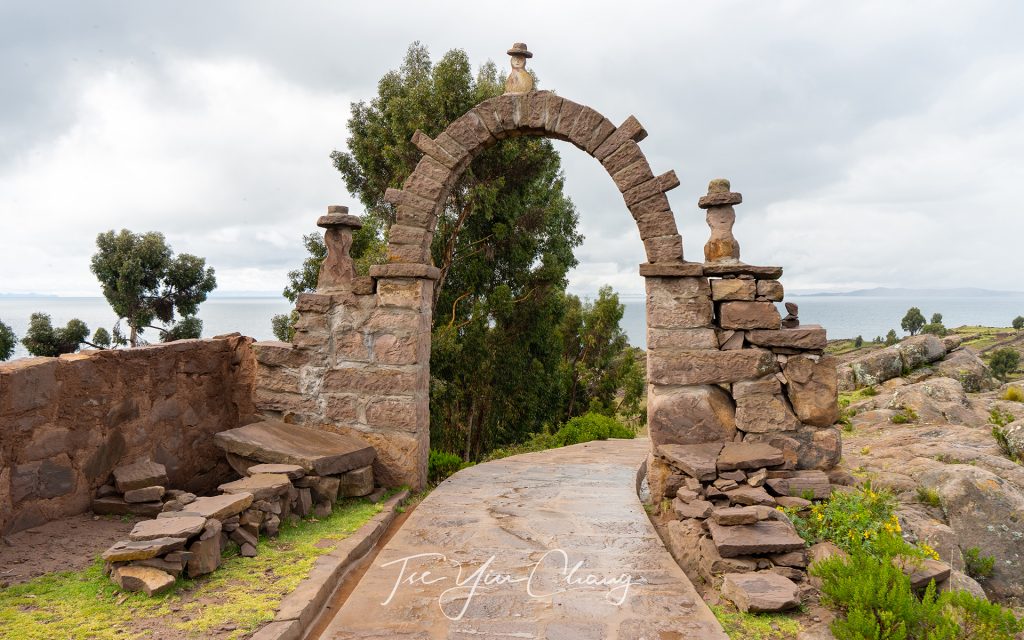
Visitors must hike along the pre-Inca Taquile Island trail and pass through the gate before arriving at the village

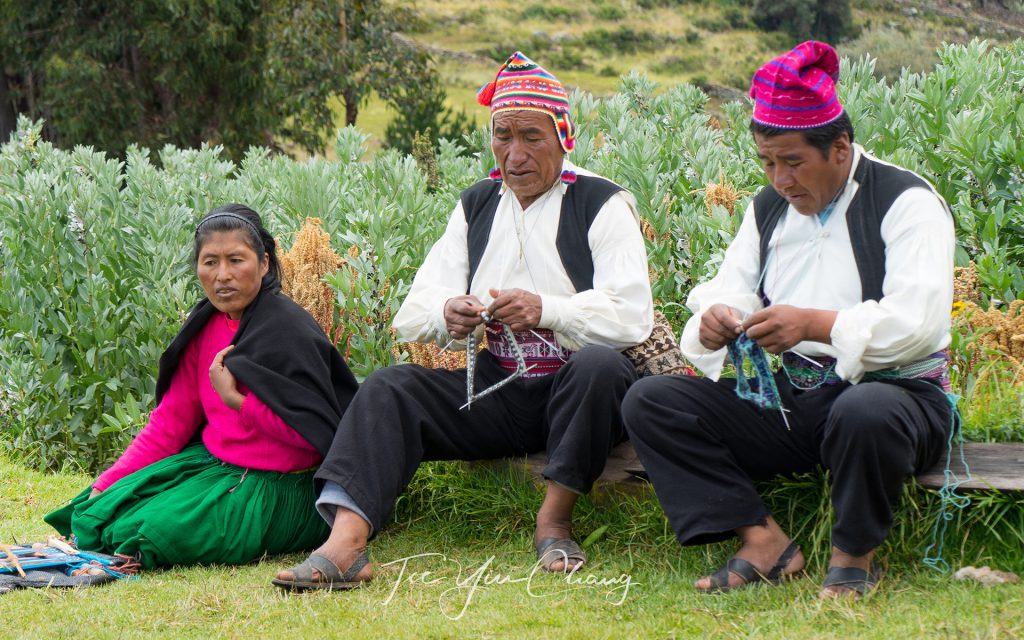
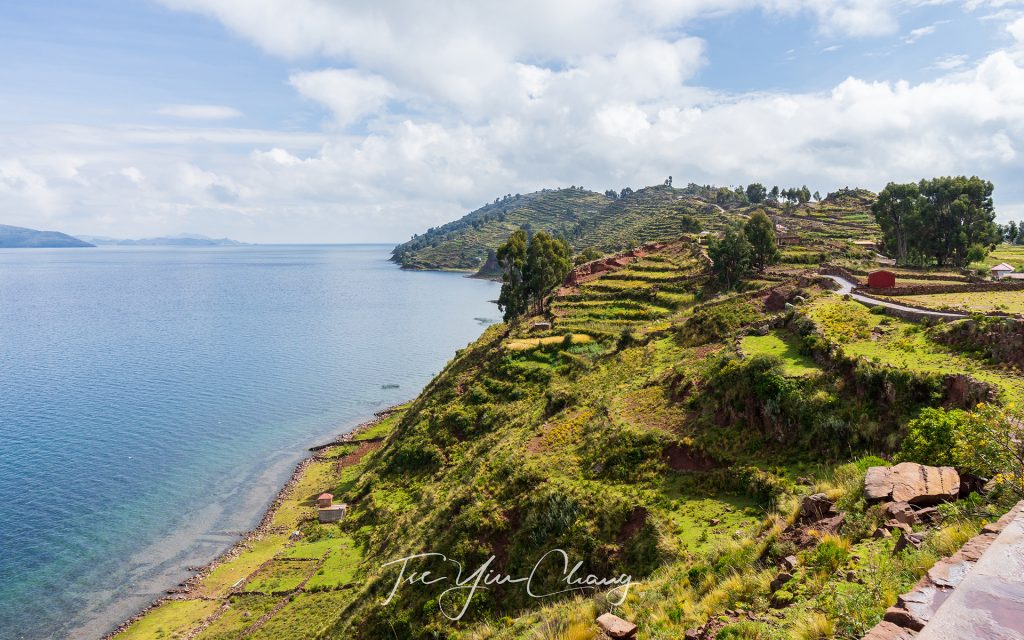
The pristine blue waters of Lake Titicaca hide a tourist gem, the scenic, tranquil and culturally rich Taquile Island. The island’s people, the self-sustaining Taquileños still speak Quechua, the ancient language of the Inca. The island is only accessible by boat. Once the boat docks on the cove, there is a short hike along a pre-Inca trail overlooking spectacular landscapes of the island. Taquile is known for producing some of Peru’s finest quality textiles and clothing. These delicately hand-knitted crafts is an activity exclusively reserved for men, a tradition practiced since the time of the Incas. Taquile’s hand-knitted textiles are considered so unique that they were named Masterpieces of the Oral and Intangible Heritage of Humanity by UNESCO in 2005.

Taquileño knitting men, a tradition practiced since the time of the Incas

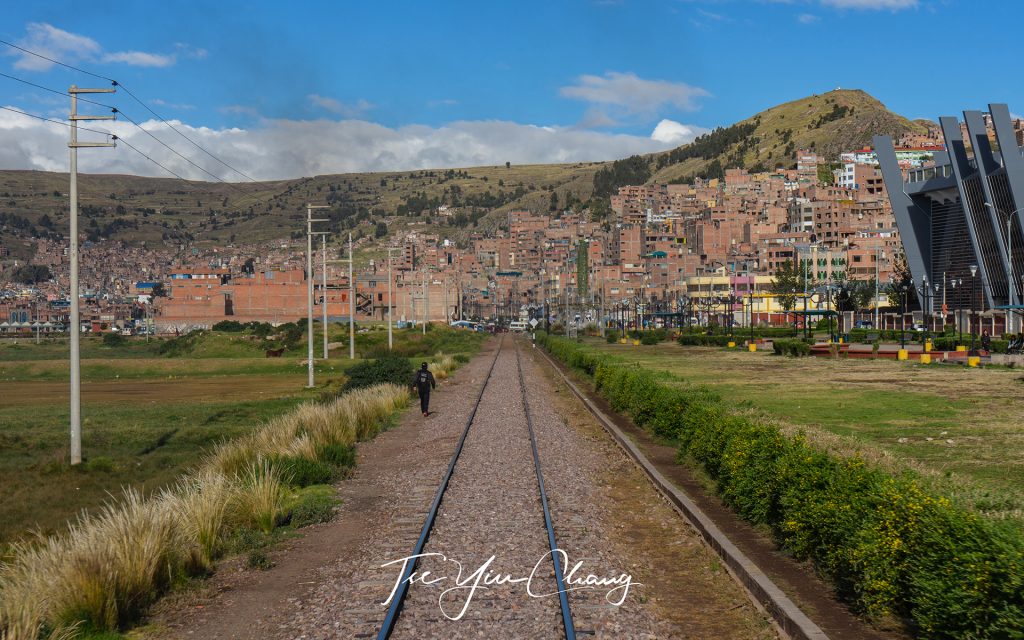
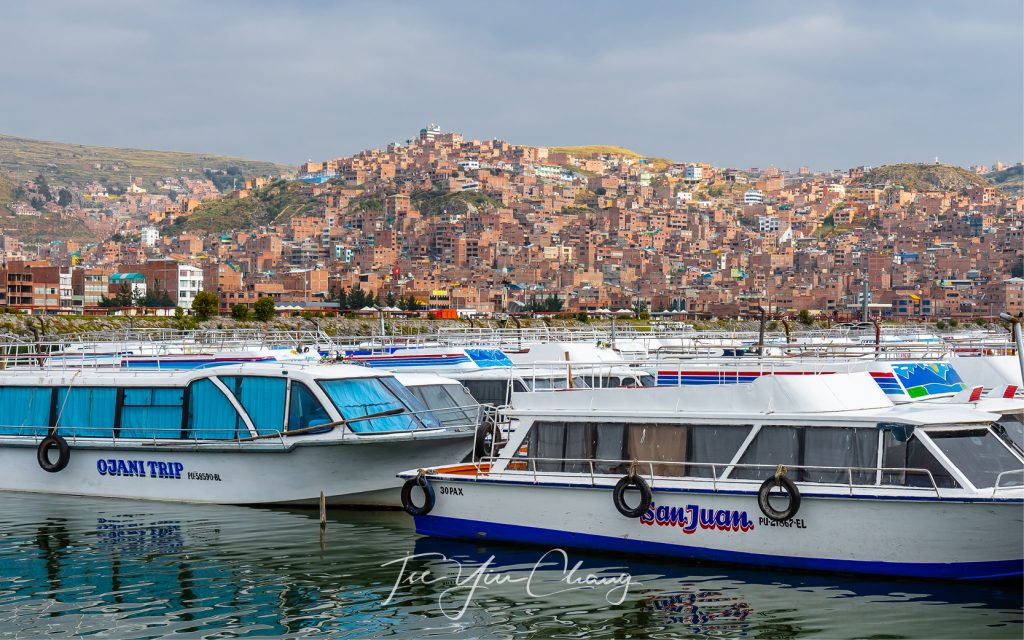
The lake straddles the border between Peru and Bolivia, and the town of Puno is the most popular base for travellers on the Peruvian side. From here, visitors can take trips out onto the lake, or visit some of the nearby pre-Hispanic ruins. The town itself possesses a few attractive colonial buildings and all this makes it a good place to spend a few days. It is from here that the PeruRail train leaves.

Town of Puno possesses a few attractive colonial buildings

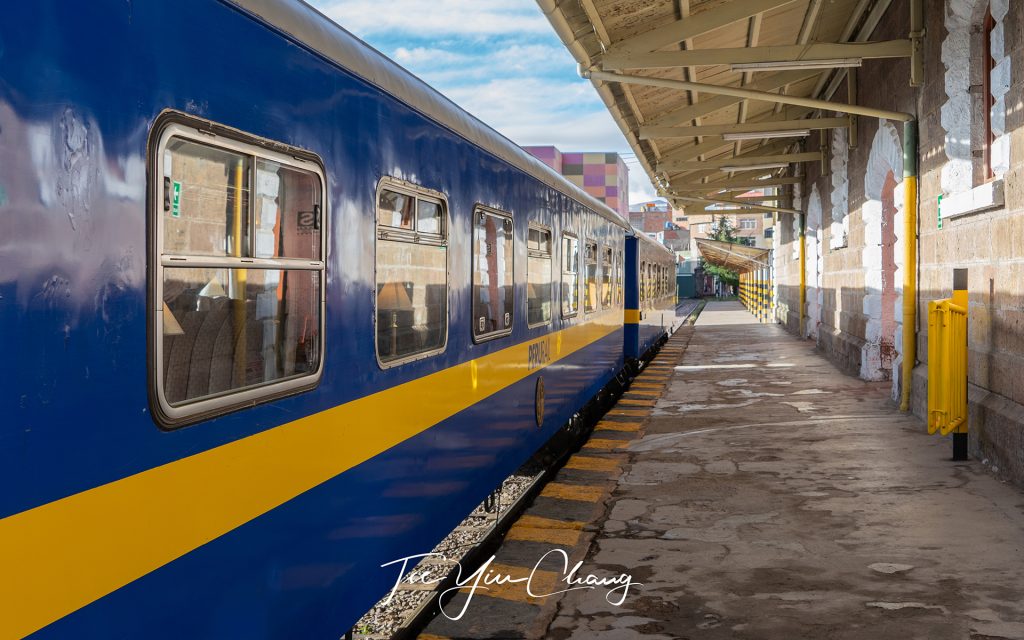
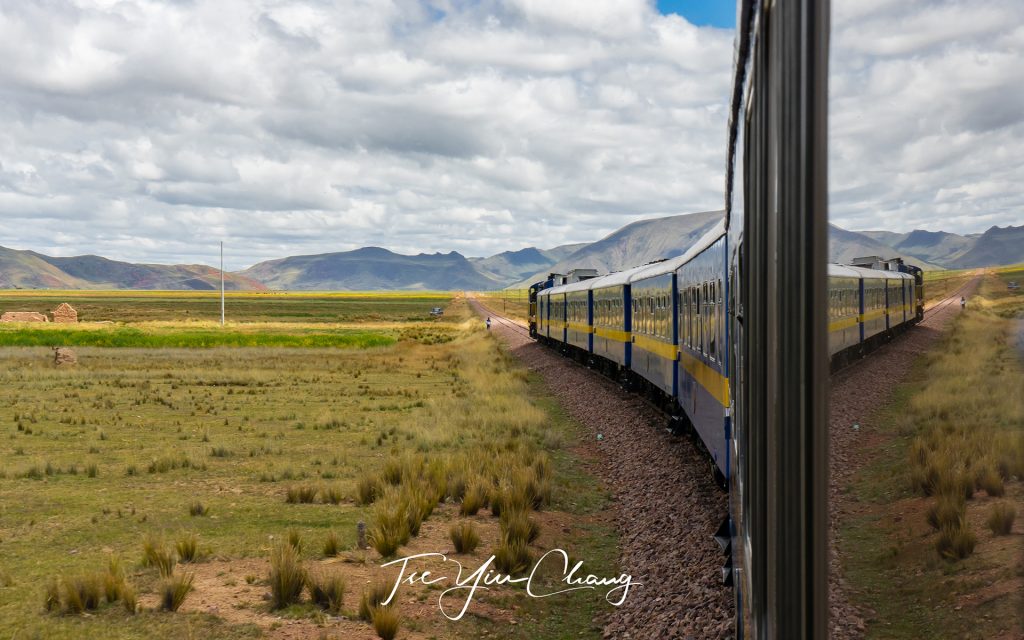
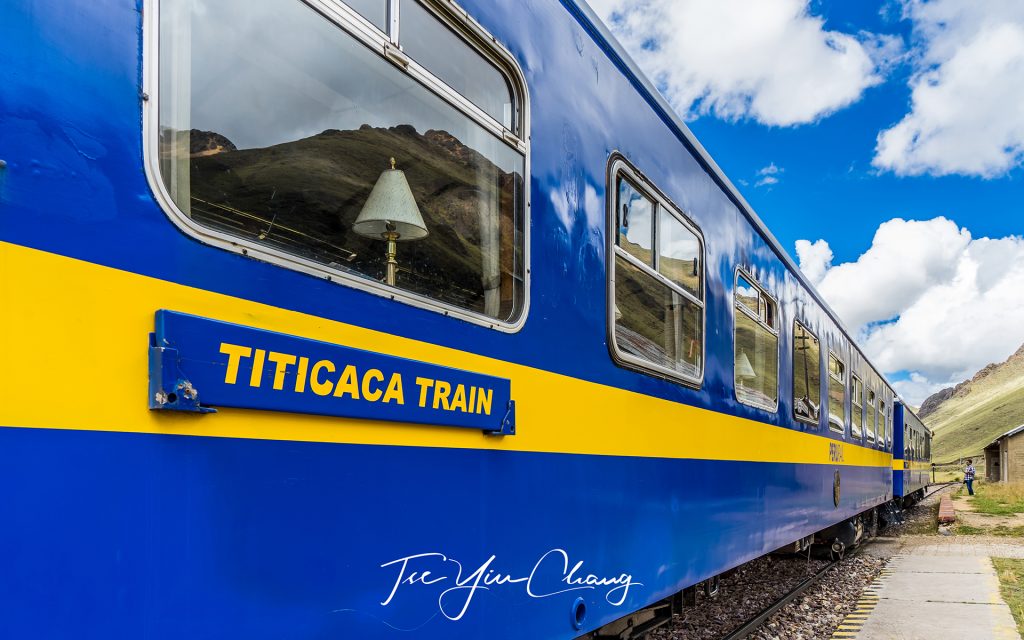
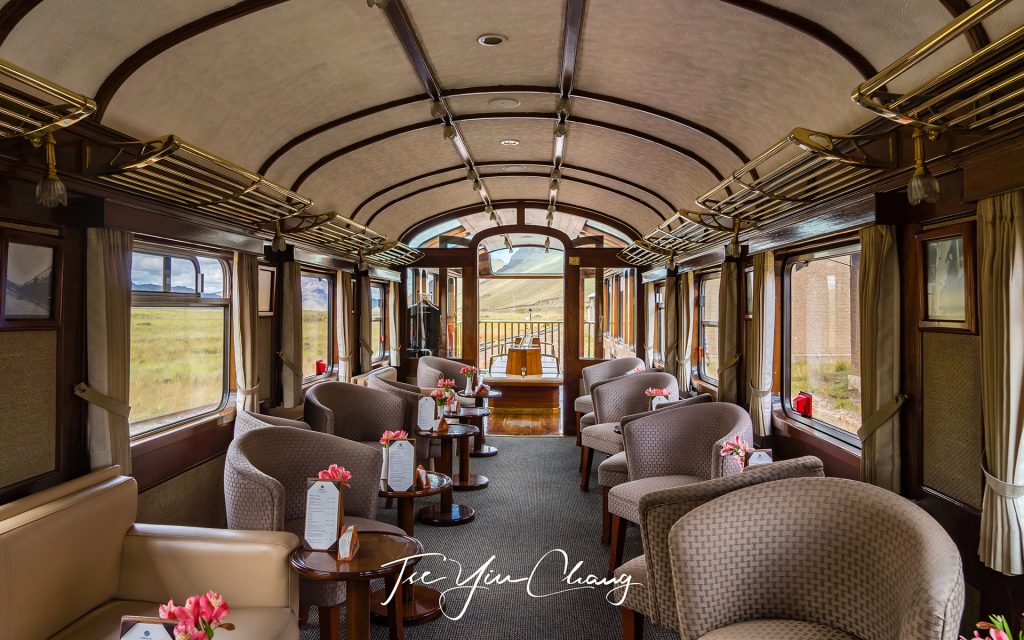
There are still working trains in Peru which are used for day-to-day transport and for moving goods around the country. This train, however, is not one of them. It exists solely to provide travellers with a memorable experience, and for this reason, is a lot more comfortable and grander than your average commuter train. The interiors of the carriages are all wooden panelling, dimmed yellow lighting and white tablecloths. It feels like something from the golden age of rail travel, not something that you immediately associate with Peru, but a welcome feature nonetheless.

PeruRail Titicaca train departing Puno

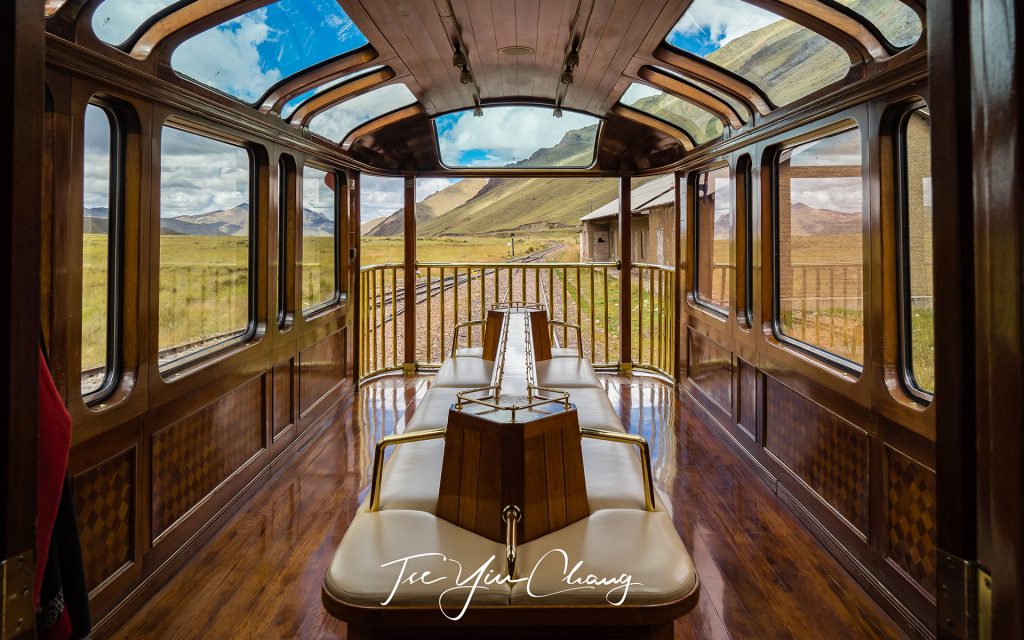
Everything else about the journey, however, is designed to highlight what a spectacular and culturally rich country Peru is. You can walk freely between the dining carriages and the observation car, which has been fitted out with glass. Its windows extend across the roof to show off the big blue skies, and the rear of the car opens up into a balcony. 

Peru is blessed with a huge variety of dramatic scenery

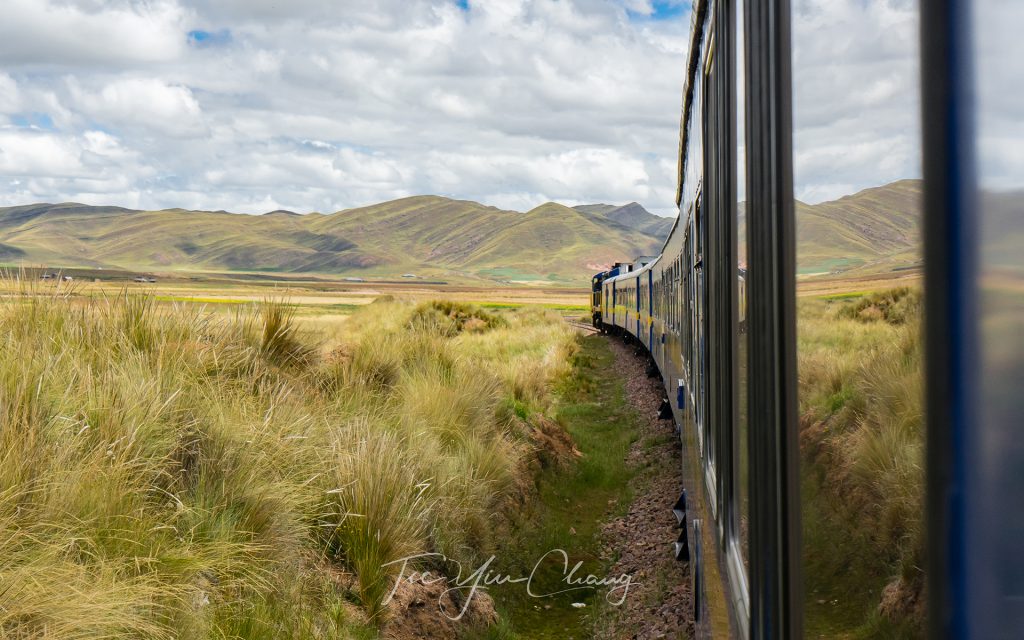
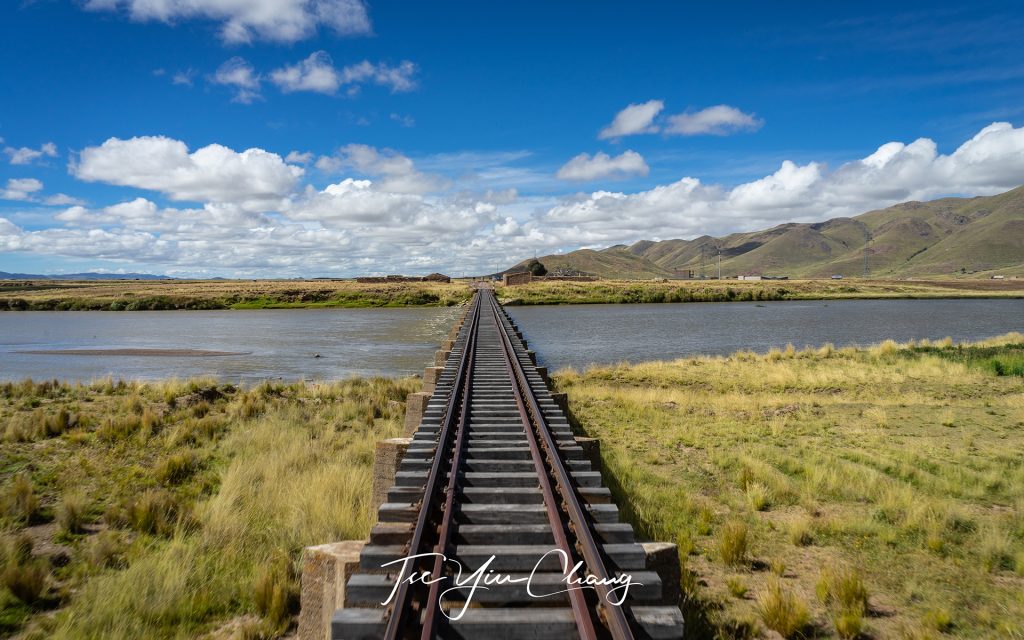
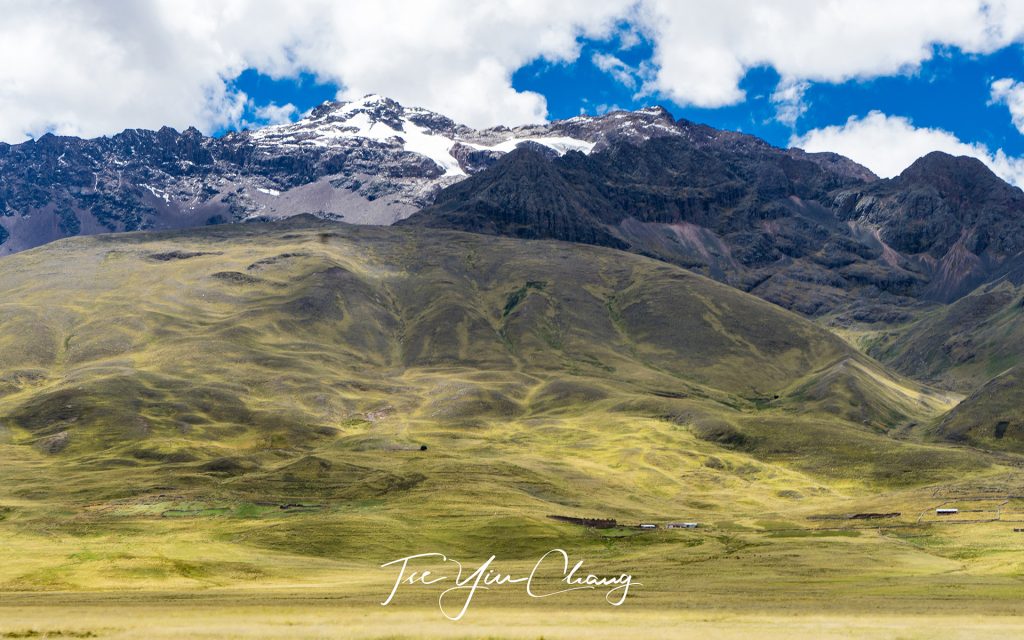
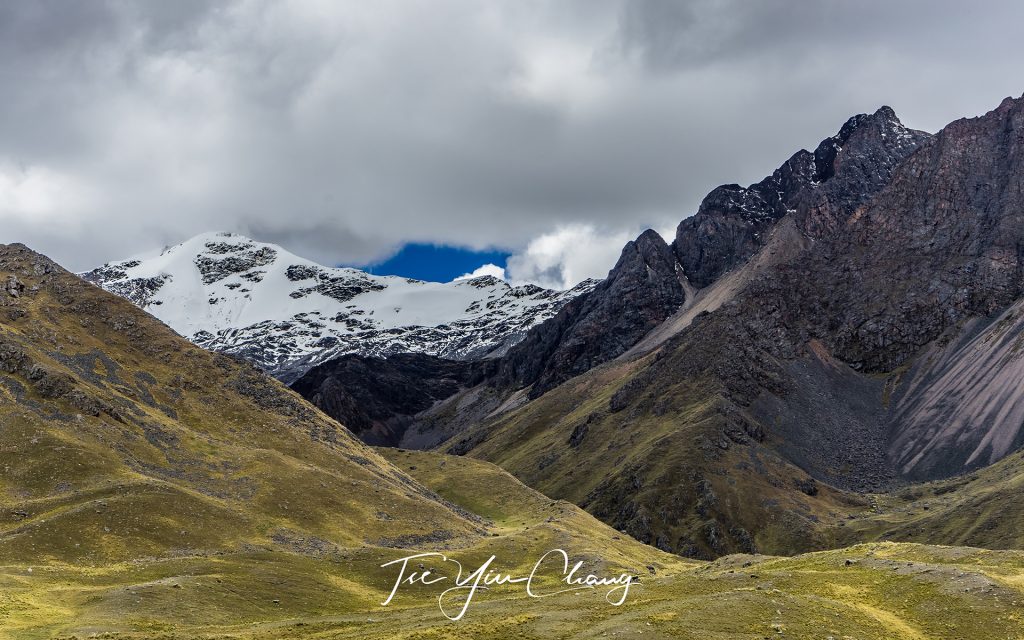
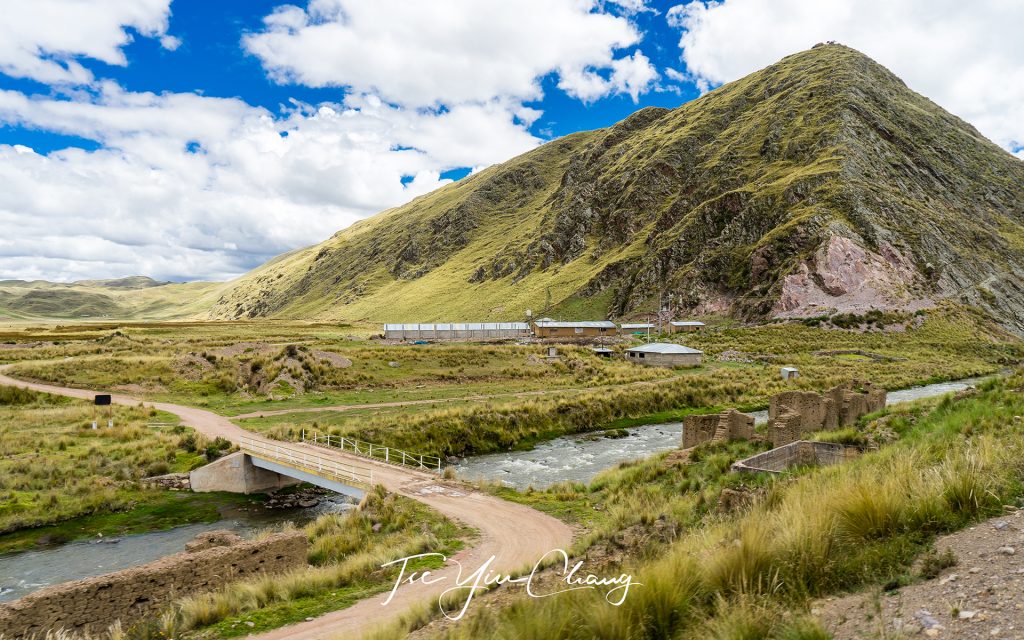
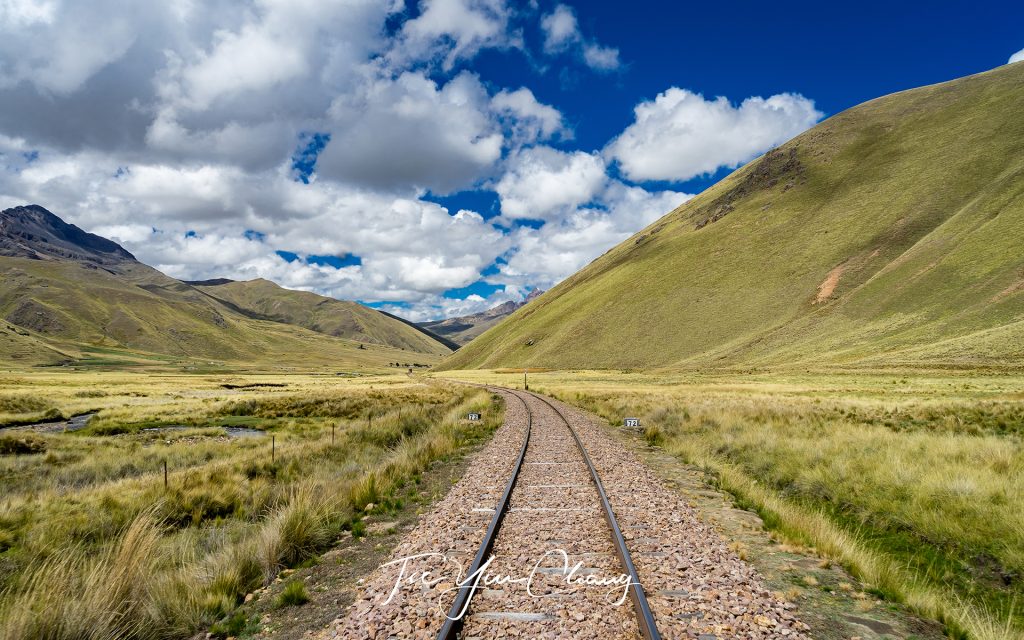
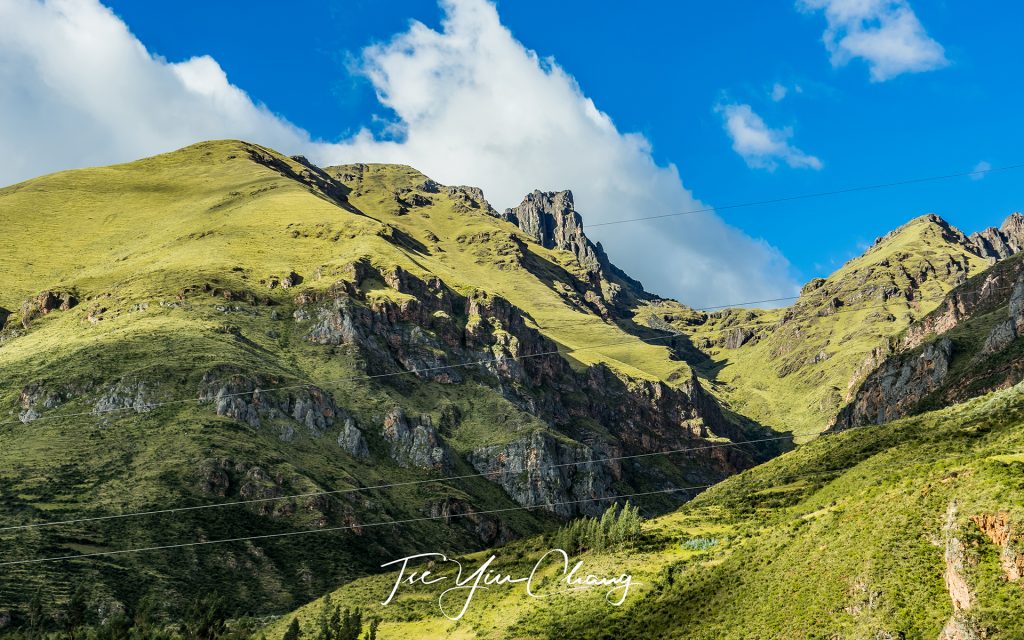
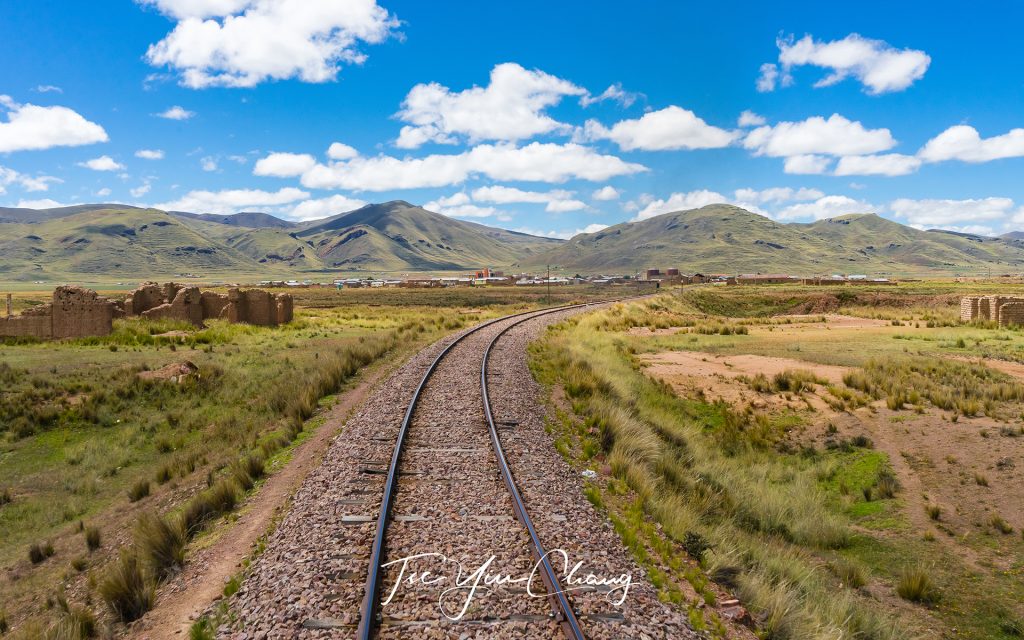
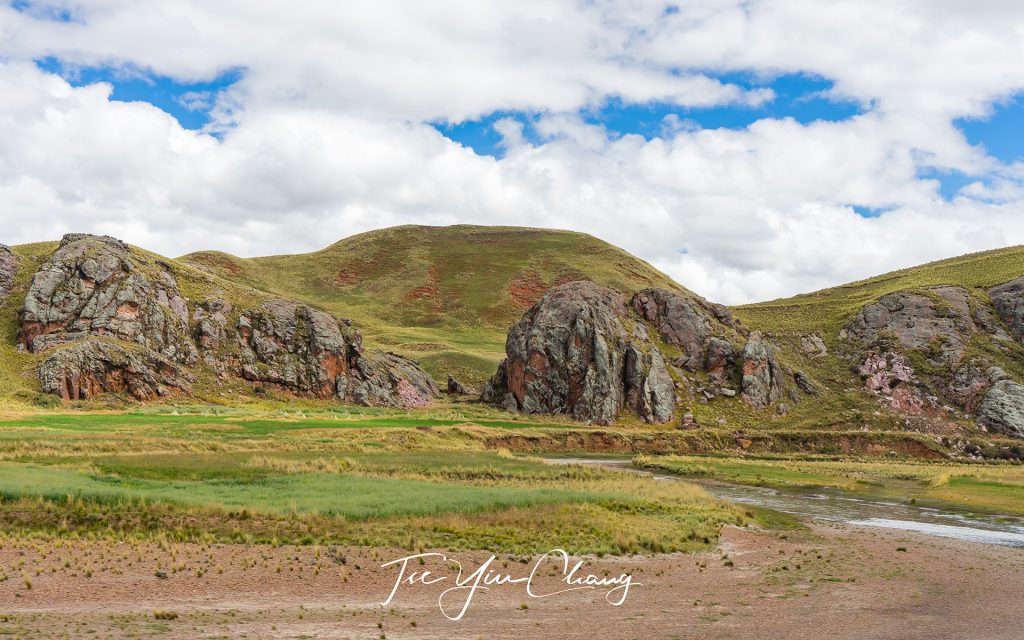
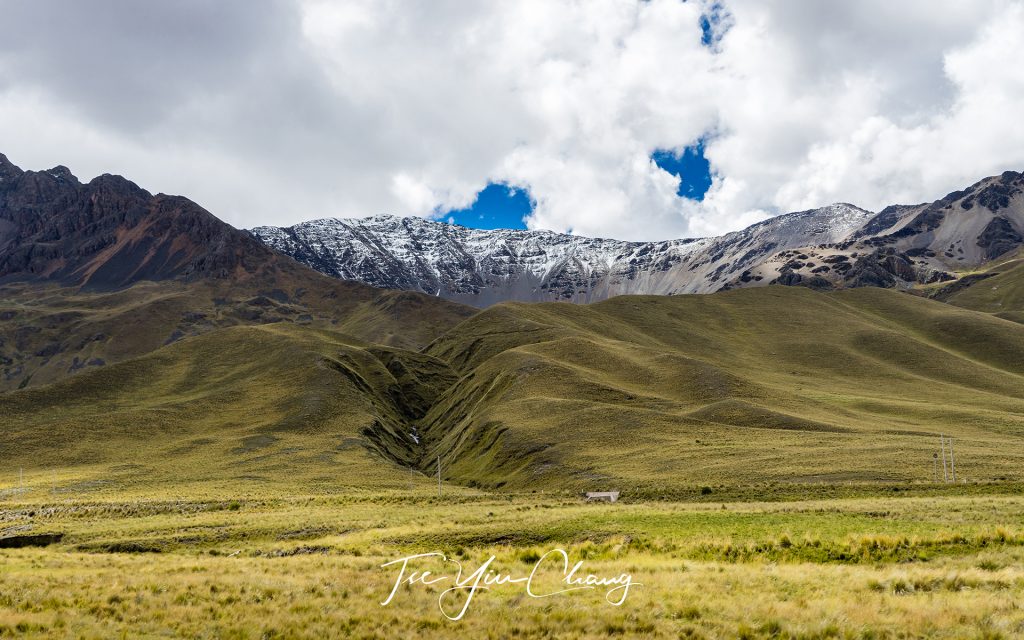
Peru is blessed with a huge variety of dramatic scenery, with everything from Amazon rainforests to one of the driest dessert on earth. The part of the country which the train travels through is known as the altiplano, and it alternates between sweeping open high altitude plains and jagged mountain peaks. Through the windows on one side, you might see empty grassland populated with only the occasional llama herd, while on the other, dramatic white peaks loom, casting their shadow over the train.

Dramatic white peaks of the Andes

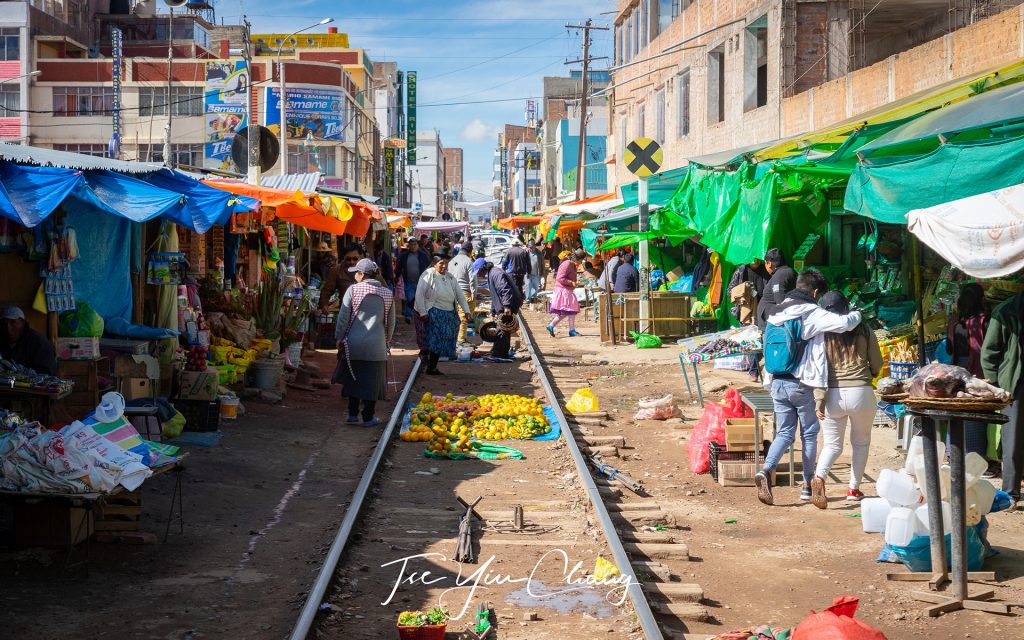
It feels impossibly lonely up here, but every now and again you are surprised by the sight of a tiny village rolling into view or someone walking alone across the empty landscape. The train passes through a few larger towns, and one of the most interesting comes soon after departing Puno. Juliaca is not the sort of place visitors would usually stop, however, passing through by train gives a fascinating glimpse of everyday life in the Peruvian Andes. The tracks cut right through the middle of the town market, with the stalls passing within touching distance. Locals go about their business, haggling for everything from food to building supplies, and children wave at you as they wait for the train to pass so they can cross the tracks. This is a slice of Peru at its most authentic.

A fascinating glimpse of everyday life of the Peruvian Andes as the train tracks cut right through the middle of the Juliaca town market, with the stalls passing within touching distance

Around halfway along, the train reaches its highest point, the pass at La Raya – a rare opening in the surrounding mountains which allows the track to cut through. At 4,319 metres above sea level and hemmed in by peaks, it’s hard to believe that this place would be inhabited if it wasn’t for the passing trains. Inhabited it is however (just about), and it is here that the train makes its only stop. It is worth using some of the time to peruse the small handicraft market, and some more to step inside the small chapel. Once you have done that, you have seen everything manmade that La Raya has to offer. The best thing about the stop, however, is the chance to step out into the spectacular scenery you have been passing, and spend some time taking it all in.

Spectacular snow-capped mountains at La Raya. This cold and remote village is the highest point of the Lake Titicaca-Cusco route which is located at 4,319 metres above sea level

Peruvian culture is not just on display outside the train, you can experience it up close thanks to the entertainment included as part of the ticket. Passengers are serenaded by a band made up of guitars, tiple, flute, percussion and of course pan pipes. The haunting Andean melodies make a perfect addition to the landscapes rolling past outside. The indigenous culture of the altiplano is particularly colourful, and it is on full display in the dress and movement of the dancers who accompany the music.

The beautiful train is furnished with 1920s-style Pullman carriages. The open-air observation carriage is a dream for photographers keen to capture the dramatic scenery of the Peruvian Andes

After ten hours the train reaches Cusco, its final destination. If you visit Peru, the chances are you will end up in Cusco at some point. It is the starting point for visits to the famous Machu Picchu and the Sacred Valley, two of the country’s world famous attractions. The city itself was once the capital of the Inca Empire and later became an important colonial town for the Spanish. They built their opulent mansions, cathedrals and plazas right on top of the existing city, resulting in a unique hybrid architecture. Inca walls made from enormous stone blocks – somehow fitting together perfectly without the need for cement – sit next to whitewashed Iberian villas. Sometimes the two can be found within the same building. While most come here by road, the PeruRail train from Puno has to be the best way of arriving. You won’t get the luxurious comfort, the sweeping views and the exposure to Peruvian culture on a bus.
Every now and again you are surprised by the sight of a tiny village rolling into view

Prints from my trip on the Puno-Cusco train, as well as the rest of my South American adventure are available to purchase. Get in touch if you want to own a piece of the Peruvian landscape.

The route covered by the PeruRail Titicaca train is considered as one of the most beautiful rail journeys in the world

Coping with altitude sickness

Altitude sickness is a very real problem up in the high Andes, and most visitors will experience some effects. For many this will mean nothing more than a shortness of breath, but for an unlucky few, the headaches, nausea and dizziness can be enough to require hospital treatment. Fortunately, there are simple precautions which can reduce the effects of altitude.

Ascending slowly is one of the most effective ways of preventing altitude sickness. While many of the most breath-taking sights in the Andes are above 3,000 metres, there are plenty of things to see at lower elevations. Stopping for a few days at medium altitudes can help your body adjust gradually, and reduce the strain it feels when you get really high up.

Taking extra care to look after yourself is also important. While dehydration, drinking too much alcohol and pushing yourself too hard are always things to avoid, up in the mountains they can aggravate altitude sickness. Your body is having to work extra hard to glean as much oxygen from the thin air as it can, and it needs your help to do so. Staying hydrated and saving some energy helps keep the worst effects at bay.

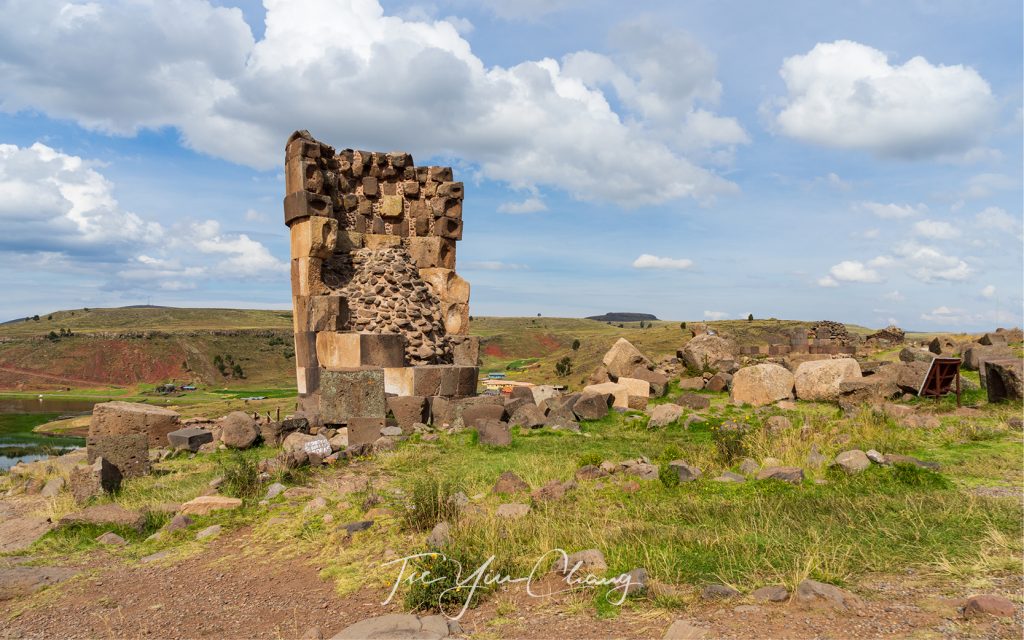
Sillustani, located on the shores of Lake Umayo near Puno is one of the main archaeological attractions in the Lake Titicaca area. It is a pre-Incan site that consists of a group of huge cylindrical tombs constructed by the Qulla people to bury their nobility
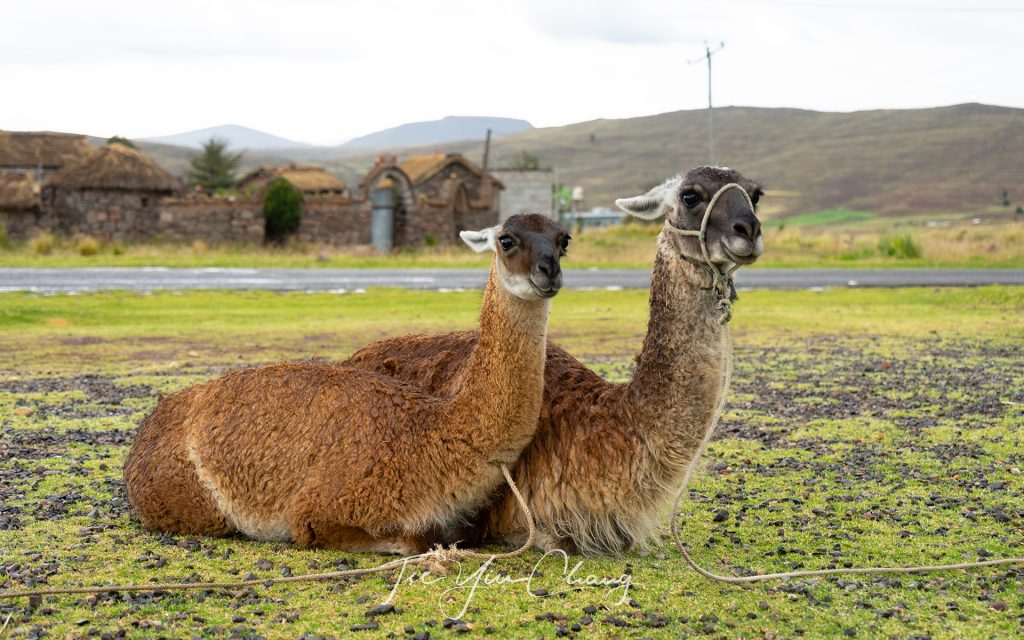
Getting up close and personal with the locals – llamas on a traditional Peruvian farm
The town of Puno is located at the edge of Lake Titicaca
Home to many unique indigenous plants, Taquile Island offers scenic hike on the rugged landscape and views of Lake Titicaca
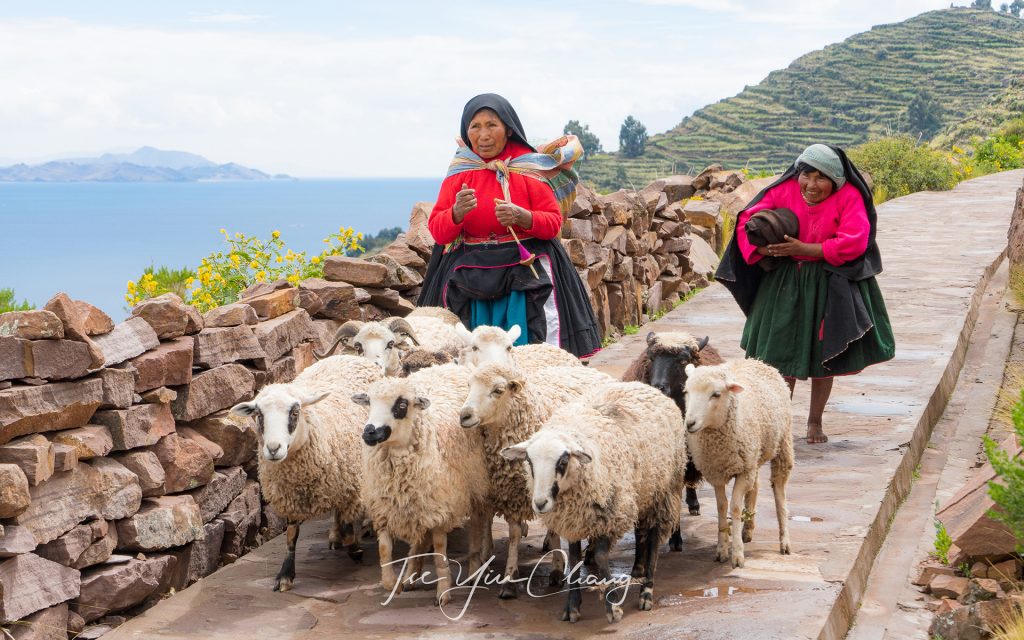
Local sheep farmer, Taquile Island, Lake Titicaca
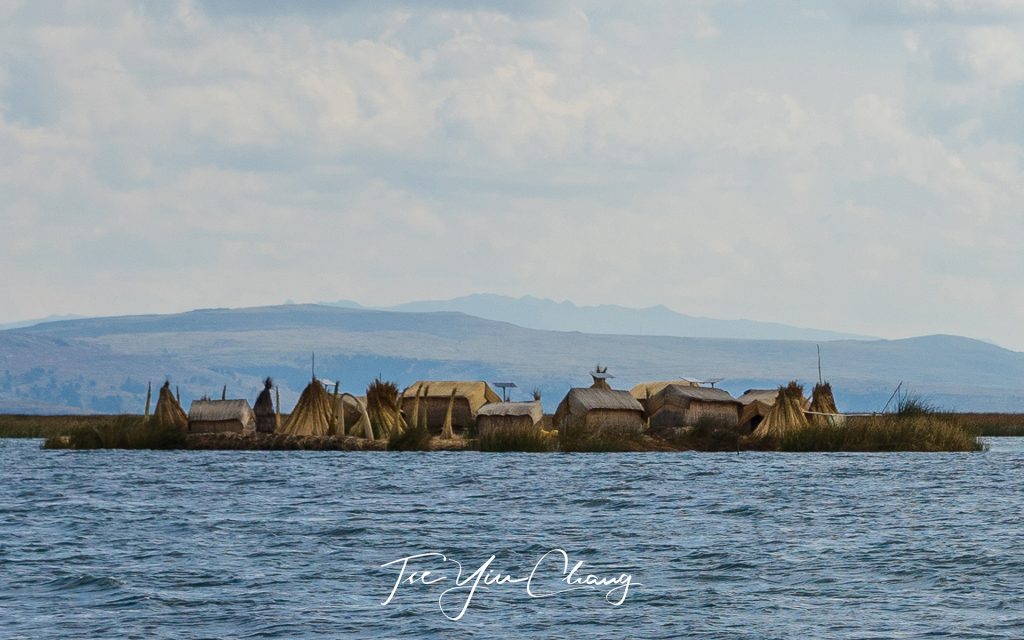
One of the many Uros floating islands on Lake Titicaca
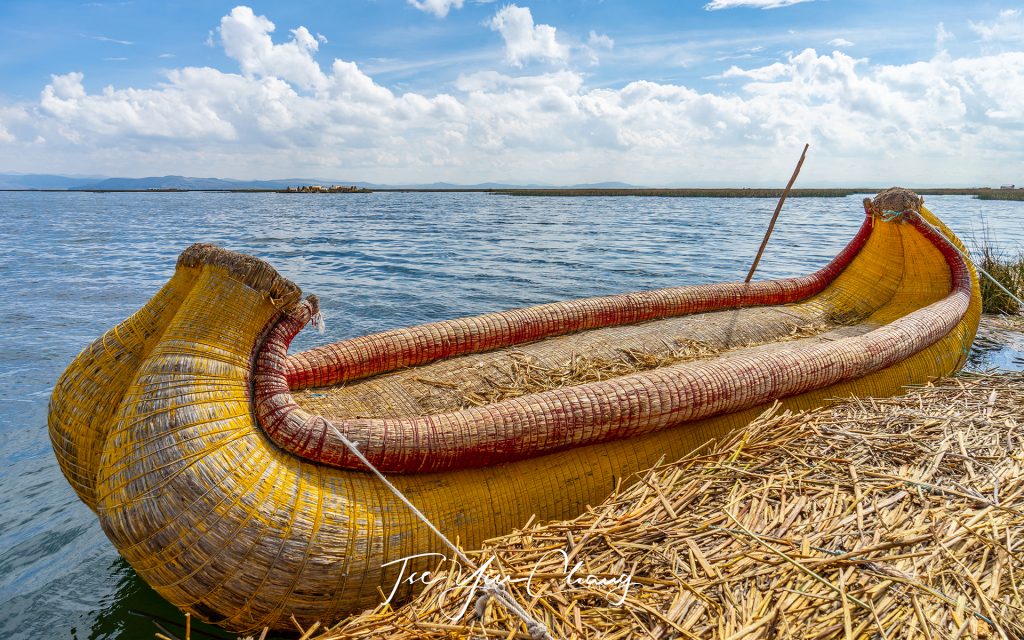
Totora reed boats built by the Uros people are among the oldest known types of boats
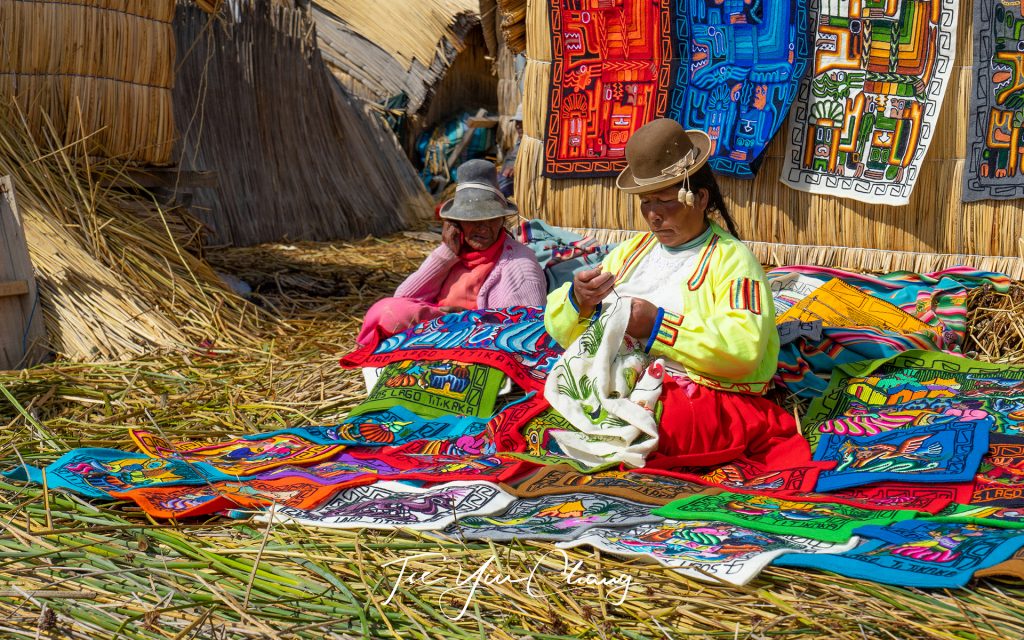
Self-sufficient Uros people weave and sell their handicrafts
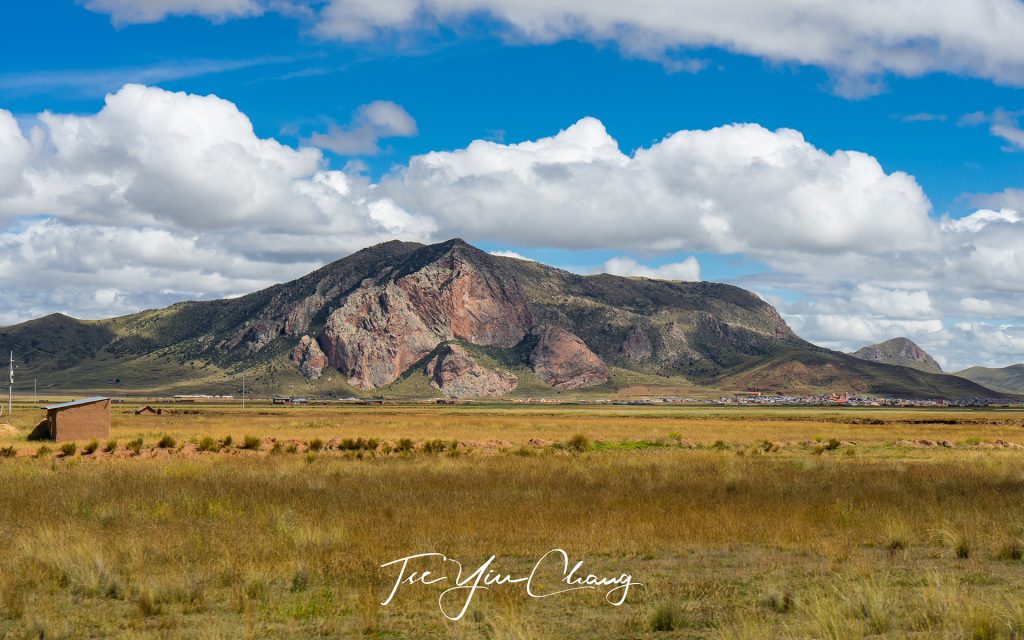
The part of the country which the train travels through is known as the altiplano
The memorable once-in-a-lifetime adventure travels between Puno and Cusco lasts approximately 10 hours
Dramatic white peaks
The wooden paneling in the interior of the train makes it feel like something from the golden age of rail

Filed Under: Blog, Photography, Portfolio, Travel Tagged With: altitude, cusco, inca, lake titicaca, peru, puno, rail, south america, travel

© Copyright 2005-26. All rights reserved. t ad studio | tad graphics. Web and graphic design Perth. Admin